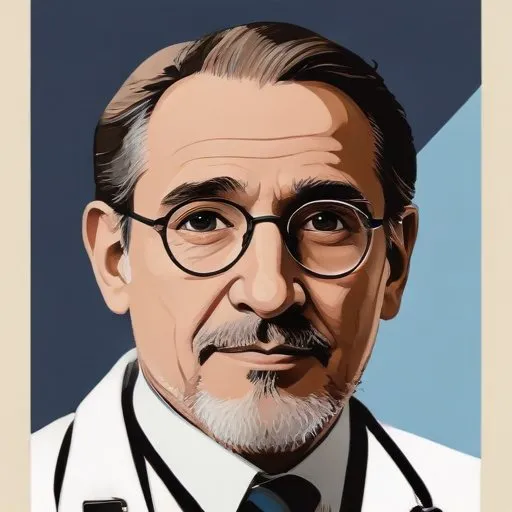
Bernard Nathanson: The Physician Who Sparked a Revolution in Abortion Rights
A Troubled Legacy: From Pro-Choice to Anti-Abortion Activist
Bernard Nathanson, a renowned American physician, is famously known for his instrumental role in shaping the abortion rights movement in the United States. As the co-founder of the National Association for the Repeal of Abortion Laws (NARAL), Nathanson played a pivotal role in the landmark Roe v. Wade case of 1973, which legalized abortion nationwide.
Early Life and Education
Born on July 31, 1926, in New York City, Nathanson came from a Jewish family with strong roots in the medical profession. His father, an obstetrician-gynecologist, likely inspired Nathanson's career path. He earned his undergraduate degree from Cornell University and later graduated with a medical degree from McGill University Faculty of Medicine in Montreal in 1949.
A Career of Contrasts
Nathanson's professional journey was marked by significant contradictory positions. Licensed to practice medicine in New York state in 1952, he became board-certified in obstetrics and gynecology in 1960. As the director of the Center for Reproductive and Sexual Health (CRASH), Nathanson oversaw the largest freestanding abortion facility in the world. However, in 1974, he penned a haunting admission: "I am deeply troubled by my own increasing certainty that I had in fact presided over 60,000 deaths."
From Pro-Choice to Anti-Abortion Advocate
Nathanson's transformative experience came with the advent of ultrasound technology in the 1970s. Witnessing a real-time abortion led him to reevaluate his stance on abortion rights. This epiphany sparked a radical shift in his beliefs, and he eventually became an anti-abortion activist. His narration of the controversial 1984 anti-abortion film "The Silent Scream" cemented his new position.
Philosophical Contributions and Beliefs
Nathanson's paradoxical journey raises questions about the complexities of moral conviction. His initial passion for abortion rights was driven by a desire to ensure women's reproductive freedom and autonomy. However, as he delved deeper into the issue, he began to grapple with the moral implications of terminating human life. His transformation serves as a testament to the power of introspection and the human capacity for growth and change.
Influence on Modern Society
Bernard Nathanson's legacy is multifaceted and far-reaching. His early advocacy for abortion rights contributed significantly to the Roe v. Wade decision, shaping the reproductive landscape in the United States. His subsequent conversion to anti-abortion activism sparked heated debates and reinvigorated the national conversation around abortion.
Personal Milestones and Key Life Events
- 1949: Earned medical degree from McGill University Faculty of Medicine
- 1952: Licensed to practice medicine in New York state
- 1960: Became board-certified in obstetrics and gynecology
- 1969: Co-founded NARAL (National Association for the Repeal of Abortion Laws)
- 1974: Wrote about his growing unease with abortion
- 1984: Narrated the film "The Silent Scream"
Historical Context and Legacy
Bernard Nathanson's life serves as a poignant reminder of the complexities of human conviction and the power of personal introspection. His journey, marked by contradictions and transformations, has left an indelible mark on the abortion rights debate in the United States. As we reflect on his legacy, we are compelled to confront the nuances of morality, the importance of self-reflection, and the enduring impact of individual actions on the broader social landscape.
FAQ
What was Bernard Nathansons role in the abortion debate?
Bernard Nathanson was an American physician and activist who played a key role in the abortion debate. He was a founder of NARAL (now NARAL Pro-Choice America) and later became a prominent anti-abortion activist, advocating for the rights of the unborn.
What was Bernard Nathansons most notable contribution to the abortion debate?
Bernard Nathansons most notable contribution to the abortion debate was his film The Silent Scream, which graphically depicted the process of abortion and helped to galvanize the anti-abortion movement. He also wrote several influential books on the subject, including Aborting America.
What motivated Bernard Nathansons conversion to anti-abortion activism?
Bernard Nathansons conversion to anti-abortion activism was motivated by his growing unease with the morality and ethics of abortion, as well as his concerns about the impact of abortion on womens health and the unborn. He came to see abortion as a fundamentally unjust and immoral practice.
How did Bernard Nathansons medical background inform his views on abortion?
Bernard Nathansons medical background informed his views on abortion by providing him with a deep understanding of human development and the biological realities of pregnancy and fetal life. He believed that abortion was a violation of the Hippocratic oath and a rejection of the fundamental principles of medical ethics.
What legacy did Bernard Nathanson leave behind in the abortion debate?
Bernard Nathanson left behind a legacy as a complex and influential figure in the abortion debate. His conversion to anti-abortion activism helped to shift public opinion and galvanize the anti-abortion movement, while his film and writings remain powerful arguments against abortion.