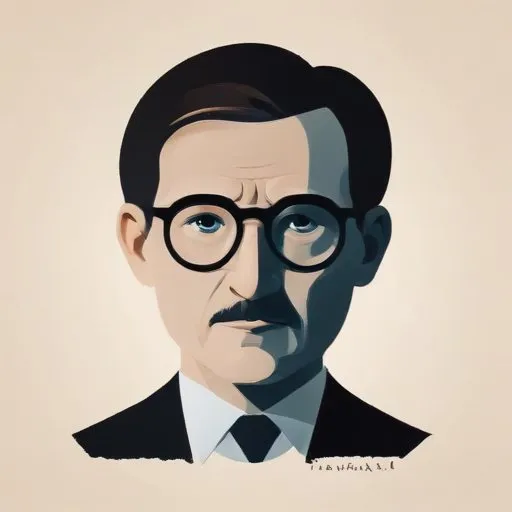
Berthold Grnfeld: The Pioneering Norwegian Psychiatrist and Sexologist
A Trailblazing Career in Forensic Psychiatry and Social Medicine
Berthold Grnfeld was a renowned Norwegian psychiatrist, sexologist, and professor of social medicine at the University of Oslo, who made significant contributions to the fields of forensic psychiatry, sexology, and social medicine. He was a recognized expert in examining insanity defense pleas and was often employed by Norwegian courts to provide expert testimony.
Early Life and Escape from the Holocaust
Born on January 22, 1932, in Bratislava, Czechoslovakia, Grnfeld's life took a dramatic turn in 1939, when he was just seven years old. Along with 34 other Jewish children, he was separated from his family as part of the Nansenhjelpen's effort to rescue them from the early manifestations of the Holocaust. The group of children was sent to Norway via Berlin, where they were told they would never see their parents again. Grnfeld's journey took him to Norway, where he was first placed in a Jewish children's home in Oslo, then lived with a Jewish family in Trondheim as a foster child, before returning to the orphanage.
War, Resistance, and Education
During the occupation of Norway, Grnfeld avoided capture and deportation by fleeing with members of the Norwegian Resistance in 1942 to neutral Sweden, where he stayed until the war ended. He returned to the children's home in 1946, and the Jewish community funded his education. Grnfeld earned his medical degree in 1960 and later met his future wife, Gunhild. In 1973, he was awarded his doctorate in medicine based on a dissertation on abortion, which would later influence the reform of abortion laws in Norway.
Academic Contributions and Expertise
Grnfeld's academic contributions spanned several areas, including sexology, forensic psychology, and social medicine. He was a prominent expert in examining insanity defense pleas and was frequently employed by Norwegian courts. His work also extended to advocacy and teaching, and he acted as a consultant on human relations and sexology for Oslo Helserd.
Pioneering Work in Abortion and Euthanasia
Grnfeld's dissertation on abortion was a landmark work that contributed significantly to the reform of abortion laws in Norway. His expertise in this area earned him recognition as a leading authority in the field. Additionally, his work on euthanasia shed light on the complex ethical and moral implications surrounding this controversial topic.
Personal Life and Legacy
Grnfeld and his wife had three children and six grandchildren. In 2005, his daughter Nina Grnfeld made a film,
Origin Unknown, about her efforts to research her father's background and heritage. This film provides a poignant and personal glimpse into Grnfeld's life and legacy.
Legacy and Impact
Berthold Grnfeld's legacy extends far beyond his academic contributions and expertise. His life story serves as a testament to the resilience of the human spirit in the face of adversity. His work continues to influence Norwegian society, and his pioneering efforts in forensic psychiatry, sexology, and social medicine have left an indelible mark on these fields.
- Born: January 22, 1932, Bratislava, Czechoslovakia
- Died: August 20, 2007
- Notable works: Dissertation on abortion, influential in reforming abortion laws in Norway
- Notable positions: Professor of social medicine, University of Oslo; expert witness in criminal cases; consultant on human relations and sexology, Oslo Helserd
Remembering a Life of Service and Contribution
Berthold Grnfeld's life was a testament to the power of human resilience, dedication, and service. Through his work, he has left an enduring legacy that continues to inspire and inform future generations of scholars, practitioners, and advocates.
FAQ
What were Berthold Grünfelds contributions to psychiatry?
Berthold Grünfeld was a renowned Norwegian psychiatrist and academic who made significant contributions to the field of psychiatry, particularly in the areas of psychotherapy and psychopharmacology. He is known for his work on the treatment of anxiety disorders and depression.
What was Berthold Grünfelds educational background?
Berthold Grünfeld received his medical degree from the University of Oslo and later specialized in psychiatry at the University of Copenhagen. He also held a doctorate in medicine from the University of Oslo.
What were Berthold Grünfelds academic affiliations?
Berthold Grünfeld held various academic positions throughout his career, including professor of psychiatry at the University of Oslo and director of the psychiatric hospital in Oslo.
What were Berthold Grünfelds publications and research focus?
Berthold Grünfeld published numerous papers and books on psychiatry, with a focus on psychotherapy, psychopharmacology, and anxiety disorders. He was also a frequent speaker at international conferences.
What was Berthold Grünfelds impact on Norwegian psychiatry?
Berthold Grünfelds work had a significant impact on the development of psychiatry in Norway, and he is considered one of the most influential Norwegian psychiatrists of his time. Sub-question: How did Berthold Grünfelds work influence Norwegian psychiatric practice?