


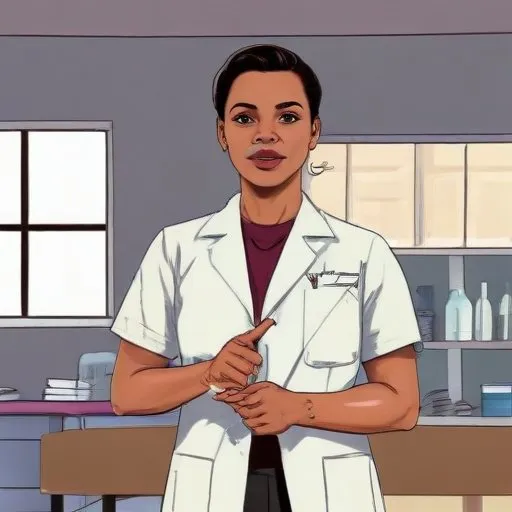
A pioneering physical therapist, inventor, and forensic scientist who developed innovative devices and techniques to aid disabled veterans and solve crimes. Her work improved lives and brought criminals to justice.
Bessie Blount Griffin, a trailblazing American writer, nurse, physical therapist, inventor, and forensic scientist, left an indelible mark on her respective fields. Known for her innovative approaches to rehabilitation and her groundbreaking inventions, Griffin's legacy continues to inspire and empower individuals across the globe.
Born on November 24, 1914, in Hickory, Virginia, Griffin grew up in a community that valued education. Despite the limited resources available to African American children at the time, Griffin's determination and perseverance led her to attend Diggs Chapel, a one-room schoolhouse built by the local black community.
Griffin's early education was marked by challenges, including a lack of textbooks and a teacher who reprimanded her for writing with her left hand. Instead of being deterred, Griffin took this as an opportunity to develop her ambidexterity, eventually learning to write with both hands, and even with her feet and teeth.
Griffin's diverse career spanned multiple fields, including nursing, physical therapy, and forensic science. She worked as a nurse during World War II, where she developed a deeper understanding of the rehabilitation process. This experience sparked her interest in creating devices that could aid individuals with disabilities.
One of Griffin's most notable inventions was a hygienic device that allowed individuals with disabilities to feed themselves. This invention earned her a patent in 1951 and was later adapted for use in hospitals and rehabilitation centers.
Griffin's contributions to the field of rehabilitation were instrumental in improving the quality of life for individuals with disabilities. Her inventions and innovative approaches paved the way for future generations of healthcare professionals and inventors.
Moreover, Griffin's legacy extends beyond the medical community. She serves as a powerful symbol of determination and perseverance, inspiring individuals from all walks of life to pursue their passions and overcome obstacles.
Griffin's impressive career was marked by numerous awards and honors, including the American Legion Auxiliary's Certificate of Appreciation and the New Jersey State Nurses Association's Honorary Membership.
In addition to her many professional accomplishments, Griffin's personal life was marked by milestones such as her marriage to her husband, John Griffin, and her ability to overcome the challenges posed by her segregated education.
Throughout her life, Griffin embodied a strong sense of determination and perseverance. Her willingness to challenge the status quo and push boundaries reflects her unwavering commitment to improving the lives of others.
Griffin's approach to rehabilitation emphasized the importance of empowering individuals with disabilities, promoting independence, and fostering a sense of self-worth. Her philosophical contributions continue to inspire healthcare professionals and individuals with disabilities alike.
Bessie Blount Griffin's remarkable life and career serve as a testament to the power of innovation, determination, and perseverance. Her groundbreaking inventions, innovative approaches to rehabilitation, and unwavering commitment to improving the lives of others have left a lasting impact on modern society.
As we reflect on Griffin's incredible legacy, we are reminded of the importance of promoting diversity, inclusivity, and empowerment. Her story serves as a powerful reminder of the boundless potential that lies within each individual, waiting to be tapped and harnessed.
Today, Griffin's legacy continues to inspire new generations of healthcare professionals, inventors, and individuals with disabilities, ensuring that her groundbreaking work will have a lasting impact on the world.
Bessie Blount Griffin's remarkable life and career serve as a shining example of innovation, determination, and perseverance. Her groundbreaking contributions to the fields of rehabilitation and forensic science continue to inspire and empower individuals across the globe.
93 Years Old
A pioneering Supreme Court Justice and women's rights advocate who championed gender equality and became a cultural icon.
96 Years Old
First female Supreme Court Justice in the United States, serving from 1981 to 2006 and playing a crucial role in many landmark cases, particularly those involving gender equality and reproductive rights.
Born in 1908
A trailblazing lawyer and civil rights champion who broke racial barriers in the US justice system, serving as the first African American on the Supreme Court. He fought tirelessly for equality and justice, leaving a lasting impact on American history.
Born in 1913
Refused to give up her seat on a Montgomery, Alabama bus to a white person, sparking the Montgomery Bus Boycott, a pivotal event in the Civil Rights Movement.
97 Years Old
A prominent leader in the civil rights movement, advocating for racial equality and social justice through nonviolent means, leaving a lasting impact on American history.
Born in 1884
A humanitarian and politician who championed human rights, women's empowerment, and social justice, leaving a lasting impact on American politics and international relations.
