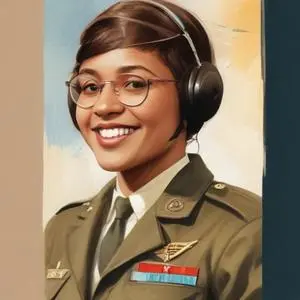
Bessie Coleman: The Pioneering Aviatrix Who Defied Gravity and Convention
The First African American and Native American Woman to Take to the Skies
Bessie Coleman was a trailblazing American civil aviator who broke down barriers of race and gender to earn her international pilot's license in 1921. She was the first African American and Native American woman to achieve this remarkable feat, paving the way for future generations of women and minorities in aviation.
Early Life and Struggle for Education
Born on January 26, 1892, in Atlanta, Texas, Coleman grew up in a family of sharecroppers, where she was expected to work in the cotton fields from a young age. Despite the odds, she was determined to education herself and attended a segregated one-room school, where she excelled in math and developed a passion for reading.
The Call of the Skies
Coleman's fascination with flying began when she was working as a manicurist in Chicago. She was captivated by the stories of World War I pilots and became determined to learn how to fly. However, her dreams were met with resistance, as African Americans, Native Americans, and women were barred from flight training in the United States.
Overcoming Obstacles
Undeterred, Coleman saved up money and secured sponsorships to travel to France, where she enrolled in the Fdration Aronautique Internationale (FAI) and earned her international pilot's license on June 15, 1921. Her achievement made headlines across the globe, earning her the nickname "Queen Bess" and "Brave Bessie."
A Career of Daring Feats and Advocacy
Coleman returned to the United States and became a high-profile pilot, performing in aerial shows and captivating audiences with her daring stunts. She used her platform to advocate for African American involvement in aviation, hoping to start a school for African American fliers.
Personal Milestones and Key Life Events
- June 15, 1921: Earns international pilot's license from the Fdration Aronautique Internationale (FAI)
- 1922: Becomes the first African American woman to fly in an American air show
- 1923: Plans to start a school for African American fliers
Legacy and Influence
Tragically, Coleman's life was cut short in a plane crash on April 30, 1926, at the age of 34. However, her pioneering spirit and determination have inspired countless individuals, including African American pilots and women in aviation. Her legacy extends far beyond her achievements in the skies, serving as a beacon of hope and empowerment for marginalized communities.
Inspirational Quotes
- "I decided blacks should not have to experience the difficulties I had faced, so I decided to open a flying school and teach them."
- "The air is the only place free from prejudices."
Honors and Recognition
In recognition of her groundbreaking achievements, Coleman has been posthumously honored with numerous awards and accolades, including:
- Inducted into the National Aviation Hall of Fame in 2006
- Featured on a U.S. Postal Service stamp in 1995
- Recognized as a Pioneer in Aviation by the Federal Aviation Administration (FAA)
Bessie Coleman's remarkable story serves as a testament to the power of perseverance, courage, and determination, inspiring generations to pursue their dreams, no matter how impossible they may seem.
FAQ
Who was the first African American female pilot?
Bessie Coleman was a pioneering American pilot who became the first African American woman to earn a pilots license in 1921. Born in 1892, Coleman overcame racial and gender barriers to achieve her dream of flying.
What challenges did Bessie Coleman face as a pilot?
Bessie Coleman faced numerous challenges as a pilot, including racism, sexism, and lack of opportunities. She was rejected by American flight schools due to her race and gender, and had to travel to France to earn her pilots license.
How did Bessie Coleman die?
Tragically, Bessie Coleman died in a plane crash on April 30, 1926, at the age of 34, while preparing for an aerial show. Her legacy as a trailblazing pilot continues to inspire generations.
What is Bessie Colemans legacy?
Bessie Colemans legacy is one of determination and perseverance. She paved the way for African American women in aviation and inspired others to pursue careers in flying. Today, she is celebrated as a pioneer and a role model.
What is the Bessie Coleman Foundation?
The Bessie Coleman Foundation is a non-profit organization dedicated to preserving Colemans legacy and promoting diversity in aviation. The foundation provides scholarships and educational programs to support young people interested in flying and aerospace careers