


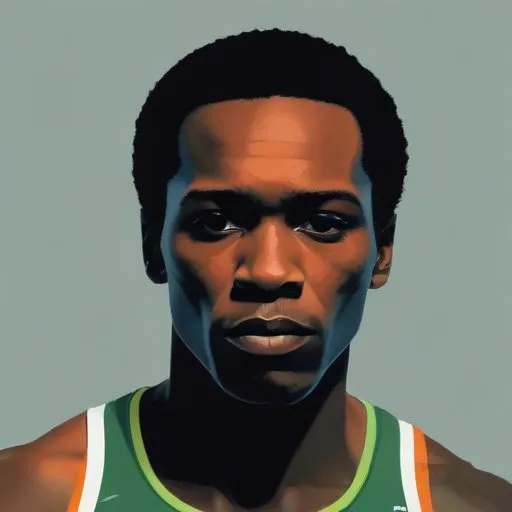
A pioneering athlete and writer who broke racial barriers in South African sports journalism, known for his courageous reporting and trailblazing athletic feats.
Bevil Rudd is widely regarded as one of the greatest athletes to have ever emerged from South Africa, famously taking home the gold medal in the 400 meters at the 1920 Olympic Games in Antwerp, Belgium. This remarkable achievement not only cemented his status as a national hero but also paved the way for future generations of South African athletes to follow in his footsteps.
Rudd was born on October 5, 1894, in Kimberley, South Africa, to Henry Percy Rudd and Mable Mina Blyth. His paternal grandfather, Charles Rudd, was a co-founder of the De Beers diamond mining company, while his maternal grandfather, Captain Matthew Smith Blyth, served as the chief magistrate of the Transkei. Rudd's impressive lineage laid the foundation for his future success.
During his schooling at St. Andrews College in Grahamstown, Rudd excelled both academically and athletically, earning a scholarship to the University of Oxford. This prestigious opportunity allowed him to further develop his athletic prowess while pursuing higher education.
During World War I, Rudd served bravely and was awarded the Military Cross for his courage under fire. After the war, he completed his studies in England and returned to South Africa, where he began working as a sports journalist.
Rudd's crowning achievement came at the 1920 Olympic Games, where he dominated the 400 meters event, claiming the gold medal with a time of 49.6 seconds. This remarkable feat made him an overnight sensation in South Africa and solidified his position as a national hero.
In the subsequent years, Rudd continued to excel in athletics, competing in various events and setting multiple records. His dedication to the sport earned him recognition as one of the pioneers of South African athletics.
In 1926, Rudd married Ursula Mary Knight, daughter of the Italian Consul to Cape Town, and they had two sons, Bevil John Blyth Rudd and Clifford Robin David Rudd, who would go on to become a notable South African cricketer.
Rudd's journalistic career flourished, and he became an editor for The Daily Telegraph in 1930, a position he held until after World War II.
Bevil Rudd's remarkable achievements on the track paved the way for future generations of South African athletes. His inspiring story serves as a testament to the power of dedication, perseverance, and hard work.
Rudd's legacy extends beyond the realm of athletics, as he played a significant role in promoting sports journalism in South Africa. His contributions to the field have been recognized and celebrated by sports enthusiasts around the world.
Today, Bevil Rudd's name is synonymous with excellence, courage, and determination. His remarkable life serves as a shining example of what can be achieved through sheer willpower and a passion for one's craft.
Tragically, Rudd's life was cut short when he passed away on February 2, 1948, at the age of 53. Despite his untimely demise, his legacy continues to inspire and motivate athletes, journalists, and individuals from all walks of life.
34 Years Old
South Africa's fastest man, a world champion and record-holder in the 400 meters, known for his incredible speed and dominance on the track.
88 Years Old
A Dutch professional footballer who played as a midfielder and earned 6 caps for the Netherlands national team, known for his skills on the field.
Born in 1920
Notable American football player and coach who led the University of Wisconsin to a Rose Bowl victory in 1953, and later coached in the NFL.
