


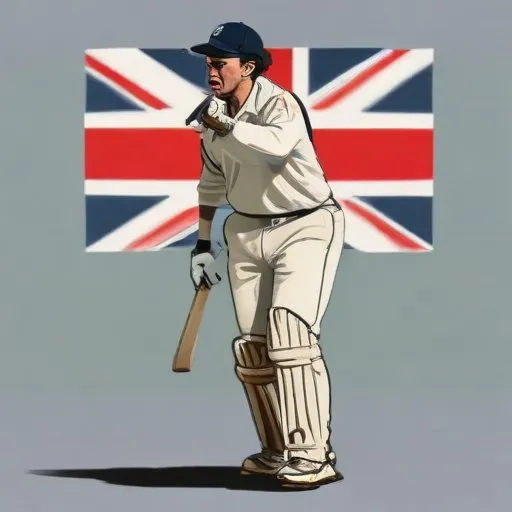
A dominant fast bowler of the 1930s, known for his pace, accuracy, and ability to move the ball off the seam, taking 163 wickets in 15 Test matches.
Bill Bowes was a renowned English professional cricketer who made a name for himself as a right-arm fast bowler and a right-handed tail-end batsman. With a remarkable career spanning from 1929 to 1947, he played in 372 first-class matches, taking 1,639 wickets and scoring 1,531 runs.
Bowes played for Yorkshire and Marylebone Cricket Club (MCC), and was a member of the ground staff at MCC for ten seasons. He made fifteen appearances for England in Test cricket, including the infamous 1932-1933 Bodyline series. During his Test career, he took 68 wickets at an impressive average of 22.33.
Bowes represented Yorkshire in thirteen County Championship seasons, with the team winning the championship eight times during that period. The strong attack led by Hedley Verity and himself was a significant factor in Yorkshire's success.
During World War II, Bowes was commissioned in the British Army as a gunnery officer and served in North Africa. He was captured by the enemy in 1942, along with over 30,000 other Allied troops, after the fall of Tobruk. Bowes spent three years in Italian and German prisoner-of-war camps, where he lost over four stone in weight.
After the war, Bowes continued to play cricket for two seasons, but his experiences in the war had taken a toll on his body, and he could only bowl at medium pace. He eventually retired from playing and went on to become a coach with Yorkshire and a cricket writer for The Yorkshire Post.
Bill Bowes was born on 25 July 1908 in Elland. His father, John Bowes, was a railwayman whose job with the Lancashire and Yorkshire Railway caused the family to move frequently during Bill's childhood.
Bowes' remarkable career was marked by several awards and honors, including his inclusion in the Yorkshire Cricket Club's Hall of Fame.
Bill Bowes' contributions to the world of cricket are still remembered and revered today. He will always be remembered as one of the greatest fast bowlers in English cricket history.
Born in 1903
A dominant right-handed batsman and successful coach who held multiple records for his impressive cricketing career, including the highest individual Test score for England.
Born in 1916
A highly skilled batsman and captain of the English cricket team, known for his exceptional technique and leadership during the post-war era.
66 Years Old
A former All Blacks captain and chairman of the New Zealand Rugby Union, known for his leadership and contributions to the sport's governance.
Born in 1894
A renowned opening batsman who dominated cricket in the early 20th century, known for his exceptional defensive skills and record-breaking partnerships.
Born in 1900
A dominant left-handed batsman and coach who played a key role in England's cricket team during the 1920s and 1930s, known for his aggressive style and innovative tactics.
Born in 1905
A talented English cricketer who played for Kent County Cricket Club and was known for his impressive bowling skills, taking over 1,000 wickets in his career.
Born in 1902
A decorated war hero and talented all-rounder cricketer who played for both Australia and England, known for his aggressive batting style and effective medium-pace bowling.
Born in 1900
A captain of the English cricket team who introduced the infamous "Bodyline" tactic, sparking controversy and changing the game's dynamics. He was a skilled batsman and lawyer, too.
