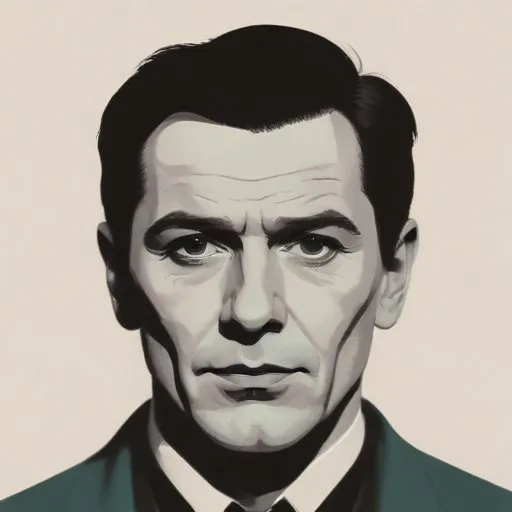
Bill Bryden: A Visionary Director and Screenwriter
A Legacy of Innovative Storytelling
Bill Bryden was a Scottish stage and film director and screenwriter, renowned for his versatility and creative vision. With a career spanning over four decades, he left an indelible mark on the world of theatre, film, and television, earning him a Commander of the Order of the British Empire (CBE) in 1993.
Early Life and Career
Born on 12 April 1942, Bryden began his journey in the world of television as a trainee with Scottish Television. He then worked as an assistant director at the Belgrade Theatre, Coventry, in 1965, before moving on to become a director at the Royal Court Theatre (1967-1971) and the Royal Lyceum Theatre, Edinburgh (1972-1975). His early career was marked by a series of notable appointments, including Associate Director at the National Theatre (1975-1985) and visiting director in Glasgow and New York.
Diverse Range of Work
Bryden's repertoire is a testament to his boundless creativity and adaptability. He directed
Leo Janek's The Cunning Little Vixen at the Royal Opera House in 1990, showcasing his talent for opera direction. He also worked extensively in film and television, serving as a screenwriter, director, and executive producer on various projects. Some notable works include
Ill Fares the Land (1983),
The Holy City (1986), and
Aria (1987). His work in theatre is just as impressive, with credits like
Kidnapped (1972) and
Romeo and Juliet (1974) under his belt.
Personal Life and Legacy
Bryden's personal life was marked by two significant relationships. He married the Hon. Deborah Morris, a potter, in 1970, and they had two children, Dillon and Mary Kate, before divorcing in 1988. He later met actress Angela Douglas at a dinner party and they were married at City Hall, New York City, in February 2009. Bryden passed away on 5 January 2022, at the age of 79, leaving behind a rich legacy of innovative storytelling and creative direction.
Awards and Honors
* Commander of the Order of the British Empire (CBE) in 1993
Notable Works
- Ill Fares the Land (1983) - Film
- The Holy City (1986) - Film
- Aria (1987) - Film
- Kidnapped (1972) - Theatre
- Romeo and Juliet (1974) - Theatre
- Benny Lynch, Scenes from a Short Life (1975) - Play
- Willie Rough (1976) - BBC Play for Today
- Old Movies (1977) - Film
- The Long Riders (1980) - Film
- Civilians (1981) - Play
Oral History Interview
In 2009, National Life Stories conducted an oral history interview with Bill Bryden, which is now part of the Legacy of the English Stage Company collection held by the British Library. This interview provides valuable insights into Bryden's life and career, offering a unique perspective on his experiences and achievements.
FAQ
What was Bill Brydens most notable work as a director?
Bill Brydens most notable work as a director was the 1978 television series The View from Daniel Pike, which won several awards and critical acclaim.
What was Bill Brydens contribution to Scottish theatre?
Bill Bryden was a pioneering figure in Scottish theatre, known for his innovative and provocative productions. He was the director of the Edinburgh Traverse Theatre and later became the artistic director of the Royal Lyceum Theatre.
What awards did Bill Bryden win for his work?
Bill Bryden won several awards for his work, including the BAFTA TV Award for Best Drama Serial for The View from Daniel Pike and the Society of West End Theatre Award for Best Director for his production of Benny Lynch.
What was Bill Brydens approach to storytelling?
Bill Bryden was known for his unique approach to storytelling, often blending drama and documentary styles to create innovative and thought-provoking productions.
What is Bill Brydens legacy in Scottish cultural life?
Bill Brydens legacy in Scottish cultural life is significant, having inspired a generation of actors, directors, and writers. He is remembered for his innovative productions and his contribution to the development of Scottish theatre.