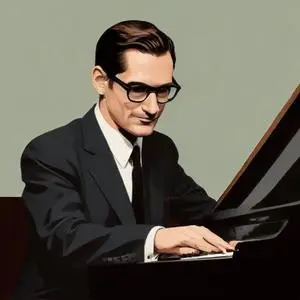
The Poetic Pianist: Bill Evans and His Enduring Legacy in Jazz
A Harmony of Innovation and Expression
Bill Evans is revered as one of the most influential jazz pianists of all time, celebrated for his sublime mastery of harmony, innovative chord voicings, and introspective, singing melodic lines. His distinctive playing style, characterized by lyricism, subtlety, and nuance, has inspired generations of jazz musicians and continues to shape the genre.
Early Life and Education
Born on August 16, 1929, in Plainfield, New Jersey, Evans was drawn to music from an early age. He began his musical journey studying classical piano at the age of 6 and later pursued a degree in composition at Southeastern Louisiana University and the Mannes School of Music in New York City. This classical foundation would later inform his jazz playing, imbuing it with a sense of sophistication and elegance.
Breaking Ground with Miles Davis
In 1958, Evans joined
Miles Davis's sextet, a collaboration that would prove pivotal in his career. During this period, they recorded the iconic album
Kind of Blue, which remains the bestselling jazz album of all time. This experience not only showcased Evans's technical prowess but also marked the beginning of his exploration of modal jazz.
The Trio Years
In 1959, Evans left the Davis band to form his own trio with bassist Scott LaFaro and drummer Paul Motian. This group's innovative and introspective playing style would redefine the jazz trio format. Tragically, LaFaro's life was cut short in a car accident in 1961, just 10 days after their legendary engagement at New York's Village Vanguard jazz club. Evans would later reunite with Motian, and their trio's 1961 recordings,
Sunday at the Village Vanguard and
, remain testaments to the trio's groundbreaking work.
A Solo Journey and Collaborations
In 1963, Evans recorded the groundbreaking solo album Conversations with Myself, which utilized overdubbing technology to create a rich, layered sound. This project marked a new direction in his career, as he began to explore the potential of solo performance. Evans also collaborated with other notable musicians, including singer Tony Bennett, with whom he recorded two critically acclaimed albums, The Tony Bennett/Bill Evans Album (1975) and Together Again (1977).
Legacy and Influence
Evans's impact on modern jazz is immeasurable. His compositions, such as "Waltz for Debby" and "Time Remembered," have become jazz standards, performed and recorded by countless artists. Throughout his career, he received 31 Grammy nominations and seven awards, cementing his status as a jazz legend. In 1980, Evans passed away, but his music continues to inspire and influence new generations of musicians and listeners alike.
Awards and Honors
- 31 Grammy nominations
- Seven Grammy awards
- Inducted into the DownBeat Jazz Hall of Fame
Quotes and Memorable Sayings
"The gift of playing is the gift of sharing."
"Music is not just a job, it's a way of life."
Evans's poetic approach to music has left an indelible mark on the jazz world. As we reflect on his life and legacy, we are reminded of the power of innovation, collaboration, and creative expression.
FAQ
What style of jazz piano did Bill Evans play?
Bill Evans was a prominent pianist and composer in the cool jazz and modal jazz genres.
What was Bill Evans most famous group?
Bill Evans most famous group was the Bill Evans Trio, featuring bassist Scott LaFaro and drummer Paul Motian.
What is Bill Evans most famous composition?
Bill Evans most famous composition is the jazz standard Waltz for Debby, which has been covered by numerous artists.
How did Bill Evans personal struggles influence his music?
Bill Evans music was heavily influenced by his personal struggles with addiction and depression, often conveying a sense of melancholy and introspection.
What is Bill Evans legacy in the jazz community?
Bill Evans is revered as a pioneering pianist and composer who expanded the possibilities of jazz, influencing generations of musicians.