


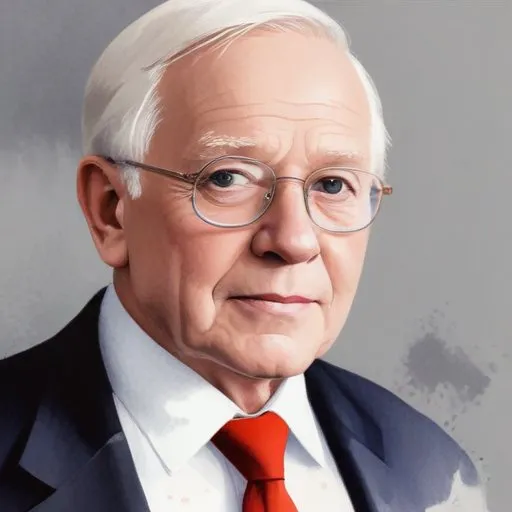
A renowned expert in labor law and human rights, known for his significant contributions to the development of anti-apartheid legislation in South Africa.
Sir Bob Hepple, a renowned South African-born legal academic, left an indelible mark on the fields of labour law, equality, and human rights. As a champion of social justice, he fearlessly fought against apartheid, racial segregation, and discrimination, earning himself a revered place in the annals of history.
Born on August 11, 1934, in South Africa, Hepple was the son of Alexander Hepple, the leader of the South African Labour Party, and Josephine Zwarenstein, a Dutch Jew. Hepple's educational journey took him to Jeppe High School for Boys (1947-1951), the University of the Witwatersrand (B.A., 1954, LLB cum laude, 1957), and later to the University of Cambridge (LLB, 1966, LLD, 1993).
A committed advocate for labour rights and human rights, Hepple's professional journey began as a lecturer in law at the University of the Witwatersrand (1959-1962) and practising as an Advocate at the Johannesburg Bar (1962-1963). During this period, he actively participated in the underground struggle against apartheid, working closely with the South African Congress of Trade Unions.
In 1962, Hepple served as legal adviser to Nelson Mandela during his trial for incitement. Later, he was arrested at Liliesleaf Farm, Rivonia, along with other prominent leaders of the African National Congress and Communist Party, on July 11, 1963. Despite being held in 90-day detention without trial, Hepple managed to escape to England in November 1963.
Throughout his illustrious career, Hepple championed the causes of labour law, equality, and human rights, inspiring generations of scholars, activists, and lawyers. His tireless efforts contributed significantly to the fight against apartheid, paving the way for a more just and equitable society.
In recognition of his outstanding contributions, Hepple was appointed an Officer of the Order of the Lion of Gold in 1993.
Sir Bob Hepple passed away on August 21, 2015, leaving behind a rich legacy of courage, conviction, and unwavering commitment to the pursuit of social justice.
Born in 1918
A South African lawyer and politician who fought against apartheid, becoming the country's first black president and a symbol of racial reconciliation, earning a Nobel Peace Prize. He's a beacon of hope and freedom.
Born in 1917
A leading figure in the fight against apartheid, he served as President of the African National Congress and played a crucial role in mobilizing international opposition to the racist regime.
Born in 1912
A leading figure in the fight against apartheid, he was a co-founder of the African National Congress and spent 25 years in prison for his activism. He played a key role in shaping South Africa's transition to democracy.
Born in 1926
A Lithuanian-born South African revolutionary who fought against apartheid, leading the armed wing of the African National Congress and playing a key role in the country's transition to democracy.
97 Years Old
A South African anti-apartheid activist who spent 26 years in prison, including 18 years on Robben Island with Nelson Mandela, fighting for racial equality and democracy.
94 Years Old
A champion of human rights and democracy, he played a crucial role in shaping South Africa's constitution and transitioning the country from apartheid to democracy. He's revered for his commitment to justice and equality.
92 Years Old
A South African anti-apartheid activist who served as a Minister of Education, known for his efforts to reform the country's education system and promote human rights.
