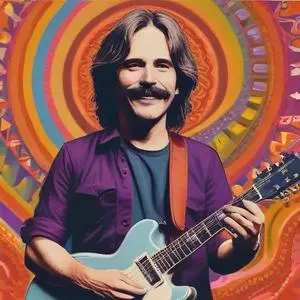
Bob Weir: The Rhythmic Heart of the Grateful Dead
A Legendary Musician and Songwriter
Bob Weir is an American musician and songwriter, best known as a founding member of the iconic rock band, the Grateful Dead. With a career spanning over five decades, Weir has been instrumental in shaping the sound and spirit of the Grateful Dead, playing mostly rhythm guitar and singing many of the band's rock and roll and country-western songs.
Early Life and Influences
Born on October 16, 1947, in San Francisco, California, Weir was adopted by Frederic Utter Weir and Eleanor nee Cramer Weir, and grew up in Atherton. He began playing guitar at the age of 13, after trying his hand at the piano and trumpet. Weir's early life was marked by struggles in school due to undiagnosed dyslexia, which led to him being expelled from several schools, including Menlo School in Atherton and Fountain Valley School in Colorado.
The Grateful Dead and Beyond
Weir's musical journey took off on New Year's Eve in 1963, when he met
Jerry Garcia, Ron McKernan, and
Bill Kreutzmann, with whom he formed the Grateful Dead. The band's unique blend of rock, folk, and psychedelia catapulted them to fame in the 1960s and 1970s. After the Grateful Dead disbanded in 1995, Weir went on to perform with The Other Ones, later known as The Dead, and founded and played in several other bands, including Kingfish, the Bob Weir Band, Bobby and the Midnites, Scaring the Children, RatDog, and Furthur.
Philosophical Contributions and Beliefs
Weir's music and philosophy are deeply intertwined with the counterculture movement of the 1960s. He has been an advocate for social and environmental activism, often incorporating themes of love, peace, and freedom into his music. Weir's dedication to his craft and his community has earned him a reputation as a true artist and a champion of social change.
Influence on Modern Society
The Grateful Dead's music and message have had a profound impact on modern society. Their live performances, known as "Deadheads," have become a cultural phenomenon, fostering a sense of community and camaraderie among fans. Weir's music has also inspired countless other artists, including Phish,
Dave Matthews Band, and Widespread Panic, who have followed in the Grateful Dead's footsteps.
Career Highlights and Major Works
- Inducted into the Rock and Roll Hall of Fame as a member of the Grateful Dead in 1994
- Released several solo albums, including "Ace" and "Heaven Help the Fool"
- Toured extensively with the Grateful Dead and his other bands, performing at iconic venues such as Woodstock and the Fillmore
- Collaborated with other legendary musicians, including Bob Dylan and Neil Young
Quotes and Memorable Sayings
- "The Grateful Dead is not just a band, it's a way of life."
- "Music is the easiest way to get in touch with your emotions and your soul."
Historical Context and Legacy
Bob Weir's contributions to the world of music and beyond are immeasurable. As a founding member of the Grateful Dead, he has left an indelible mark on the music industry and popular culture. Weir's music and message continue to inspire new generations of fans, solidifying his place as a true American music icon.
FAQ
What is Bob Weirs role in the Grateful Dead?
Bob Weir is a founding member and guitarist of the Grateful Dead, one of the most influential rock bands of all time.
What other bands has Bob Weir been part of?
Bob Weir has been part of several bands, including RatDog, Phil Lesh and Friends, and Furthur, in addition to his work with the Grateful Dead.
What are Bob Weirs most popular songs?
Bob Weir has written or co-written many iconic songs, including Truckin, Sugar Magnolia, and Cassidy.
Has Bob Weir won any awards?
Bob Weir has won several awards, including a Grammy Lifetime Achievement Award and induction into the Rock and Roll Hall of Fame with the Grateful Dead.
What is Bob Weirs current music project?
Bob Weir continues to tour and record music with his band, Dead & Company, which features former Grateful Dead members and other musicians.