


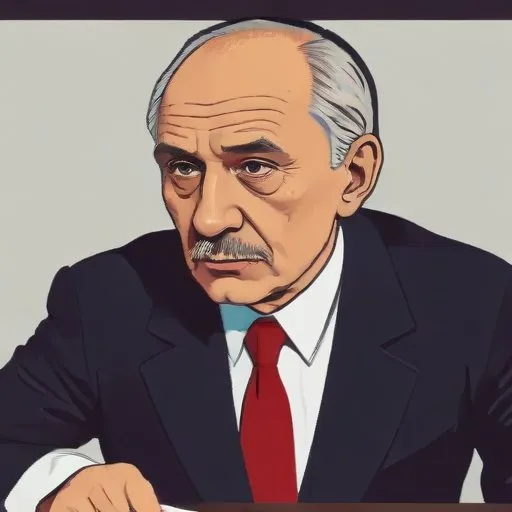
A Soviet philosopher, psychologist, and author who developed the concept of social psychology and wrote influential works on the human psyche, exploring the relationship between individual and society.
Boris Parygin, a renowned Russian philosopher and sociologist, is widely recognized as one of the founders of social psychology. His groundbreaking work in the field has left an indelible mark on the scientific community, shaping the course of social psychology and its applications.
Parygin's academic journey began in 1948 when he enrolled at Saint Petersburg State University to study philosophy. He graduated with distinction in 1953 and went on to defend his thesis on the problem of social mood in 1961. This marked the beginning of his prolific career in social psychology.
Parygin's most significant contributions to social psychology include his work on the history, methodology, and theory of the field. His research focused on the philosophical and psychological problems of social psychology, earning him recognition as a specialist in the sphere.
In 1965, Parygin's first monograph, Social Psychology as a Science, was published, becoming a rare and valuable resource in the field. The revised edition, published in 1967, was translated into multiple languages, including Czech, Bulgarian, Portuguese, and Spanish, and made available in 15,000 copies.
In 1971, his book The Basics of Socio-Psychological Theory was published, presenting his concept of the main social and psychological problems, with a focus on personality and human communication. This work further solidified his reputation as a leading authority in social psychology.
In 1968, Parygin became the head of the Philosophy Department at Herzen University, where he established the laboratory of social and psychological studies and social psychology faculty – the first of its kind in the Soviet Union. This institution attracted prominent scientists, including Andreeva G. M., Bodalev A. A., Gumilev L. N., and many others.
Parygin's editorial work on various books also contributed significantly to the advancement of social psychology. His leadership and vision helped shape the field, inspiring future generations of researchers and scholars.
Throughout his career, Parygin was recognized for his contributions to social psychology, earning him membership in various international academies. His work continues to influence the field, leaving a lasting legacy in the world of social psychology.
Parygin's work was characterized by a deep understanding of the interplay between social and psychological factors. He believed in the importance of addressing the complexities of human communication and personality, laying the groundwork for future research in these areas.
Through his groundbreaking research and institutional leadership, Parygin has left an indelible mark on the field of social psychology. His work continues to inspire and inform researchers, scholars, and practitioners, ensuring his legacy as a visionary in the field.
Born in 1896
A renowned Italian poet and translator, celebrated for his unique and expressive style that explores the human condition, earning him the Nobel Prize in Literature.
Born in 1921
A Soviet physicist and dissident who advocated for human rights and nuclear disarmament, earning a Nobel Peace Prize in 1975. He's known for his courageous stance against the Soviet regime, promoting peace and democracy.
95 Years Old
The last leader of the Soviet Union, who introduced reforms that led to the end of the Cold War and the collapse of communism, earning a Nobel Peace Prize. He's known for his policies of glasnost and perestroika, which transformed the Soviet Union and the world.
Born in 1875
A Russian journalist and politician who served as the Soviet Union's first Commissar of Enlightenment, responsible for education and culture, and was a key figure in the development of Soviet arts and literature.
Born in 1888
A prominent figure in the Russian Revolution, he was a key architect of the Soviet economy and a vocal critic of Stalin's regime, ultimately falling victim to his purges.
Born in 1870
Founder of the world's first socialist state, leading the Bolshevik Revolution and establishing the Soviet Union, known for his radical Marxist ideology and authoritarian rule.
