


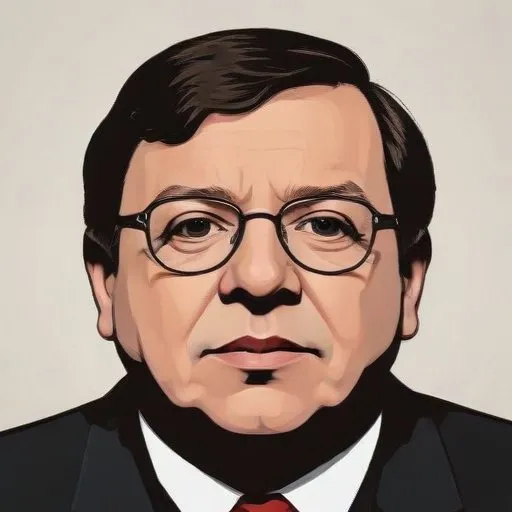
The 12th Taoiseach of Ireland, serving from 2008 to 2011, led the country through a severe economic crisis and implemented austerity measures to address the situation. He's also known for his role in shaping Ireland's economy and politics.
Brian Cowen is a name synonymous with Irish politics, a man who held the reins of power as Taoiseach and Leader of Fianna Fáil from 2008 to 2011. During his tumultuous tenure, Cowen navigated the country through the depths of the Irish financial and banking crises, a period that would forever define his legacy.
Born on January 10, 1960, in Tullamore, County Offaly, Cowen came from a political family. His father, Bernard Cowen, was a Fianna Fáil TD and Senator, and the family owned a public house, butcher shop, and undertaking business in Clara. This instilled in Cowen a strong sense of public service and a commitment to his community.
As Minister for Finance from 2004 to 2008, Cowen played a crucial role in shaping Ireland's economic policy. However, it was his failure to stem the tide of the financial crisis, which began weeks after he took office as Taoiseach, that would tarnish his reputation. The Irish Government's formal request for financial aid from the European Union and the International Monetary Fund was seen as a national humiliation, and Cowen's leadership was widely criticized.
Cowen's tenure as Taoiseach was marked by controversy, with public support for Fianna Fáil plummeting to record lows. His approval rating hit an all-time low of 8%, and he was eventually forced to resign as Leader of Fianna Fáil in January 2011. The Irish Independent would later label him "the worst Taoiseach in the history of the State."
Throughout his career, Cowen held firm to his commitment to social justice and equality. As a member of Fianna Fáil, he subscribed to the party's core values of Irish republicanism and liberal democracy. Despite the criticisms he faced, Cowen remained steadfast in his belief that public service was essential to creating a better Ireland.
Brian Cowen's legacy continues to shape Irish politics and society. His tenure as Taoiseach highlights the importance of effective crisis management and the need for political leaders to prioritize the well-being of their citizens. While his time in office was marked by controversy, Cowen's commitment to public service remains an inspiration to future generations of Irish politicians.
Since leaving politics in 2011, Cowen has maintained a low profile. While his political legacy remains a subject of debate, Cowen's contributions to Irish society are undeniable. As the country continues to navigate the complexities of modern politics, Brian Cowen's story serves as a reminder of the importance of responsible leadership and the need for accountability.
Brian Cowen's tumultuous tenure as Taoiseach may have defined his legacy, but it is only part of the story. As a committed public servant, Cowen's contributions to Irish society extend beyond his time in office. While his leadership was marked by controversy, Cowen's commitment to social justice and equality remains an inspiration to future generations of Irish politicians.
75 Years Old
The 11th Taoiseach of Ireland, a skilled politician who played a crucial role in the Northern Ireland peace process, and oversaw a period of rapid economic growth in Ireland.
75 Years Old
The 13th Taoiseach of Ireland, a teacher-turned-politician who led the country from 2011 to 2017, is most known for his efforts to rebuild the Irish economy after a severe financial crisis. He also played a key role in passing same-sex marriage legislation.
71 Years Old
A former Irish Labour Party leader who served as Deputy Prime Minister and Minister for Foreign Affairs and Trade, known for his efforts to stabilize Ireland's economy during the financial crisis.
61 Years Old
A former Irish Minister for Social and Family Affairs, known for her advocacy on social welfare and disability rights. She was the first woman to hold the position.
