


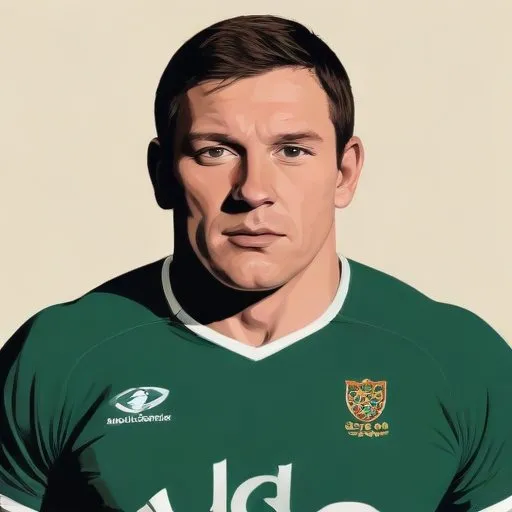
A former England rugby union player who won 64 caps and was a key figure in the team that won the 2003 Rugby World Cup, known for his tough and physical playing style.
Brian Moore, a luminary in the world of rugby, is renowned for his exceptional skills on the field and his unwavering dedication to the sport. As a former English rugby union footballer, he made a name for himself as a formidable hooker, representing England in 64 internationals, including three Rugby World Cups.
Born on January 11, 1962, in Birmingham, Moore's early life was marked by adversity. Abandoned by his father, he was given up for adoption to Methodist lay preachers Ralph and Dorothy Moore, who raised him in Halifax, West Yorkshire. Despite these challenges, Moore's natural aptitude for sports and his determination to succeed propelled him forward.
Moore's educational pursuits were equally impressive, earning an LLB Hons degree in Law from the University of Nottingham in 1984. He later received an honorary Doctorate in Law in 2010, and in 2023, he added a Masters degree in Psychology from the University of Westminster to his academic achievements. Additionally, he obtained diplomas in counselling and psychotherapy from Guildford College in 2016, 2017, and 2018.
Moore's rugby career was nothing short of spectacular. He began playing as an amateur senior for Nottingham, the club where he made his name. During his time at Nottingham, he won his first England caps and toured Australia with the British and Irish Lions. In 1990, he moved to London to train as a solicitor and played for Harlequins, eventually ending his club career at Richmond.
Moore's 64 England caps, earned between 1987 and 1995, solidified his position as the 13th most-capped Englishman. He was known for his pre-match ritual of reading Shakespeare, particularly parts of Henry V, to his teammates in the dressing room.
After retiring from professional rugby, Moore transitioned into a successful career as a rugby presenter and pundit for BBC Sport, Talksport, and Love Sport Radio. He also qualified as a Rugby Football Union referee in 2010, further solidifying his connection to the sport.
In 2008, Moore visited the Child Exploitation and Online Protection Centre in London, where he spoke publicly about his experiences as a victim of abuse. This courageous act marked a significant turning point in his life, allowing him to confront the trauma he had endured and find a platform to raise awareness about child abuse.
Brian Moore's impact on modern society extends far beyond his rugby exploits. As a vocal advocate for mental health awareness and child protection, he has inspired countless individuals to speak out against abuse and seek help when needed. His dedication to education and personal development has also served as a beacon of hope for those seeking to overcome adversity.
Moore's experiences have led him to believe that "if you have been abused, you feel tainted by association with the awfulness of the crime." This poignant insight has driven his efforts to promote healing, redemption, and support for victims of abuse.
Brian Moore's achievements have been recognized with numerous awards and honors, including an honorary Doctorate in Law from the University of Nottingham and a Masters degree in Psychology from the University of Westminster.
Brian Moore's remarkable journey, both on and off the rugby pitch, serves as a testament to the human spirit's capacity for resilience, determination, and redemption. As a champion of mental health awareness, child protection, and education, he continues to inspire generations to come.
In conclusion, Brian Moore's life is a powerful reminder that even in the face of adversity, one can overcome and achieve greatness. His unwavering commitment to his passions, whether on the rugby field or in his personal life, has left an indelible mark on the world of sports and beyond.
