


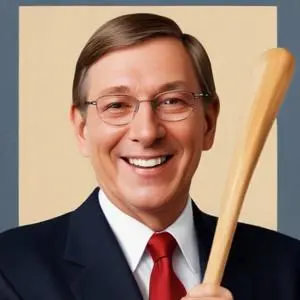
The 9th Major League Baseball Commissioner, who oversaw the game's expansion, introduction of the wild card, and steroids scandal, while also presiding over a period of unprecedented growth and revenue.
Bud Selig, the ninth Commissioner of Baseball, is known for his transformative leadership of the sport, overseeing the introduction of the wild card, interleague play, and revenue sharing, which led to a 400 percent increase in revenue and record-breaking attendance during his tenure. However, his tenure was also marred by controversy, including the steroid era and the 1994 strike that divided the league.
Born on July 30, 1934, in Milwaukee, Wisconsin, Selig's love for baseball dates back to his childhood. He grew up watching the Milwaukee Brewers, a minor league team, and went on to acquire the Seattle Pilots, a struggling franchise, in 1970. Renaming it the Milwaukee Brewers, Selig was credited with keeping baseball in Milwaukee, and his ownership and team presidency paved the way for his future role as Commissioner of Baseball.
Selig's ascent to the Commissioner's office began in 1992, when he served as the chairman of the Major League Baseball Executive Committee. During this period, he played a crucial role in negotiations with the players' union, eventually becoming the de facto acting commissioner. In 1998, he was officially named the Commissioner of Baseball, a position he held until 2015.
Selig's tenure was marked by significant reforms, including the introduction of the wild card, interleague play, and revenue sharing. These changes helped increase fan engagement and revenue, but also sparked criticism and controversy. The 1994 strike, which lasted for 232 days, was a major setback for the league, and Selig's handling of the situation was widely criticized.
The steroid era, which plagued baseball during the late 1990s and early 2000s, is a stain on Selig's legacy. The Mitchell Report, commissioned by Selig in 2007, concluded that the MLB, club officials, the Players Association, and the players themselves shared responsibility for the widespread use of performance-enhancing drugs. Selig faced calls for his resignation, and his response to the crisis was deemed inadequate by many.
Despite the controversies, Selig's contributions to baseball are undeniable. He was instrumental in organizing the World Baseball Classic in 2006 and introduced revenue sharing, which helped small-market teams compete with larger markets. He was inducted into the Baseball Hall of Fame in 2017, a testament to his impact on the sport.
Selig has been vocal about the importance of preserving baseball's history and tradition. He has also emphasized the need for integrity and accountability in the sport. His commitment to ridding baseball of performance-enhancing drugs has been a hallmark of his tenure, despite the challenges and criticisms he faced.
In addition to his baseball career, Selig has been a dedicated philanthropist, supporting various charitable organizations, including the Boys & Girls Clubs of America and the United Way. He has also been recognized for his contributions to the Jewish community, receiving the 2007 Hank Greenberg Sportsmanship Award.
Selig's net worth is estimated to be around $400 million, largely due to his successful ownership of the Milwaukee Brewers. His financial impact on baseball has been significant, with revenue increasing from $1.7 billion in 1992 to over $7 billion in 2015.
Selig's legacy extends beyond the baseball world. His reforms and initiatives have helped shape the modern sports landscape, with revenue sharing and competitive balance becoming essential components of professional sports leagues.
Selig's tenure was marked by controversy, including the steroid era, the 1994 strike, and criticism of his response to the growing use of performance-enhancing drugs. However, his contributions to baseball and his commitment to preserving the sport's integrity have also earned him praise and recognition.
"The game has always been about the players, and it always will be." - Bud Selig
"I'm proud of what we've accomplished, but I'm also mindful of the challenges that lie ahead." - Bud Selig
Bud Selig's legacy is complex and multifaceted, marked by both transformative reforms and controversy. As the Commissioner Emeritus of Baseball, his impact on the sport will be remembered for generations to come.
90 Years Old
Hall of Fame pitcher and coach who dominated on the mound with a fierce fastball and intimidating presence, leading his team to World Series championships.
Born in 1920
Legendary baseball player and manager who won three World Series championships and was a 24-time All-Star, known for his consistent hitting and iconic stance.
92 Years Old
Legendary baseball player who broke Babe Ruth's home run record in 1974, becoming an iconic figure in American sports history.
95 Years Old
Legendary baseball player and coach who is widely regarded as one of the greatest all-around players in baseball history, known for his impressive defensive skills and powerful hitting.
94 Years Old
Legendary baseball slugger and charismatic broadcaster, famous for his incredible power and speed on the field, and his folksy, down-to-earth personality in the broadcast booth.
Born in 1925
Legendary baseball player, coach, and manager known for his witty quotes and impressive career with the New York Yankees, winning 10 World Series championships.
86 Years Old
Legendary baseball figure who played, managed, and executive-led teams to multiple championships, earning a spot in the Baseball Hall of Fame.
98 Years Old
Legendary voice of baseball, broadcasting iconic games and moments for over 60 years, with a warm, storytelling style that made fans feel like they were part of the game.
