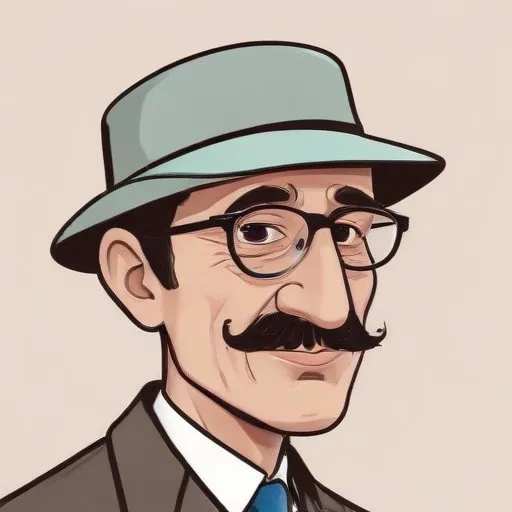
Cabu: The Provocative Cartoonist Who Refused to Be Silenced
A Life Dedicated to Satire and Social Commentary
Cabu, born Jean Maurice Jules Cabut, was a French comic strip artist and caricaturist known for his biting satire and unapologetic social commentary. Through his work, he fearlessly tackled controversial topics, becoming a household name in France and earning the respect of his peers.
The Early Years: From Art School to Army Conscription
Cabu's artistic journey began at the École Estienne in Paris, where he studied art. His early work was published in a local newspaper in 1954, showcasing his talent and wit. However, his artistic career was put on hold when he was conscripted into the army during the Algerian War. During his two-year service, Cabu's drawings were featured in the army magazine
Bled and
Paris Match, honing his skills and developing his distinctive style.
Founding Hara-Kiri and Charlie Hebdo: A Platform for Satire
After leaving the army, Cabu co-founded
Hara-Kiri magazine in 1960, a platform that allowed him to express his anti-militarist and anarchistic views. Later, he became a staff cartoonist and shareholder at
Charlie Hebdo, a satirical newspaper that shared his commitment to pushing boundaries and challenging societal norms.
Iconic Characters and Controversial Cartoons
Cabu's creations are legendary in French popular culture. His characters, such as
Le Grand Duduche and
Adjudant Kronenbourg, are cherished for their humor and social commentary. Perhaps his most famous character is
Mon Beauf, a quintessential representation of the average, racist, sexist, and vulgar Frenchman. This caricature was so spot-on that the term "beauf" has become a common expression in French slang.
One of Cabu's most controversial cartoons was published in 1973, questioning who had impregnated the 343 women who signed the "Manifesto of the 343" in support of abortion rights. The cartoon sparked outrage and has since become an iconic representation of feminist struggle in France.
The Danish Cartoons Affair and Its Aftermath
In February 2006, Cabu's cartoon depicting the Muslim prophet Muhammad, captioned "Muhammad overwhelmed by fundamentalists, crying 'C'est dur d'être aimé par des cons' (So hard to be loved by jerks)," sparked international controversy and a lawsuit. This cartoon, published on the cover of
Charlie Hebdo, was a response to the Danish cartoons affair and exemplified Cabu's unwavering commitment to freedom of expression.
A Lifetime of Advocacy and Activism
Throughout his career, Cabu remained an outspoken advocate for social justice, freedom of expression, and human rights. His work inspired generations of cartoonists, satirists, and writers, earning him numerous accolades and honors. Cabu's unwavering dedication to his craft and his refusal to be silenced made him a legendary figure in French cultural history.
A Legacy Cut Short: The 2015 Charlie Hebdo Attack
Tragically, Cabu's life was cut short on January 7, 2015, when he was murdered in the terrorist attack on the
Charlie Hebdo offices. This senseless act of violence shocked the world, underscoring the importance of protecting freedom of expression and the power of satire in challenging oppressive ideologies.
Remembering Cabu: A Legacy of Resistance and Laughter
Cabu's legacy extends far beyond his cartoons and caricatures. He embodied the spirit of resistance and rebellion, inspiring generations to challenge the status quo and fight for their rights. Through his work, Cabu continues to inspire, provoke, and entertain, reminding us that laughter and satire are the most powerful tools in the face of adversity.