


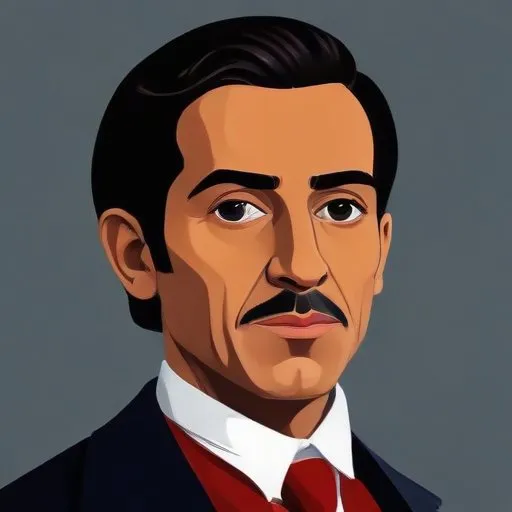
A 19th-century novelist who penned over 260 works, primarily romances and historical novels, offering vivid portrayals of Portuguese life and society. His writings are considered a cornerstone of Portuguese literature.
Camilo Castelo Branco, 1st Viscount of Correia Botelho, is renowned for his remarkable literary contributions to Portuguese literature in the 19th century, having penned over 260 books, including novels, plays, and essays. His writing style, a unique blend of Romanticism, sarcasm, bitterness, and dark humor, has captivated readers and earned him a distinctive place in the literary world.
Born on March 16, 1825, out of wedlock and orphaned in infancy, Camilo's early life was marked by uncertainty and upheaval. Despite his aristocratic roots, his family struggled financially due to the strict law of primogeniture, which excluded younger sons from inheritance. This tumultuous start paved the way for his later literary success, as he drew upon his experiences to craft compelling stories.
Camilo's writing is characterized by its originality, combining the dramatic and sentimental spirit of Romanticism with a personal touch of wit, sarcasm, and dark humor. His works often centered around local and picturesque themes, affiliating him with the Romantic tradition. As a conservative and Catholic traditionalist, his literature reflected his ideals of legitimism, which set him apart from his literary contemporaries.
The dichotomy between Camilo's writing and that of his contemporary, Ea de Queiroz, is often referred to as the "literary guerrilla." This contrast highlights the synthesis of two great tendencies in 19th-century Portuguese literature: Romanticism and Realism. Camilo's influence extends beyond literature, as his works have shaped the cultural identity of Portugal and continue to captivate readers today.
Despite his literary success, Camilo's life was marked by turmoil and tragedy. He was accused of being initiated into Freemasonry, although this claim is disputed by his involvement in the Miguelist cause during the Revolution of Maria da Fonte. His later years were marred by personal struggles, including a tumultuous marriage and financial difficulties.
Camilo Castelo Branco's literary legacy continues to inspire and educate generations of readers. His unique writing style, philosophical contributions, and cultural significance have earned him a place among the greatest Portuguese writers of all time. His influence extends beyond literature, shaping the cultural identity of Portugal and reflecting the complexities of the human experience.
Born in 1902
A Portuguese journalist who covered several international conflicts, including the Portuguese Colonial War and the Carnation Revolution, providing firsthand reports from the front lines.
Born in 1799
A prominent 19th-century Portuguese writer and playwright who helped shape the country's Romantic movement with his influential works, including poetry, novels, and theater pieces.
