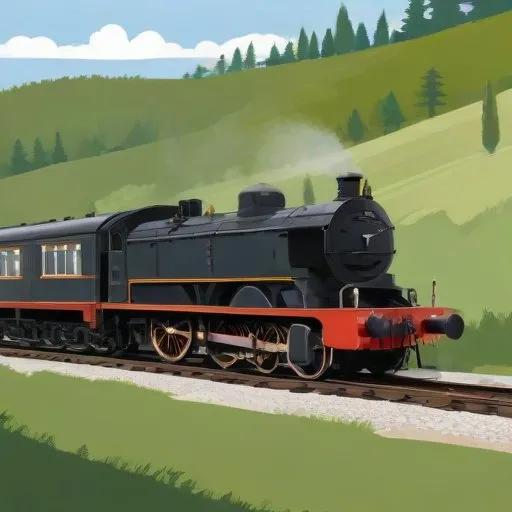
Carl Ritter von Ghega: The Visionary Behind the Semmering Railway
A Revolutionary Engineer and His Enduring Legacy
Carl Ritter von Ghega was a renowned Austrian engineer, best known for designing and building the Semmering Railway, a groundbreaking feat that transformed the landscape of transportation in the 19th century. This innovative railway, which connected Vienna to Trieste, was the first to traverse a major mountain range, earning Ghega a place among the most celebrated engineers of his time.
Early Life and Education
Born on 1802 in Venice, Italy, Ghega was raised in a family of modest means. Despite the odds, he displayed exceptional aptitude for mathematics and science, which led him to pursue a degree in engineering at the University of Padua. His academic excellence earned him a scholarship to continue his studies at the prestigious University of Vienna, where he honed his skills inbridge construction and hydraulic engineering.
The Semmering Railway: A Masterpiece of Engineering
Ghega's magnum opus, the Semmering Railway, was a 41-kilometer-long marvel that conquered the treacherous terrain of the Semmering Mountains. Completed in 1854, this pioneering project featured 14 tunnels, 16 viaducts, and over 100 curved sections, showcasing Ghega's unwavering dedication to precision and innovation. The railway reduced travel time between Vienna and Trieste by a staggering 24 hours, revolutionizing trade and commerce across the Austro-Hungarian Empire.
Philosophical Contributions and Beliefs
Ghega's work was guided by a profound respect for the natural world and a commitment to harnessing technology in harmony with the environment. He believed that engineering should not only serve humanity but also preserve the beauty and integrity of the land. This philosophical approach is reflected in his attention to detail, from the railway's carefully crafted curves to the strategic placement of tunnels and viaducts.
Career Highlights and Major Works
- 1836: Appointed chief engineer of the Austrian Southern Railway, overseeing the construction of several key sections.
- 1842: Designed and built the Margarethen Bridge in Vienna, which remained one of the city's most iconic landmarks for decades.
- 1848: Collaborated with fellow engineer Matthias Schönerer on the construction of the Austro-Italian Railway.
Influence on Modern Society
Ghega's work on the Semmering Railway paved the way for the development of modern rail networks, setting a new standard for engineering excellence and inspiring generations of engineers, architects, and urban planners. His innovative approaches to tunnel construction, track design, and environmental sustainability continue to influence infrastructure projects worldwide.
Personal Milestones and Key Life Events
- 1851: Elevated to the nobility by Emperor Franz Joseph I, earning the title "Ritter von Ghega."
- 1854: Celebrated the completion of the Semmering Railway, hailed as a national hero in Austria.
- 1857: Passed away on March 14, at the age of 55, leaving behind a legacy that continues to inspire and awe people around the world.
Legacy and Historical Context
Ghega's remarkable achievement on the Semmering Railway cemented his place among the greatest engineers of the 19th century. His work not only transformed the transportation landscape but also fostered economic growth, cultural exchange, and urban development across the Austro-Hungarian Empire. As a testament to his enduring impact, the Semmering Railway was designated a UNESCO World Heritage Site in 1998, recognizing its significance as a masterpiece of industrial heritage.
Trivia and Fun Facts
- Ghega was known for his meticulous work habits, often spending 12 hours a day on site, overseeing the construction of the Semmering Railway.
- The Semmering Railway's iconic tunnels were built using manual labor, with thousands of workers involved in the excavation process.
Ghega's remarkable story serves as a testament to human ingenuity, perseverance, and the transformative power of innovation. As we continue to build upon his legacy, his work remains an enduring symbol of what can be achieved when vision, skill, and determination come together.
FAQ
What was Carl Ritter von Ghegas role in the construction of the Semmering Railway?
Carl Ritter von Ghega was the chief engineer responsible for the construction of the Semmering Railway in Austria. He designed and built the railway, which was a major engineering feat at the time.
How did Carl Ritter von Ghegas engineering skills contribute to the development of Austria?
Carl Ritter von Ghegas engineering skills played a crucial role in the development of Austrias infrastructure. He designed and built several railways and bridges, which helped to modernize the country and facilitate economic growth.
What were Carl Ritter von Ghegas contributions to the field of civil engineering?
Carl Ritter von Ghega was a pioneer in the field of civil engineering. He developed new techniques and methods for building railways and bridges, which paved the way for future generations of engineers.
What was Carl Ritter von Ghegas legacy in Austria?
Carl Ritter von Ghega is considered one of the most important engineers in Austrian history. He was awarded the title of Ritter (knight) for his contributions to the development of Austrias infrastructure.
How did Carl Ritter von Ghegas work impact the economy of Austria?
Carl Ritter von Ghegas work on the Semmering Railway and other infrastructure projects helped to stimulate economic growth in Austria. The railway facilitated the transportation of goods and people, boosting trade and commerce.