


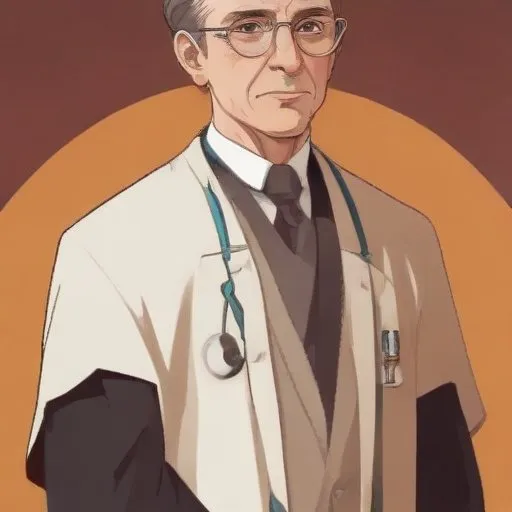
A 19th-century physician who pioneered the field of pathological anatomy, making significant contributions to the understanding of human disease and its effects on the body.
Carl von Rokitansky, a renowned Austrian physician, pathologist, and humanist philosopher, revolutionized the field of medicine by introducing scientific and evidence-based diagnostics in the 19th century. He is credited with founding the Vienna School of Medicine, which became a hub for medical innovation and education.
Born on February 19, 1804, in Hradec Králové, Bohemia (now part of the Czech Republic), Rokitansky was the eldest of four children. His father, Prokop Rokitansky, was a civil servant who passed away when Carl was just eight years old. Despite the financial struggles that followed, his mother, Theresia, ensured that he received a good education, enrolling him in grammar school and later at the Charles University in Prague.
Rokitansky began his university studies in 1818 with philosophical propaedeutics, where he was heavily influenced by philosopher Bernardo Bolzano. However, in 1821, he shifted his focus to medicine, drawn to the teachings of prominent physicians of the time. In 1824, he moved to Vienna to continue his medical studies at the University of Vienna, where he began his research at the Pathological-Anatomical Prosecture at the Vienna General Hospital.
Rokitansky's groundbreaking work in pathology and diagnostics led to the development of modern diagnostic techniques. He performed over 30,000 autopsies during his career, meticulously documenting his findings and establishing the importance of evidence-based diagnosis. His work laid the foundation for the Vienna School of Medicine, which became a beacon for medical innovation and education.
Rokitansky's humanist philosophical background significantly influenced his approach to medicine. He believed in the importance of compassion, empathy, and understanding in the doctor-patient relationship. His philosophical leanings also led him to advocate for social and political reforms, striving to create a more just and equitable society.
Rokitansky received numerous accolades for his contributions to medicine, including the title of Baron (Freiherr) in 1868. He was also elected as a member of the German Academy of Sciences Leopoldina and the Austrian Academy of Sciences.
Carl von Rokitansky's pioneering work in diagnostic medicine has had a profound impact on the field. His emphasis on evidence-based diagnosis and his meticulous approach to pathology have shaped the way we practice medicine today. His legacy continues to inspire generations of medical professionals, and his contributions to medical education and innovation remain unparalleled.
Rokitansky's personal life was marked by simplicity and humility. He remained unmarried throughout his life, dedicating himself to his work and his patients. His relationships with his contemporaries were characterized by respect and admiration, earning him the nickname "the great Rokitansky."
Carl von Rokitansky's remarkable life and work continue to inspire and educate medical professionals around the world. His commitment to evidence-based diagnosis, compassion, and humanity has left an indelible mark on the field of medicine.
Born in 1821
A pioneer in modern medicine, he founded the field of social medicine, emphasizing the importance of social and environmental factors on health, and made significant contributions to cellular pathology.
Born in 1849
A Hungarian anatomist who made significant contributions to the field of comparative anatomy, particularly in the study of the human nose and sinuses. His work laid the foundation for modern rhinology.
Born in 1817
A pioneer in the field of anatomy and physiology, he discovered the importance of nerve cells and made significant contributions to the understanding of human embryology.
