


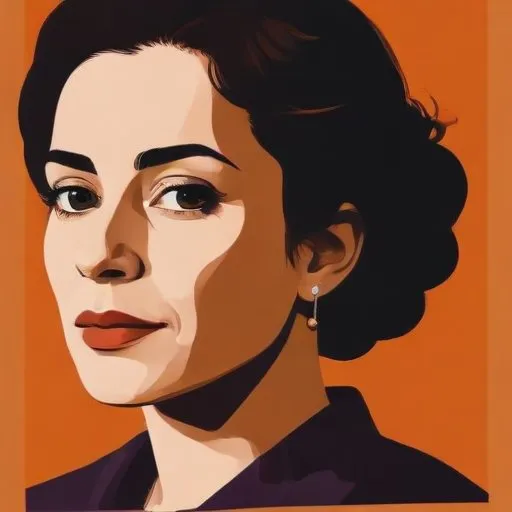
A Spanish author and poet celebrated for her lyrical prose and exploration of women's experiences in post-Civil War Spain, particularly in her novel "The Back Room".
Carmen Martín Gaite was a renowned Spanish author, celebrated for her remarkable contributions to Spanish literature. With a prolific career spanning multiple genres, including novels, short stories, screenplays, and essays, she left an indelible mark on the literary world.
Born on December 8, 1925, in Salamanca, Spain, Martín Gaite was the second daughter of José Martín López Valladolid and María Gaite Veloso. Her parents' progressive values and love for education instilled in her a strong passion for learning. She was taught at home by private tutors and her father, who fostered her interest in history and literature.
Martín Gaite's literary career was marked by numerous accolades and awards. Her novel "Entre visillos" earned her the prestigious Premio Nadal in 1957. She went on to receive the Prince of Asturias Award in 1988 and the Premio Castilla y León de las Letras in 1992. Her body of work was further recognized with the Premio Acebo de Honor.
Martín Gaite's literary oeuvre includes:
Martín Gaite's work had a profound impact on Spanish literature, particularly in the post-Civil War era. Her writing often explored themes of identity, gender, and social change, resonating with readers and inspiring a new generation of writers.
Martín Gaite's life was marked by her strong connection to her Galician heritage, which she often drew upon in her writing. Her commitment to preserving the region's cultural traditions was reflected in her work and legacy.
Martín Gaite's words continue to inspire and captivate readers: "La literatura es un juego, pero un juego serio" ("Literature is a game, but a serious one"). Her wisdom and wit continue to resonate with readers and writers alike.
In addition to her literary accolades, Martín Gaite was recognized for her contributions to Spanish culture and society. She was awarded the Premio Castilla y León de las Letras in 1992, a testament to her enduring impact on Spanish literature.
Martín Gaite's life and work were shaped by the tumultuous period of Spanish history, marked by the Civil War and Franco's dictatorship. Her writing served as a powerful tool for social commentary and critique, leaving a lasting legacy in Spanish literature.
Today, Carmen Martín Gaite is remembered as a pioneering Spanish author, celebrated for her remarkable contributions to literature and her unwavering commitment to preserving cultural heritage.
Born in 1916
A Spanish writer and politician who won the Nobel Prize in Literature in 1989 for his innovative and influential literary style, which explored the human condition and Spanish culture.
Born in 1898
A Spanish poet and author, celebrated for his surreal and introspective works that explored the human condition, earning him the Nobel Prize in Literature in 1977.
Born in 1898
A renowned Spanish poet and philologist who made significant contributions to the study of Spanish literature, particularly in the field of Golden Age poetry. He's also known for his own poetry, which explores themes of love, death, and existential crisis.
Born in 1920
A renowned Spanish journalist and novelist, celebrated for his poignant and humorous portrayals of rural life, social commentary, and human relationships.
Born in 1925
A renowned Spanish novelist and educator, celebrated for her lyrical and introspective works that explore the human condition, particularly in the context of Spanish Civil War and its aftermath.
