


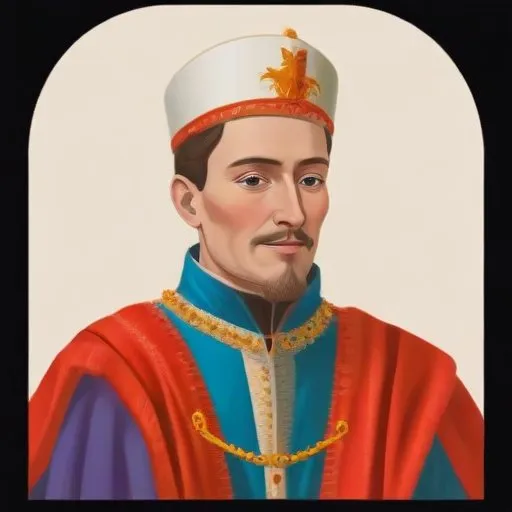
Unified the fragmented Polish state, ending a period of feudal fragmentation, and re-established a strong centralized government. He is also known for promoting Christianity and establishing the Archdiocese of Gniezno.
Casimir I the Restorer, also known as Kazimierz I Odnowiciel, is renowned for reunifying the fragmented Kingdom of Poland during a period of turmoil and earning the title of "the Restorer" for his remarkable achievements. From 1040 until his death in 1058, he ruled as the duke of Poland, reincorporating Masovia, conquering Silesia and Pomerania, and leaving a lasting legacy in the history of Poland.
Although little is known about Casimir's early life, it is believed that he spent his childhood at the royal court of Poland in Gniezno. In 1026, he was sent to a Polish monastery to acquire a proper education, where he may have held the post of oblate and even requested a dispensation to become a monk. However, he did not pursue a career in the Church, leaving his ecclesiastical pursuits indefinitely in 1031.
Following his father's death, Casimir I the Restorer emerged as a strong leader, determined to reunify the fragmented kingdom. Through his military campaigns and strategic alliances, he successfully reincorporated Masovia, conquered Silesia and Pomerania, and restored stability to Poland.
Casimir I the Restorer's legacy extends far beyond his military conquests. He is credited with establishing a strong foundation for the future growth and prosperity of Poland, earning him a place among the most notable rulers in Polish history.
His reign marked the beginning of a new era of stability and unity in Poland, paving the way for future generations to build upon his achievements. Although he failed to crown himself King of Poland, his contributions to the development of the Polish state are immeasurable.
Little is known about Casimir I the Restorer's personal life, including his relationships and family. However, it is believed that he was married to Maria Dobroniega, a member of the Rurik dynasty, and had several children, including Bolesław II the Generous and Władysław I Herman.
Casimir I the Restorer died on November 19, 1058, leaving behind a legacy that would shape the course of Polish history for centuries to come. His remarkable achievements and contributions to the unity and stability of Poland have earned him a permanent place in the annals of history as one of the most important figures in Polish history.
