


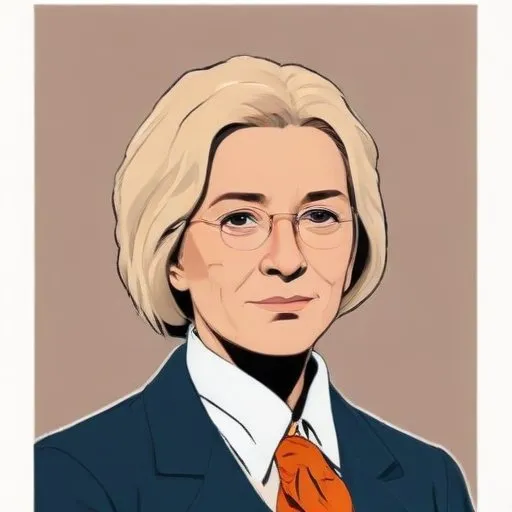
Pioneering educator and women's rights advocate who championed equal access to education and advocated for women's roles in society. Known for her influential writings on education and domesticity.
Catharine Beecher was a pioneering American educator, known for her groundbreaking work in female education and her advocacy for the importance of kindergarten in children's education. Her influential manual, The American Woman's Home, co-authored with her sister Harriet Beecher Stowe, remains a testament to her dedication to empowering women through education.
Born on September 6, 1800, in East Hampton, New York, Catharine was the daughter of renowned minister and religious leader Lyman Beecher and Roxana Foote Beecher. She was part of a remarkable family that included siblings Harriet Beecher Stowe, Henry Ward Beecher, and Charles Beecher, all of whom made significant contributions to American literature and society.
Catharine's education began at home, where she was taught by her parents until the age of ten. She then attended the Litchfield Female Academy in Litchfield, Connecticut, where she developed a strong foundation in various subjects. However, she didn't stop there – she went on to teach herself mathematics, Latin, and philosophy, subjects not commonly offered to women at the time.
Tragedy struck when Catharine was just 16, as her mother passed away, leaving her with the responsibility of managing the household. This experience shaped her future, as she went on to found a school for women in New Haven, Connecticut, in 1821.
In 1823, Catharine co-founded the Hartford Female Seminary in Hartford, Connecticut, with her sister Mary Foote Beecher Perkins. This institution provided educational opportunities for women, which was a pioneering effort in an era where women's education was often overlooked. Catharine's innovative approach to education led her to develop her own textbooks, including arithmetic, theology, and mental and moral philosophy.
Catharine's philosophical contributions were deeply rooted in her belief that women had a vital role to play in shaping American society. She advocated for equal access to education, recognizing that women's participation in the workforce was essential to the country's growth and development.
Her influential manual, The American Woman's Home, co-authored with Harriet Beecher Stowe, emphasized the importance of women's domestic roles and provided practical advice on household management, childcare, and education. This seminal work upheld the notion that women's work was valuable and deserving of respect.
Catharine Beecher's pioneering work in education and her advocacy for women's empowerment have left an indelible mark on American society. Her legacy extends beyond her own accomplishments, inspiring generations of educators, women's rights activists, and social reformers.
Today, Catharine Beecher is remembered as a trailblazer who challenged conventional norms and paved the way for future generations of women to pursue careers in education, politics, and beyond. Her life's work serves as a testament to the power of perseverance, innovation, and dedication to creating positive change.
Catharine Beecher's remarkable life and achievements continue to inspire and educate us today, serving as a powerful reminder of the transformative power of education and the importance of empowering women to shape their own destinies.
Born in 1811
Wrote influential abolitionist novels, including "Uncle Tom's Cabin", which humanized the horrors of slavery and fueled the anti-slavery movement.
Born in 1813
A prominent abolitionist and women's suffrage advocate, known for his powerful oratory skills and influential writings that helped shape public opinion on social issues.
Born in 1799
A British naval officer, hydrographer, and explorer who mapped many previously unknown coastlines and islands, particularly in the Pacific and Arctic regions.
Born in 1802
Pioneering nurse and social reformer who crusaded for humane treatment of the mentally ill and prisoners, establishing asylums and advocating for their rights.
