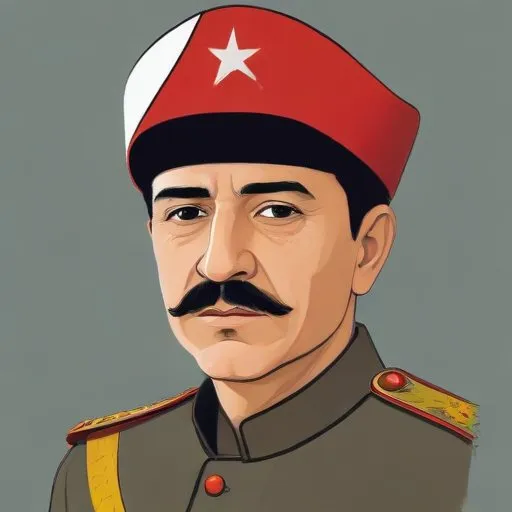
Cemal Tollu: The Turkish Master of Cubism and Constructivism
A Pioneer of Modern Turkish Art
Cemal Tollu, a renowned Turkish painter, is best known for his contributions to the development of Cubism and Constructivism in Turkey. As a founding member of the D Group, a collective of artists devoted to these avant-garde movements, Tollu played a pivotal role in shaping the country's modern art landscape.
Early Life and Career
Born on April 19, 1899, in Turkey, Tollu's early life was marked by turmoil and conflict. He served as a cavalry lieutenant in the Turkish War of Independence and witnessed the devastating Fire of Manisa, an experience that would later influence his art.
The D Group and the Birth of Modern Turkish Art
In 1933, Tollu founded the D Group alongside fellow artists, including Nurullah Berk, Eşref Üren, and Cemal Bingöl. This collective aimed to promote Cubism and Constructivism in Turkey, moving away from traditional Ottoman art forms. The D Group's innovative approach paved the way for modern Turkish art, earning Tollu and his contemporaries recognition both domestically and internationally.
Artistic Style and Influences
Tollu's artistic style was characterized by bold, geometric forms and vibrant colors, reflecting his fascination with Cubism and Constructivism. His works, such as "The Burning of Manisa during the War for Liberation" (1968) and "Mother Earth" (1956), demonstrate his ability to merge emotional depth with intellectual rigor.
Teaching and Legacy
Tollu's influence extended beyond his art to the next generation of Turkish artists. He taught at the Fine Arts Academy of Istanbul from 1933 until 1965, nurturing the talents of future masters. His pedagogical contributions cemented his legacy as a pioneering figure in Turkish modern art.
Notable Works
- The Ballerina (1935)
- (1930)
- The Burning of Manisa during the War for Liberation (1968)
- Mother Earth (1956)
A Life of Artistic Innovation
Cemal Tollu's remarkable life, marked by war, artistic innovation, and pedagogical dedication, left an indelible mark on Turkish modern art. As a pioneer of Cubism and Constructivism, he paved the way for future generations of artists, ensuring his legacy as a master of Turkish modern art.
Timelines and Milestones
- 1899: Born on April 19th in Turkey
- 1933: Founded the D Group with fellow artists
- 1933-1965: Taught at the Fine Arts Academy of Istanbul
- 1956: Created "Mother Earth"
- 1968: Created "The Burning of Manisa during the War for Liberation"
- 1968: Passed away on July 26th
FAQ
What kind of art did Cemal Tollu create?
Cemal Tollu was a talented painter who primarily focused on creating landscapes and still-life paintings. His work was characterized by its vibrant colors and attention to detail.
What was Cemal Tollus role in the Turkish military?
Cemal Tollu served as a lieutenant in the Turkish military. Despite his military background, he was also an accomplished artist, showcasing his creative side through his paintings.
Where did Cemal Tollu receive his art training?
Cemal Tollu received his art training at the Istanbul Academy of Fine Arts. This institution provided him with the necessary skills to hone his craft and develop his unique style.
What inspired Cemal Tollus artwork?
Cemal Tollus artwork was inspired by his surroundings and the beauty of nature. He often drew inspiration from the landscapes and scenery around him, reflecting his love for the outdoors.
Is Cemal Tollus artwork still exhibited today?
Yes, Cemal Tollus artwork is still exhibited today in various galleries and museums. His paintings continue to be celebrated for their beauty and historical significance, serving as a testament to his talent and legacy.