


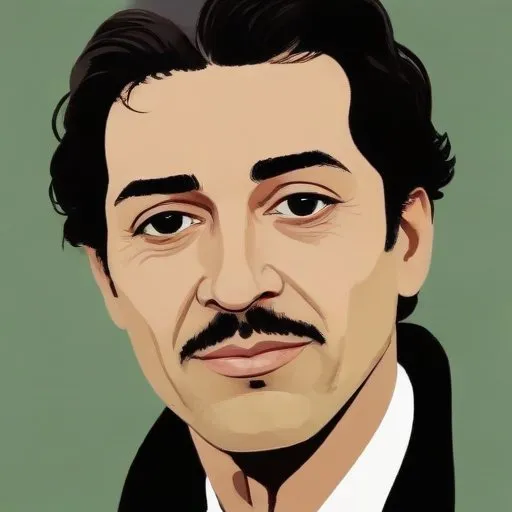
A 19th-century poet and writer, known for his vivid descriptions of Lisbon's streets and people, capturing the essence of Portuguese urban life. His poetry is celebrated for its lyricism and social commentary.
Cesrio Verde, a 19th-century Portuguese poet, is renowned for his soulful and evocative works that have captivated readers for generations. His poems, though largely overlooked during his lifetime, are now hailed as some of the most significant contributions to Portuguese poetry, inspiring numerous writers, including the esteemed Fernando Pessoa.
Born on February 25, 1855, in Lisbon, Portugal, Jos Joaquim Cesrio Verde was raised in a middle-class family with a strong work ethic. His father, a shopkeeper and exporter, instilled in him a deep appreciation for nature, which would later become a defining feature of his poetry.
The family's move to the countryside in 1857, prompted by the outbreak of the plague, had a profound impact on Verde's life and work. The bucolic landscape and rustic way of life would later be reflected in his poems, often depicting the countryside in an idyllic, serene light.
Verde's first poems were published in the local newspaper, Dirio de Notcias, in 1873. Though he dropped out of his studies shortly after, he went on to develop a lifelong friendship with Silva Pinto, who would later become the publisher of his works.
Verde's poetry is characterized by its simplicity, depth, and emotional intensity, often exploring themes of love, nature, and mortality. His poems frequently feature vivid descriptions of the Portuguese countryside, as well as introspective narratives that reveal his own personality and experiences.
The loss of his sister Julia to tuberculosis in 1872 had a profound impact on Verde's life and work. Her passing is often cited as a significant influence on his poetry, which frequently features the sickly and the deceased, often portrayed as beautiful, innocent women.
The autobiographical poem "Ns" explicitly addresses his sister's death, offering a poignant glimpse into Verde's inner world and emotional landscape.
Despite being largely overlooked during his lifetime, Verde's work has been rediscovered and celebrated by numerous writers and scholars. His poetry has been widely taught in Portuguese schools, cementing his status as one of the country's most important poets.
Fernando Pessoa, in particular, played a significant role in championing Verde's work, recognizing the poet's unique voice and contribution to Portuguese literature.
Verde's poetry is imbued with a sense of realism and simplicity, reflecting his strong connection to the natural world and his rural upbringing. His work often celebrates the beauty of everyday life, while also acknowledging the inevitability of mortality and the passing of time.
Through his poetry, Verde offers a unique perspective on the human experience, encouraging readers to slow down, appreciate the beauty around them, and cherish the fleeting moments of life.
Verde's poetry has inspired numerous writers, poets, and artists, contributing to a rich cultural heritage that continues to resonate with audiences today.
In the realm of pop culture, Verde's work has been referenced and celebrated in various forms of media, from literature and music to film and art.
Cesrio Verde's life and work serve as a powerful reminder of the enduring power of poetry to touch hearts, inspire minds, and transcend time. His legacy continues to inspire generations, offering a glimpse into the soul of Portugal and the human experience.
Through his poetry, Verde leaves behind a timeless message of hope, beauty, and the importance of slowing down to appreciate the beauty around us. As we reflect on his life and work, we are reminded of the transformative power of art to touch our lives and shape our understanding of the world.
Born in 1902
A Portuguese journalist who covered several international conflicts, including the Portuguese Colonial War and the Carnation Revolution, providing firsthand reports from the front lines.
