


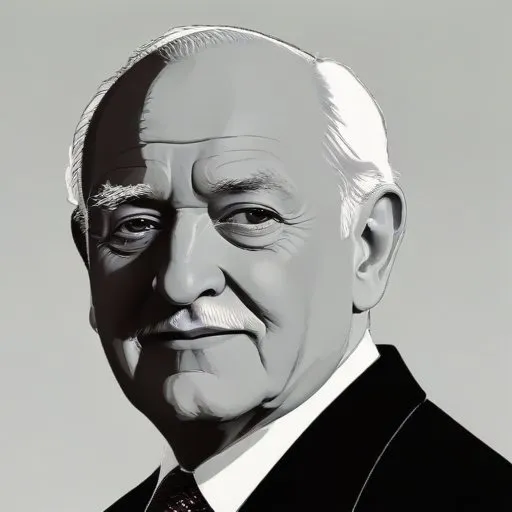
A British politician who served as Education Secretary from 2001 to 2004, implementing significant reforms to the education system, particularly the introduction of tuition fees. He's also known for his role in the Labour Party.
As a British Labour Party politician, Charles Clarke has left an indelible mark on the country's political landscape, having held various Cabinet positions under Prime Minister Tony Blair from 2001 to 2006, including the prestigious role of Home Secretary from December 2004 to May 2006.
Born on September 21, 1950, in London, Clarke's early life was shaped by his father, Sir Richard Clarke, a Civil Service Permanent Secretary. He attended the prestigious Highgate School, where he excelled as Head Boy, and later pursued Mathematics and Economics at King's College, Cambridge. It was during his university days that Clarke discovered his passion for public service, serving as the president of the Cambridge Students Union.
Clarke's involvement with the Labour Party began in the 1970s, and he quickly rose through the ranks, becoming a key figure in the Broad Left faction. He served as the president of the National Union of Students from 1975 to 1977 and later as the British representative on the Permanent Commission for the World Youth Festival in Cuba from 1977 to 1978.
Before entering national politics, Clarke gain valuable experience in local government, serving as a councillor in the London Borough of Hackney from 1980 to 1986. During this period, he chaired the Housing Committee and vice-chaired the Economic Development Committee. His research skills were also honed during his stint as a researcher and later chief of staff for Labour Party leader Neil Kinnock from 1981 to 1992.
Elected to the House of Commons in the Labour landslide of 1997, Clarke served as a junior education minister from 1998 to 1999 and later as a minister at the Home Office. His dedication and work ethic earned him a place in the Cabinet as Minister without Portfolio in 2001.
Throughout his career, Clarke has been driven by a passion for public service and a commitment to improving the lives of the British people. His contributions to education, healthcare, and home affairs have had a lasting impact on modern British society.
Clarke's personal life has been marked by significant milestones, including his marriage to Carol Pearson and the birth of their son, Christopher. His wife has been a constant source of support throughout his political career.
Like any seasoned politician, Clarke has faced his fair share of controversies, including criticisms over his handling of the 2005 London bombings and the introduction of identity cards. Despite these challenges, he remains a respected figure in British politics.
Clarke's legacy extends beyond his political career. He has inspired a generation of young politicians and continues to contribute to public life through his writing and speaking engagements.
"Politics is not a short-term game; it's about making a difference in people's lives." - Charles Clarke
Clarke's dedication to public service has been recognized with several awards, including an honorary doctorate from the University of East Anglia.
Throughout his career, Clarke has been committed to charitable causes, particularly in the area of education. He has supported various organizations, including the Norwich-based charity, the Benjamin Foundation.
In conclusion, Charles Clarke's life and legacy are a testament to the power of public service and dedication to making a difference in people's lives. His contributions to British politics and society continue to inspire and influence future generations.
73 Years Old
The former Prime Minister of the United Kingdom who led the country through a transformative period, including the Iraq War, and is known for his charismatic leadership and controversial decisions.
75 Years Old
The Prime Minister of the United Kingdom from 2007 to 2010, known for his key role in shaping the country's economy and response to the 2008 global financial crisis.
79 Years Old
A British Labour politician who served as Home Secretary from 2001 to 2004, known for his reform efforts and controversies surrounding his personal life.
58 Years Old
A British economist and politician who served as Secretary of State for Transport, known for her efforts to improve the country's transportation infrastructure and reduce carbon emissions.
76 Years Old
Former UK Labour Party politician who served as Shadow Chancellor of the Exchequer, known for his strong advocacy for social justice and workers' rights. Held various cabinet positions, including Home Secretary and Education Secretary.
59 Years Old
A British Labour Party politician who served as Shadow Chancellor of the Exchequer, known for his economic policies and appearances on reality TV shows.
58 Years Old
A Scottish journalist and politician who served as Secretary of State for Education, known for his efforts to reform the UK's education system and his role in the Brexit campaign.
59 Years Old
Deputy Prime Minister of the UK from 2010 to 2015, leading the Liberal Democrats in a coalition government with the Conservatives, known for his role in shaping British politics and advocating for EU membership.
