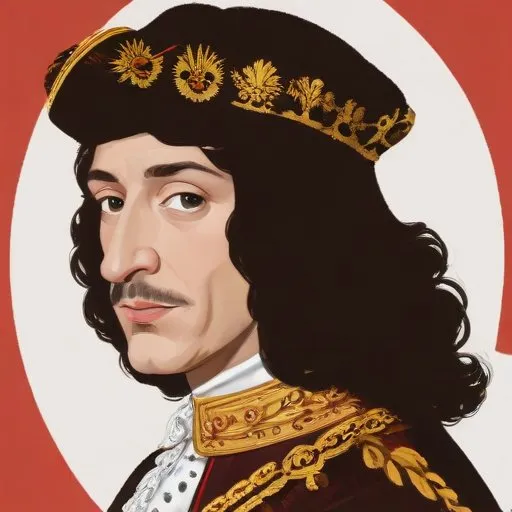
Charles II, Elector Palatine: A Life of Turbulent Reign and Familial Intrigue
A Life Marked by Conflict and Weakness
Charles II, Elector Palatine, is most notably remembered for his tumultuous reign from 1680 to 1685, marked by poor decision-making and familial conflicts. As the son of Charles I Louis, Elector Palatine, and Charlotte of Hesse-Kassel, Charles II's life was defined by the tumultuous relationships within his family.
Early Life and Education
Born on April 10, 1651, in Heidelberg, Charles II was raised without his mother, who retreated to Kassel after separating from his father. Under the authoritarian gaze of his father, Charles received his education from prominent scholars
Samuel von Pufendorf and Ezekiel Spanheim. His early life was marked by a grand tour to Switzerland and France in 1670, where he fell ill with smallpox, permanently disfiguring his face.
Marriage and Unhappy Union
In 1671, Charles married Princess Wilhelmine Ernestine of Denmark through the mediation of
Sophia of Hanover. The marriage proved to be unhappy and remained childless, with Sophia later writing about it in her memoirs. Charles sought guidance from his aunt's husband,
Ernest Augustus, in matters he knew little about, but his wife never became pregnant.
Reign and Controversies
Charles II's short reign was marked by questionable decisions, appointing his incompetent former tutor Paul Hachenberg as chief minister, and favoring his mother, whom he brought back from Kassel, over his half-siblings, the Raugraves. He showed a superficial enthusiasm for military life and was a strict Calvinist. The court preacher Johann Ludwig Langhanns became senior minister after Hachenberg's death.
Financial Difficulties and Legacy
Charles II's reign was plagued by financial difficulties, caused by his mother's immense debts and his own poor management of the state budget. His weak and timid nature, shaped by his familial experiences, led to a lack of effective governance. Upon his death on May 26, 1685, in Heidelberg, Charles II left behind a legacy of tumultuous relationships and financial struggles.
Personal Milestones and Key Life Events
- 1670: Undertook a grand tour to Switzerland and France
- 1671: Married Princess Wilhelmine Ernestine of Denmark
- 1680: Became Elector Palatine
- 1685: Died in Heidelberg
Historical Context and Legacy
Charles II, Elector Palatine, lived during a time of significant upheaval in Europe, with the Thirty Years' War and the rise of the Ottoman Empire. His reign, though marked by turmoil, is a testament to the complex web of familial relationships and power struggles that defined the 17th century.
FAQ
Who was Charles II, Elector Palatine, and what was his role in European politics?
Charles II, Elector Palatine was a German nobleman who played a significant role in European politics during the late 17th and early 18th centuries. He was the husband of Princess Wilhelmine Ernestine of Denmark and had close ties with the royal courts of Europe.
What was Charles II, Elector Palatines relationship with Princess Wilhelmine Ernestine of Denmark?
Charles II, Elector Palatine was married to Princess Wilhelmine Ernestine of Denmark, and their union strengthened the ties between the Palatinate and Denmark. Their marriage was a strategic alliance that had significant implications for European politics.
How did Charles II, Elector Palatines reign impact the Palatinate?
Charles II, Elector Palatines reign had a significant impact on the Palatinate, as he implemented various reforms and modernized the administration of the region. He also sought to strengthen the Palatinates position within the Holy Roman Empire.
What was Charles II, Elector Palatines role in the War of the Spanish Succession?
Charles II, Elector Palatine played a minor role in the War of the Spanish Succession, as he sought to maintain the Palatinates neutrality in the conflict. He eventually allied himself with the Holy Roman Empire and supported the Habsburgs.
How is Charles II, Elector Palatine remembered in European history?
Charles II, Elector Palatine is remembered in European history as a skilled politician and diplomat who navigated the complex web of alliances and rivalries during the late 17th and early 18th centuries. He played a significant role in shaping the Palatinates position within the Holy Roman Empire.