


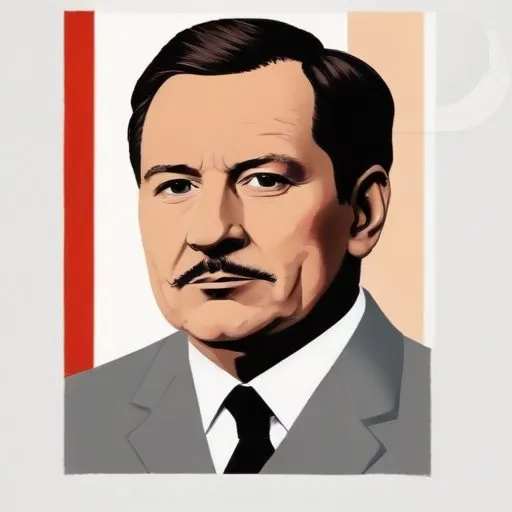
Luxembourg's 3rd Prime Minister, a jurist and politician, served from 1853 to 1860, implementing key reforms and modernizing the country's administration. He's most known for his progressive policies and contributions to Luxembourg's development.
Charles-Mathias Simons, the third Prime Minister of Luxembourg, is renowned for his pivotal role in shaping the country's constitutional framework and modernizing its infrastructure during his seven-year tenure from 1853 to 1860. As a jurist, politician, and key figure in Luxembourg's development, Simons left an indelible mark on the nation's history.
Simons' academic credentials, including his Doctorate of Laws from the University of Liège in 1823, laid the foundation for his subsequent involvement in drafting the Belgian constitution in 1831. His expertise in constitutional law led to his participation in the Assembly of Estates and the Constituent Assembly, where he played a crucial role in shaping Luxembourg's political landscape.
Simons' political ascendance began in 1843, when he became a member of the cabinet and later, in 1848, of the Constituent Assembly. His appointment as Administrator-General of communal affairs in the de la Fontaine Ministry (1848) further solidified his position in the government. The deposition of the Willmar government in 1853 paved the way for Simons' ascension to the office of Prime Minister, a position he held until 1860.
During his tenure as Prime Minister, Simons oversaw the revision of the constitution in October 1856, which significantly altered the balance of power between the monarch and the parliament. Although controversial, this reform had far-reaching consequences for Luxembourg's political future. Simons also presided over the opening of the first railway line in Luxembourg (1859) and the establishment of the Banque Internationale à Luxembourg and the Banque et Caisse d'épargne de l'état, marking a significant step forward in the country's economic development.
Simons' resignation in 1860, prompted by growing opposition in parliament, did not mark the end of his political career. He went on to serve as a member of the Council of State (1860-1874) and its president from 1869 to 1870. Charles-Mathias Simons passed away on October 5, 1874, in Luxembourg City, leaving behind a legacy that continues to influence Luxembourg's politics and society to this day.
Through his tireless efforts to modernize Luxembourg's infrastructure and shape its constitutional framework, Charles-Mathias Simons earned his place as one of the nation's most influential statesmen. His legacy continues to inspire and inform Luxembourg's development to this day.
Born in 1810
A renowned Romantic-era composer and influential music critic, known for his expressive and emotionally charged works, including symphonies, piano music, and art songs.
98 Years Old
Luxembourg's 8th Prime Minister, a lawyer-turned-politician who led the country from 1974 to 1979, known for his efforts to strengthen the European Economic Community. He also served as the President of the European Commission from 1981 to 1985.
89 Years Old
Luxembourg's 22nd Prime Minister, a jurist and politician who led the country from 1984 to 1995 and later became the President of the European Commission from 1995 to 1999. He's known for his European integration efforts and economic reforms.
71 Years Old
Luxembourg's Prime Minister from 1995 to 2013, known for his key role in shaping the European Union's economic and monetary policies. He was the President of the European Commission from 2014 to 2019, overseeing the EU's executive body.
53 Years Old
Luxembourg's Prime Minister since 2013, leading the country's government and implementing progressive policies, including same-sex marriage and cannabis legalization.
