


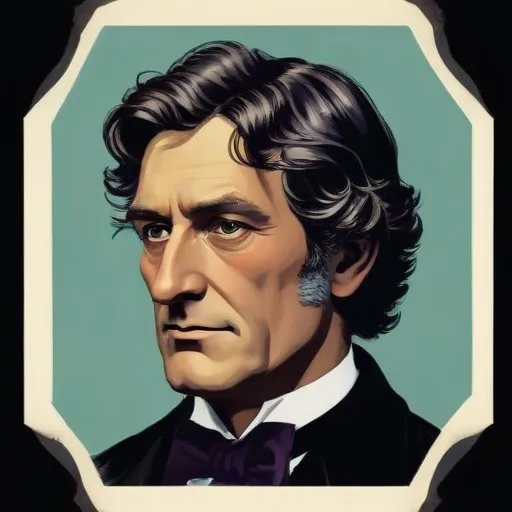
Developed the graphophone, an early version of the record player, and made significant contributions to the development of sound recording technology.
Charles Sumner Tainter is best known for his groundbreaking contributions to the development of the Graphophone, a revolutionary improvement to Thomas Edison's phonograph. As a prolific inventor and engineer, Tainter's work in sound recording technology earned him the title "Father of the Talking Machine."
Born on April 25, 1854, in Watertown, Massachusetts, Tainter's educational background was modest, with most of his knowledge acquired through self-education. He began his professional journey in 1873, working for the Alvan Clark and Sons Company, a renowned telescope manufacturer in Cambridge, Massachusetts. This opportunity led him to participate in a U.S. Navy expedition to New Zealand in 1874, where he observed the transit of Venus.
In 1878, Tainter opened his own scientific instrument shop in Cambridgeport, Massachusetts, where he crossed paths with Alexander Graham Bell, the famous inventor of the telephone. This chance encounter led to a fruitful collaboration, with Tainter joining Bell's Volta Laboratory in Washington, D.C. in 1879. During his tenure at the laboratory, Tainter worked alongside Bell and his father-in-law, Gardiner Hubbard, on several innovative projects, including the photophone and phonograph.
One of Tainter's most significant achievements was the development of the Graphophone, a substantial improvement to Edison's phonograph. The Graphophone used a wax-coated cylinder and a stylus to record and play back sound, increasing the device's durability and sound quality. Tainter received several patents for his work on the Graphophone, alongside Bell and Hubbard.
Tainter's contributions to sound recording technology paved the way for future innovations, including the development of the Dictaphone, one version of which was based on the Graphophone. His work also influenced the creation of modern recording devices, such as cassette tapes and CDs.
In his later years, Tainter managed his own research and development laboratory, where he continued to work on various projects. He passed away on April 20, 1940, leaving behind a legacy of innovation and a lasting impact on the world of sound recording technology.
"The Graphophone is a device that will revolutionize the way we communicate and preserve sound. It has the potential to change the world."
Born in 1847
A Scottish-American engineer and academic credited with inventing the telephone, revolutionizing real-time communication. This innovation transformed the way people connect and conduct business.
Born in 1847
A pioneer in innovation, credited with developing groundbreaking inventions that revolutionized the way people live and communicate, including the light bulb and phonograph.
Born in 1835
Co-founder of Western Electric, a pioneer in the development of telephone technology, credited with inventing the first practical telephone instrument.
Born in 1851
German-American inventor credited with developing the Gramophone record, revolutionizing music playback and paving the way for modern recording technology.
Born in 1833
A renowned pianist and composer, he crafted complex, expressive works that blended traditional and innovative techniques, leaving an indelible mark on classical music.
Born in 1856
A pioneering engineer who harnessed the power of alternating current (AC) to transform the world's electrical systems, and is credited with developing groundbreaking technologies like radio communication and X-ray imaging.
Born in 1874
Developer of the first practical wireless telegraph, pioneering radio communication and earning a Nobel Prize in Physics. Known for revolutionizing long-distance communication.
Born in 1808
An Italian-American engineer credited with inventing the first practical telephone, predating Alexander Graham Bell's patent. He's known for his pioneering work in telecommunications.
