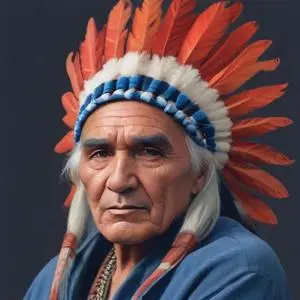
Chief Dan George: A Legacy of Cultural Ambassadorship and Artistic Expression
A Trailblazing Actor and Indigenous Leader
Chief Dan George, born Geswanouth Slahoot, is iconic for his groundbreaking performances in Hollywood films and his tireless advocacy for Indigenous rights. As a chief of the Tsleil-Waututh Nation, a Coast Salish band in British Columbia, Canada, he balanced his artistic pursuits with his duties as a leader, leaving an indelible mark on both the entertainment industry and his community.
Awards and Honors
Chief Dan George's most notable role as Old Lodge Skins in
Arthur Penn's
Little Big Man (1970) earned him an Academy Award nomination for Best Supporting Actor. This milestone marked a first for an Indigenous actor and paved the way for future generations of Native American talent.
A Multiplicity of Talents
Beyond his acting career, Chief Dan George was a prolific poet, author, and musician. His written work,
My Heart Soars, showcases his literary prowess, while his musical talents were often featured in his film performances. This Renaissance man's artistic expression was deeply rooted in his Indigenous heritage, which he proudly shared with the world.
A Life of Public Service
As band chief of the Tsleil-Waututh Nation from 1951 to 1963, Chief Dan George dedicated himself to improving the lives of his people. His leadership and vision helped to pave the way for future generations of Indigenous leaders.
Early Years and Influences
Born on July 24, 1899, Chief Dan George's early life was marked by his experiences in residential school, where he was given the English name Dan Slaholt. Later, the surname was changed to George. He worked various jobs, including as a longshoreman, construction worker, and school bus driver, before finding his calling as an actor and Indigenous advocate.
Notable Film Roles
- Little Big Man (1970) - Old Lodge Skins
- The Outlaw Josey Wales (1976) - Lone Watie
- Smith! (1969) - Ol Antoine
Philosophical Contributions and Beliefs
Chief Dan George's legacy is deeply rooted in his commitment to preserving Indigenous cultural heritage and promoting cross-cultural understanding. Through his art and advocacy, he inspired generations to celebrate and respect the rich diversity of Indigenous cultures.
Personal Milestones and Key Life Events
- 1951-1963: Band Chief of the Tsleil-Waututh Nation
- 1960: Landed first acting role in CBC Television series Cariboo Country
- 1970: Nominated for Academy Award for Best Supporting Actor
Historical Context and Legacy
Chief Dan George's life and work serve as a testament to the power of Indigenous voices in the arts and beyond. His trailblazing career paved the way for future generations of Indigenous actors, artists, and leaders, ensuring that his legacy continues to inspire and educate audiences worldwide.
FAQ
What was Chief Dan Georges most famous film role?
Chief Dan Georges most famous film role was his portrayal of Old Lodge Skins in the 1970 film Little Big Man, for which he received an Academy Award nomination.
What was Chief Dan Georges early life like?
Chief Dan George was born in 1899 on a reserve in British Columbia, Canada. He grew up in a traditional Tsleil-Waututh community, and later attended a residential school.
How did Chief Dan George advocate for Indigenous rights?
Chief Dan George was a strong advocate for Indigenous rights, and worked to promote greater understanding and respect for Indigenous cultures. He was involved in the formation of the Native Council of Canada, and served as its chairman.
What awards did Chief Dan George win for his acting?
Chief Dan George won the Canadian Film Award for Best Actor for his role in Little Big Man, and was also nominated for an Academy Award and a Golden Globe Award.
How did Chief Dan George balance his Native heritage with his acting career?
Chief Dan George worked to balance his Native heritage with his acting career by using his platform to promote greater understanding and respect for Indigenous cultures. He was proud of his heritage and sought to share it with a wider audience through his work.