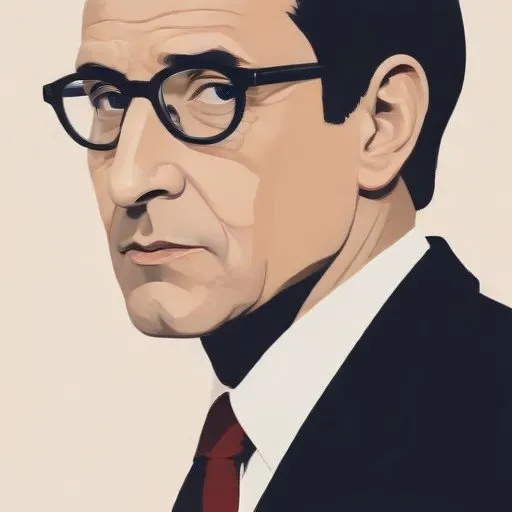
Christian Fouchet: The French Politician Who Shaped Modern France
A Life of Service and Diplomacy
Christian Fouchet, a French politician, is best known for his pivotal roles in shaping France's post-war politics and diplomacy. As a key figure in the French Resistance, Fouchet played a crucial part in France's liberation from Nazi Germany and later went on to hold various ministerial positions, leaving an indelible mark on French history.
Early Life and Education
Born on November 17, 1911, in Saint-Germain-en-Laye, Yvelines, Fouchet grew up with a passion for politics and international relations. He graduated from the prestigious Ecole des Sciences Politiques, paving the way for a career in diplomacy and politics.
The Resistance Years
Fouchet's courageous decision to join the Free French Forces in London in 1940, following Marshal Petain's request for an armistice with Nazi Germany, marked the beginning of his involvement in the French Resistance. As a liaison officer, he worked tirelessly to coordinate efforts between the Free French in London and the resistance movement in France, contributing significantly to the country's liberation.
Diplomatic Career
Fouchet's diplomatic career spanned over two decades, with postings in Moscow, Poland, India, and Denmark. In 1954, he served as Minister for Moroccan and Tunisian Affairs, playing a key role in France's decolonization process. His diplomatic prowess and understanding of international relations made him an asset to the French government.
Ministerial Appointments
Fouchet held several ministerial positions, including Minister of National Education (1962-1967) and Minister of the Interior (1967-1968). His tenure as the last French colonial head of Algeria (1962) was marked by efforts to bring about a peaceful transition to independence.
Awards and Honors
Fouchet's bravery and dedication to France were recognized through numerous accolades, including the Legion of Honour (both chevalier and commandeur), the Croix de Guerre, the Croix de la Valeur Militaire, and the Medal of the Resistance and the Medal of Free France.
Personal Life and Legacy
Fouchet's personal life was marked by a strong sense of family and a commitment to public service. He was the father of French novelist Lorraine Fouchet. Through his various roles, Fouchet left an indelible mark on modern France, shaping the country's politics, diplomacy, and education system.
Conclusion
Christian Fouchet's remarkable life serves as a testament to his unwavering dedication to France and its people. His bravery, diplomatic prowess, and commitment to public service have left a lasting impact on French history, cementing his place as one of the most influential politicians of the 20th century.
FAQ
What was Christian Fouchets role in French politics?
Christian Fouchet was a French lawyer and politician who served as the French Minister of the Interior from 1966 to 1967. He was a member of the French National Assembly and played a key role in shaping the countrys interior policies.
What were Christian Fouchets views on French politics?
Christian Fouchet was a Gaullist and a strong supporter of Charles de Gaulles policies. He was known for his conservative views on law and order, national security, and European integration.
Did Christian Fouchet have any notable achievements as Minister of the Interior?
Yes, Christian Fouchet introduced several reforms during his tenure as Minister of the Interior, including the creation of a new national police force and the introduction of stricter security measures to combat terrorism.
What was Christian Fouchets post-political career like?
After leaving politics, Christian Fouchet returned to his law practice and became a respected figure in French legal circles. He also served on the board of several companies and was involved in various charitable organizations.
Is Christian Fouchet remembered as a notable French politician?
Christian Fouchet is remembered as a prominent figure in French politics during the 1960s, known for his strong views on law and order and national security. Although his tenure as Minister of the Interior was relatively short, his legacy continues to be studied by historians and political scientists.