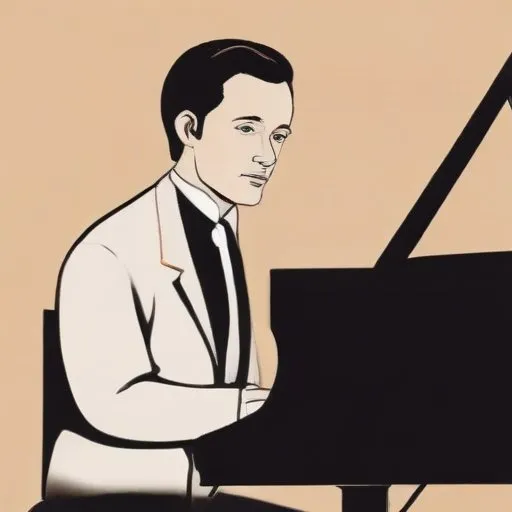
Christian Sinding: The Maestro of Lyrical Piano Music
A Life of Melodic Brilliance
Christian Sinding is renowned for his captivating piano compositions, particularly his iconic piece, "Frühlingsrauschen" (Rustle of Spring), which has become an indispensable part of classical music repertoire. Composed in 1896, this work showcases Sinding's unique ability to craft melodic masterpieces that evoke the spirit of nature and awaken the senses.
Early Life and Inspirations
Born on January 11, 1856, in Kongsberg, Norway, Christian Sinding was part of a talented family of artists. His father, Matthias Wilhelm Sinding, was a mine superintendent, and his mother, Cecilie Marie Mejdell, was a homemaker. Sinding's siblings, Otto and Stephan, were accomplished painters and sculptors, respectively. This artistic environment nurtured Sinding's passion for music from an early age.
Musical Education and Influences
Sinding's musical journey began in Christiania (now Oslo), where he received his initial training. He later moved to Germany to study at the conservatory in Leipzig, where he was mentored by
Salomon Jadassohn, a renowned composer and pedagogue. During his time in Germany, Sinding was deeply influenced by the works of
Richard Wagner and
Franz Liszt, which shaped his unique compositional style.
A Composer of International Renown
Sinding's talent and dedication earned him recognition beyond Norway's borders. He received regular grants from the Norwegian government, which enabled him to focus on his craft. In 1921-1922, he traveled to the United States, where he taught composition at the Eastman School of Music in Rochester, New York. This experience further solidified his reputation as a prominent Norwegian composer with an international appeal.
Piano Music and Chamber Works
Sinding's publishers encouraged him to write piano and chamber music, which proved to be commercially successful. However, his true passion lay in symphonic works, which he felt were his most meaningful creations. Despite this, his piano pieces, such as "Frühlingsrauschen," have remained incredibly popular and continue to enchant audiences worldwide.
Personal Life and Relationships
In 1898, Sinding married Augusta Gade, a talented actress, and they shared a loving relationship until her passing in 1936. Augusta was previously married to Fredrik Georg Gade, a physician and art patron.
Awards and Legacy
Christian Sinding's contributions to classical music have been recognized with numerous awards and honors. His legacy extends beyond his compositions, as he has inspired generations of musicians and composers. Sinding's music continues to be performed and celebrated globally, ensuring his place as one of Norway's most beloved composers.
Quotes and Memorable Sayings
"I do not compose music; it composes itself, and I am only the medium through which it flows." — Christian Sinding
Fun Facts and Trivia
- Sinding was compared to his fellow Norwegian composer, Edvard Grieg, and was often regarded as his successor.
- He was a first cousin of journalist and writer Alfred Sinding-Larsen.
- Sinding's sister, Thora Cathrine Sinding, was married to jurist Glør Thorvald Mejdell.
Christian Sinding's remarkable life and works continue to captivate music lovers today. His enduring legacy is a testament to the power of creative expression and the impact it can have on humanity.
FAQ
What were Christian Sindings key contributions to Norwegian music?
Christian Sinding was a pioneering Norwegian composer, making significant contributions to the countrys musical heritage. His works, including his famous piano piece Frühlingsrauschen, showcased his mastery of Romantic-era styles and his ability to evoke the beauty of Norwegian nature.
How did Christian Sindings music reflect his Norwegian heritage?
Christian Sindings music was deeply rooted in his Norwegian heritage, drawing inspiration from the countrys folk melodies, landscapes, and cultural traditions. His works often incorporated elements of folk music, nationalism, and lyricism, reflecting his pride in his national identity.
What was Christian Sindings role in promoting Norwegian music?
Christian Sinding played a crucial role in promoting Norwegian music, both domestically and internationally. He was a tireless advocate for his countrys musical talent, and his own success helped to raise the profile of Norwegian composers and musicians.
How did Christian Sindings work intersect with his interests in literature and drama?
Christian Sindings music was often influenced by his interests in literature and drama, and he frequently collaborated with writers and poets on musical projects. His work reflected his love of storytelling and his ability to evoke dramatic narratives through music.
What is Christian Sindings legacy in modern Norwegian music?
Christian Sindings legacy in modern Norwegian music is that of a national treasure and a champion of Norwegian culture. His music continues to delight audiences, and his contributions to the countrys musical heritage remain unparalleled, inspiring future generations of composers and musicians.