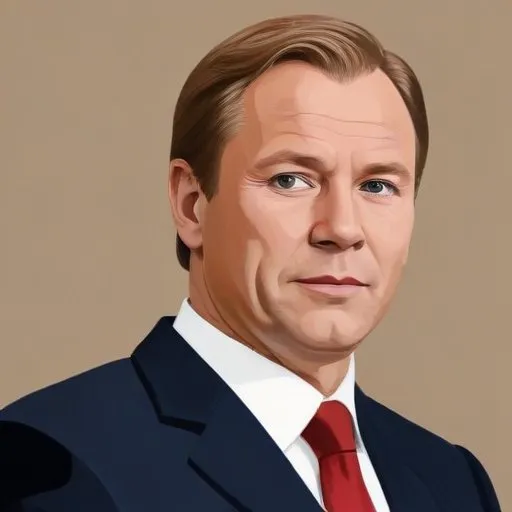
Christopher Hornsrud: Norway's Labour Pioneer
A Trailblazing Politician and Prime Minister
Christopher Hornsrud is renowned for being the first Norwegian prime minister from the Labour Party, serving in this capacity for a brief but significant period in 1928. During his term, he combined the posts of prime minister and minister of Finance, leaving an indelible mark on Norwegian politics.
Early Life and Influences
Born on November 15, 1859, in Skotselv, Øvre Eiker, Hornsrud's early life was shaped by his family's farming traditions. After his father's passing, he spent time with his mother's family in Modum before returning to Skotselv. His early education was shaped by a local school's unique schedule, where two weeks of education were followed by two weeks off. This allowed him to assist with farm work while cultivating a love for reading at the local library.
Rise to Prominence
Hornsrud's entry into politics began with his involvement in the Liberal Party. However, his ideologies shifted, and he eventually became a key figure in the Labour Party. He served as the party's leader from 1903 to 1906 and was instrumental in shaping its platform. In 1912, he became a member of the Storting, Norway's parliament.
A Brief but Significant Premiership
In 1928, Hornsrud made history by becoming the first Labour Party prime minister of Norway. Although his term lasted only three weeks, he made a lasting impact by combining the roles of prime minister and minister of Finance. This brief tenure was marked by a weak parliamentary basis, but it paved the way for future Labour Party prime ministers.
Post-Premiership and Later Life
After resigning as prime minister, Hornsrud went on to serve as vice-president of the Storting until 1934. He continued to be an influential figure in Norwegian politics, earning respect from his peers and opponents alike.
Legacy and Impact
Christopher Hornsrud's contributions to Norwegian politics and the Labour Party are undeniable. He played a crucial role in shaping the country's political landscape, paving the way for future generations of Labour Party leaders. His brief but historic premiership remains a testament to his dedication and perseverance.
Personal Milestones and Key Life Events
- Born on November 15, 1859, in Skotselv, Øvre Eiker
- Became leader of the Labour Party from 1903 to 1906
- Became a member of the Storting in 1912
- Became the first Labour Party prime minister of Norway in 1928
- Served as vice-president of the Storting until 1934
- Passed away on December 12, 1960, in Oslo
By examining Hornsrud's life and career, we gain insight into the evolution of Norwegian politics and the Labour Party. His pioneering spirit and dedication to his ideals continue to inspire generations of politicians and citizens alike.
FAQ
What was Christopher Hornsruds role in Norwegian politics?
Christopher Hornsrud was a Norwegian businessman and politician who served as the 11th Prime Minister of Norway from 1928 to 1931, and played a key role in shaping the countrys economic and social policies during the interwar period.
How did Christopher Hornsrud respond to the economic crisis of the 1930s?
Christopher Hornsrud implemented a range of measures to address the economic crisis of the 1930s, including fiscal policies, trade agreements, and social reforms, to stabilize the economy and protect the welfare of Norwegian citizens.
What were Christopher Hornsruds views on social democracy?
Christopher Hornsrud was a committed social democrat who believed in the importance of social welfare, workers rights, and economic equality, and he worked to promote these values during his time in office.
How did Christopher Hornsrud promote Norwegian industry?
Christopher Hornsrud supported the development of Norwegian industry, particularly in the areas of agriculture, forestry, and manufacturing, and worked to promote trade and economic cooperation with other countries.
What is Christopher Hornsruds legacy in modern Norwegian politics?
Today, Christopher Hornsrud is remembered as a key figure in modern Norwegian politics, who worked to promote social democracy, economic stability, and national progress during a period of significant challenge and change.