


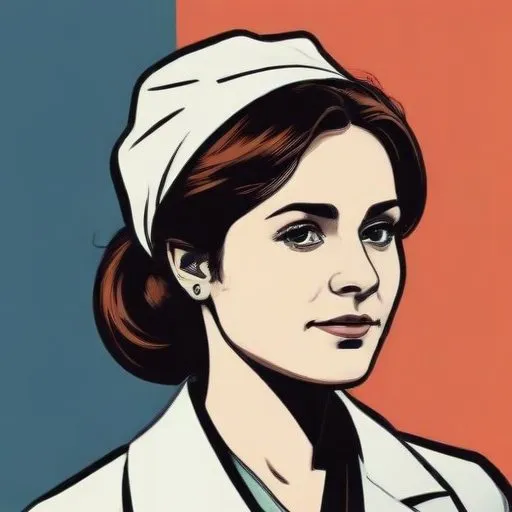
Italian physician who pioneered cancer research and treatment, particularly in the field of oncology, making significant contributions to the development of cancer therapy.
Clelia Lollini was a trailblazing Italian medical doctor who made significant contributions to the advancement of medical women's rights and tuberculosis care in the early 20th century. As one of the founders of the Medical Women's International Federation and the Italian Women's Medical Association, Lollini paved the way for women in medicine, breaking down barriers and challenging stereotypes along the way.
Born on May 1, 1890, in Rome, Italy, Clelia Lollini was the daughter of Vittorio Lollini, a lawyer, and Elisa Agnini, a journalist and feminist. Growing up in a family that valued education and equality, Lollini and her three sisters were encouraged to pursue higher education and professional careers. She completed her medical degree in 1915, a remarkable feat for a woman at that time.
Lollini was a polyglot, speaking Italian, French, German, English, and Arabic. Her remarkable life journey, marked by courage, determination, and a passion for medicine, inspired a novel by Silvia Mori, "Polveri di Luna" (2014), which fictionalizes her time at the antitubercular consortium in Massa.
Clelia Lollini passed away on November 24, 1963, at the age of 73, in Tripoli, following eye surgery. Her legacy, however, lives on, inspiring generations of women in medicine and beyond.
Lollini's contributions to medical women's rights, tuberculosis care, and education have had a lasting impact on modern society. Her tireless efforts to promote women's empowerment, equality, and access to healthcare continue to resonate today, serving as a testament to her unwavering commitment to making a difference.
Born in 1870
Developed a child-centered educational approach that emphasizes self-directed learning and hands-on activity, revolutionizing the way children are taught. This method has been widely adopted globally.
Born in 1682
An Italian anatomist and pathologist who pioneered the field of pathology by performing detailed autopsies to understand the causes of diseases, and is considered the father of modern anatomical pathology.
Born in 1452
Renaissance mastermind behind iconic works like the Mona Lisa and The Last Supper, who revolutionized art, science, and engineering with his inventive and curious nature.
