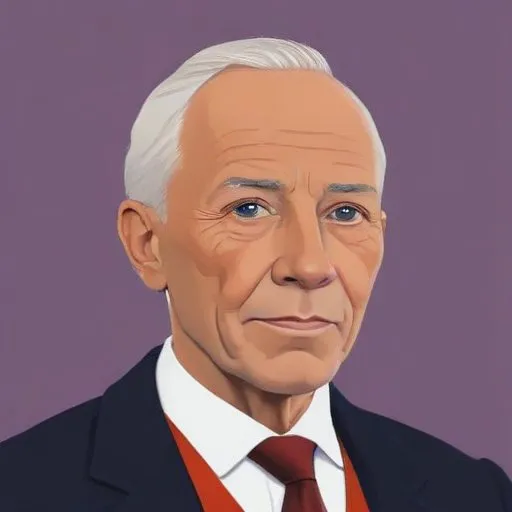
Colin Bundy: A Pioneering South African Historian
A Career Marked by Revisionist Historiography
Colin Bundy, a renowned South African historian, is celebrated for his groundbreaking contributions to the field of South African history, particularly his revisionist approach to understanding the country's rural past from a Marxist perspective. His work has significantly reshaped the narrative of South Africa's history, incorporating Africanist and underdevelopment theories to provide a more nuanced understanding of the country's complex past.
Early Life and Education
Born on October 4, 1944, in South Africa, Bundy received his secondary education at Graeme College, Grahamstown, in the Eastern Cape Province. He went on to pursue higher education at the University of Natal, where he earned his B.A., and the University of the Witwatersrand, where he obtained his B.A. Hons. As a Rhodes Scholar, Bundy furthered his studies at Merton College, Oxford, from 1968 to 1970, and later became a Beit Senior Research Scholar at St Antony's from 1970 to 1972. During this period, he completed his M.Phil. and D.Phil. at the University of Oxford, culminating in his thesis, "African Peasants and Economic Change in South Africa, 1870-1913, with Particular Reference to the Cape."
Academic Career and Administrative Roles
Bundy's academic career has been marked by a series of prominent administrative positions. He served as director and principal of the School of Oriental and African Studies (SOAS) from 2001 to 2006, deputy vice-chancellor of the University of London from 2003 to 2006, and vice-chancellor and principal of the University of the Witwatersrand from 1997 to 2001. Prior to these roles, he was director of the Institute for Historical Research from 1992 to 1994 and vicerector of the University of the Western Cape from 1994 to 1997. Bundy's most recent position was as principal of Green Templeton College, Oxford, a position he held from 2008 until his retirement.
Honors and Affiliations
Throughout his career, Bundy has been recognized for his contributions to the field of history. He is an honorary fellow of Kellogg College and has been a research fellow at Queen Elizabeth House, Oxford. Additionally, Bundy is a trustee of the Canon Collins Educational and Legal Assistance Trust.
Philosophical Contributions and Beliefs
Bundy's work is characterized by a commitment to understanding the complexities of South Africa's rural past. His deployment of Marxist, Africanist, and underdevelopment theories has significantly expanded the scope of South African historiography. His scholarship has also been marked by a critical engagement with the legacy of colonialism and apartheid in South Africa.
Influence on Modern Society
Bundy's work has had a profound impact on our understanding of South Africa's complex history, shaping the narrative of the country's rural past and informing contemporary debates on development and inequality. His influence extends beyond the academic community, with his work informing policy and public discourse on issues related to social and economic justice.
Legacy and Comparative Analysis
Bundy's contributions to South African historiography are unparalleled, and his influence can be seen in the work of subsequent historians who have built upon his revisions. A comparative analysis of Bundy's work with that of his contemporaries reveals a distinct approach that has reshaped the field of South African history.
Personal Milestones and Key Life Events
Bundy's life has been marked by significant personal milestones, including his Rhodes Scholarship and his subsequent academic achievements. His administrative roles have afforded him the opportunity to shape the direction of esteemed institutions, leaving a lasting impact on the academic community.
Quotes and Memorable Sayings
While Bundy's written work speaks volumes about his scholarship and commitment to understanding South Africa's complex history, his spoken words offer insight into his philosophical approach. Unfortunately, there are limited quotes available from Bundy, a testament to his humility and focus on his work rather than self-promotion.
Historical Context and Legacy
Bundy's work must be understood within the context of South Africa's complex history, marked by colonialism, apartheid, and the struggle for democracy. His contributions have reshaped the narrative of this history, providing a more nuanced understanding of the country's rural past. As a result, his work has had a profound impact on our understanding of South Africa's contemporary challenges and the imperative for social and economic justice.
Career Highlights and Major Works
- African Peasants and Economic Change in South Africa, 1870-1913, with Particular Reference to the Cape (thesis)
- The Rise and Fall of the South African Peasantry (1980)
- Essays on the Social and Economic History of South Africa (1987)
Conclusion
Colin Bundy's remarkable career has left an indelible mark on the field of South African history. His commitment to understanding the complexities of the country's rural past has reshaped the narrative of this history, informing contemporary debates on development and inequality. As a scholar, administrator, and public intellectual, Bundy's influence extends beyond the academic community, shaping our understanding of South Africa's complex history and its ongoing struggle for social and economic justice.