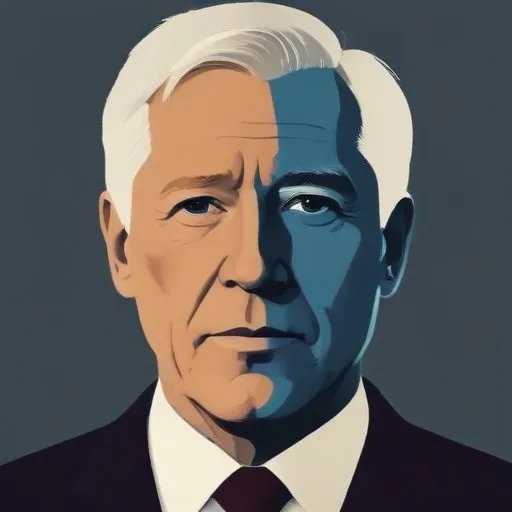
Conrad Burns: The Cattle Rancher-Turned-Senator Who Shaped Montana's Politics
A Politician with a Passion for Agriculture
Conrad Burns is remembered as a pioneering Republican senator from Montana, who leveraged his agricultural background to champion the interests of farmers and ranchers in Washington D.C. As the longest-serving Republican senator in Montana's history, Burns left an indelible mark on the state's politics, earning him a reputation as a stalwart defender of the agriculture industry.
Early Life and Education
Born on January 25, 1935, on a farm near Gallatin, Missouri, Burns grew up surrounded by the rhythms of rural life. He graduated from Gallatin High School in 1952 and briefly attended the University of Missouri's College of Agriculture before enlisting in the Marine Corps in 1955. Burns served in Japan and Korea as a small-arms instructor, an experience that instilled in him the discipline and work ethic that would define his later political career.
Rise to Prominence
After his military service, Burns worked for Trans World Airlines and Ozark Air Lines, eventually settling in Montana in 1962 as a field representative for Polled Hereford World magazine. It was during this period that he developed a passion for agriculture, which would become a central theme in his political career. In 1968, Burns became a cattle auctioneer for the Billings Livestock Commission and later founded the Northern Agricultural Network, a radio and television network that provided critical market news to farmers and ranchers across the state.
Entry into Politics
Burns' foray into politics began in 1975, when he won a seat on the Yellowstone County Commission, serving for two years. In 1988, he ran for the U.S. Senate and won, becoming the second Republican popularly elected to represent Montana in the Senate. During his three terms in office, Burns sat on the Senate Appropriations Committee, chairing its Subcommittee on the Interior, and was also chairman of the Commerce, Science, and Transportation Committee's Communications subcommittee.
Key Legislative Achievements
Burns' legislative accomplishments were shaped by his commitment to Montana's agriculture industry. Some notable achievements include:
- Co-authoring the 1990 Farm Bill, which provided critical support to farmers and ranchers during a period of economic uncertainty.
- Securing funding for the construction of the Fort Peck Dam, a critical infrastructure project that benefits Montana's agricultural community.
- Advocating for the reintroduction of wolves in Yellowstone National Park, a move that sparked controversy but ultimately contributed to the park's ecological balance.
Later Life and Legacy
After retiring from the Senate in 2007, Burns went on to work as a lobbyist, continuing to advocate for the interests of Montana's agriculture industry. He passed away on April 28, 2016, leaving behind a legacy as a champion of rural America and a dedicated public servant.
Personal Milestones
Some notable personal milestones in Burns' life include:
- Marrying Phyllis Jean Kuhlmann in 1967 and having three children, Kate, Keely, and Garrett.
- Founding the Northern Agricultural Network, which grew to serve 31 radio stations and six television stations by 1986.
- Receiving the prestigious Montana Farmer of the Year award in 1974.
Influence on Modern Society
Burns' commitment to Montana's agriculture industry has had a lasting impact on the state's economy and politics. His legacy serves as a testament to the power of grassroots political activism and the importance of rural voices in shaping national policy.
FAQ
What was Conrad Burns role in politics?
Conrad Burns was an American journalist and politician who served as a United States Senator from Montana from 1989 to 2007. He was a Republican and focused on issues related to agriculture, trade, and foreign policy.
What was Conrad Burns background before politics?
Before entering politics, Conrad Burns worked as a journalist and a television anchor. He was also a rancher and had a deep understanding of agricultural issues.
What was Conrad Burns stance on issues?
Conrad Burns was a conservative who supported issues like limited government, lower taxes, and a strong national defense. He was also a strong advocate for agriculture and rural development.
Did Conrad Burns face any controversy?
Yes, Conrad Burns faced controversy during his political career, including allegations of corruption and abuse of power. He was also criticized for his handling of Native American issues.
How did Conrad Burns die?
Conrad Burns died on April 28, 2016, at the age of 81, after a long battle with natural causes.