


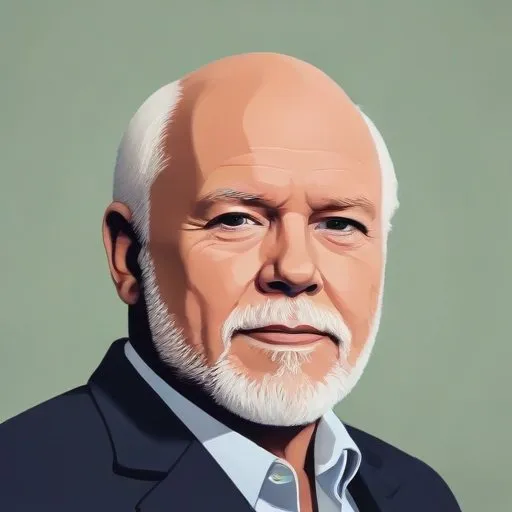
Pioneering geneticist who sequenced the human genome and created the first self-replicating synthetic cell, revolutionizing our understanding of life and its potential. 82
Craig Venter is a name synonymous with revolutionary breakthroughs in biotechnology and genomics. As the first scientist to sequence the human genome, Venter has left an indelible mark on the scientific community, pushing the boundaries of what is possible in the realm of synthetic biology.
Venter's journey to the forefront of genetic research began with his work at the National Institutes of Health (NIH), where he developed Expressed Sequence Tags (ESTs), a technique used to identify genes. This innovation propelled him to lead the Celera Genomics project, a private venture that successfully mapped the human genome in 2000.
The same year, Venter founded the Institute for Genomic Research (TIGR), which focused on sequencing microbial genomes. He later established the J. Craig Venter Institute (JCVI), a non-profit research organization dedicated to advancing genomics and synthetic biology.
In 2010, Venter created the first self-replicating synthetic cell, Mycoplasma mycoides JCVI-syn1.0. This groundbreaking achievement demonstrated the potential for creating microorganisms with customized functions, sparking a new era in synthetic biology.
Venter's early life was marked by a carefree spirit, with a passion for surfing and sailing. This free-spirited nature has translated into his approach to science, where he is known for pushing boundaries and challenging conventional thinking.
In his autobiography, A Life Decoded, Venter reflected on his experiences, citing his father's sudden passing as a catalyst for his drive to achieve something meaningful in life. His mantra, "If you want immortality, do something meaningful with your life," reflects his commitment to making a lasting impact in the scientific community.
Venter's unconventional approach to science has not been without controversy. Critics have accused him of being overly competitive and aggressive in his pursuit of scientific breakthroughs, as well as prioritizing patenting genetic sequences over collaborating with the scientific community.
However, Venter's responses to these criticisms have been characteristically forthright, emphasizing the importance of innovation and entrepreneurship in driving scientific progress.
Craig Venter's pioneering work in genomics and synthetic biology has opened doors to unprecedented possibilities in fields such as medicine, biotechnology, and environmental science. As a visionary and a maverick, Venter continues to inspire a new generation of scientists and entrepreneurs to push the boundaries of what is thought possible.
Venter's influence extends beyond the scientific community, with his work having far-reaching implications for humanity's understanding of life and the natural world.
In a world where the boundaries between science, technology, and philosophy are increasingly blurred, Craig Venter stands as a beacon of innovation and progress, inspiring us to rethink the very fabric of life itself.
76 Years Old
Led the Human Genome Project, decoding human DNA and paving the way for genetic medicine. Currently directs the National Institutes of Health, shaping biomedical research and policy.
98 Years Old
Discovered the structure of DNA, revolutionizing our understanding of genetics and earning a Nobel Prize. Pioneering work in molecular biology has far-reaching implications for medicine and beyond.
Born in 1916
Pioneering scientist who discovered the structure of DNA, revolutionizing our understanding of genetics and life itself.
Born in 1920
A British scientist who contributed significantly to the discovery of the structure of DNA, providing high-quality X-ray crystallography images that helped James Watson and Francis Crick develop their famous model.
Born in 1916
A Nobel Prize-winning physicist and biologist who contributed significantly to the discovery of the structure of DNA, using X-ray crystallography to produce the first clear images of the molecule.
81 Years Old
Developed the polymerase chain reaction (PCR) technique, a groundbreaking method for amplifying DNA sequences, revolutionizing genetics and molecular biology research.
Born in 1924
A pioneer in the field of atmospheric physics, known for his groundbreaking research on the ozone layer and climate change, and a vocal skeptic of global warming theories.
94 Years Old
Pioneering researcher who discovered the first method for rapid DNA sequencing, revolutionizing genetics and earning a Nobel Prize in Chemistry in 1980.
