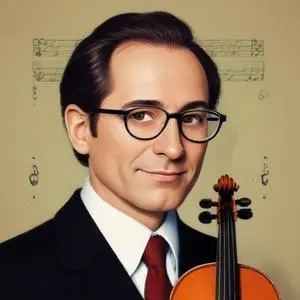
Curt Sachs: The Pioneering Musicologist Behind the Hornbostel-Sachs System
The Birth of Modern Organology
Curt Sachs, a German musicologist, is renowned for co-founding modern organology, the study of musical instruments. His most significant contribution is the Hornbostel-Sachs system, a comprehensive classification system for musical instruments, developed in collaboration with Erich von Hornbostel.
Early Life and Education
Born on June 29, 1881, in Berlin, Germany, Sachs initially pursued piano, music theory, and composition. However, he earned his doctorate in the history of art from Berlin University in 1904, with a thesis on the sculpture of Verrocchio. Sachs' career began as an art historian, but his passion for music soon took center stage.
From Art to Music
Sachs' appointment as professor of musicology at Berlin University marked a significant shift towards music. He became the director of the Staatliche Instrumentensammlung, a vast collection of musical instruments, which he reorganized and restored. This marked the beginning of his career as an organologist.
A Pioneering Publication
In 1913, Sachs published
RealLexicon der Musikinstrumente, a monumental work that surveyed musical instruments over a span of 200 years. The following year, he collaborated with Erich Moritz von Hornbostel to publish a new system of musical instrument classification in
Zeitschrift für Ethnologie, now known as the Hornbostel-Sachs system.
The Hornbostel-Sachs System
The Hornbostel-Sachs system has undergone revisions over the years, facing some criticism, but remains the most widely used classification system among ethnomusicologists and organologists. This system categorized instruments into four main categories: aerophones, chordophones, membranophones, and idiophones.
Persecution and Exile
When the Nazi Party came to power in 1933, Sachs was dismissed from his posts in Germany due to his Jewish heritage. He fled to Paris and later to the United States, settling in New York City. Sachs continued his academic pursuits, teaching at New York University from 1937 to 1953 and working at the New York Public Library.
American Career and Legacy
In 1953, Sachs was appointed adjunct professor at Columbia University, a position he held until his death in 1959. He served as president of the American Musicological Society from 1948 to 1950. Throughout his life, Sachs authored numerous books on musicology, leaving an indelible mark on the field.
Personal Milestones and Key Life Events
- 1881: Born in Berlin, Germany
- 1904: Earned doctorate in the history of art from Berlin University
- 1913: Published RealLexicon der Musikinstrumente
- 1914: Co-published the Hornbostel-Sachs system with Erich Moritz von Hornbostel
- 1933: Dismissed from German posts due to Nazi persecution
- 1937-1953: Taught at New York University
- 1948-1950: Served as president of the American Musicological Society
- 1953-1959: Adjunct professor at Columbia University
- 1959: Passed away in New York City
Sachs' groundbreaking work has left a lasting impact on the field of musicology, earning him a place among the most influential musicologists of the 20th century. His legacy continues to inspire new generations of scholars and musicians, ensuring the Hornbostel-Sachs system remains a cornerstone of organology.
FAQ
What was Curt Sachss contribution to musicology?
Curt Sachs was a renowned German-American composer and musicologist who made significant contributions to the field of musicology. He is best known for his work on the history of musical instruments and his development of the Sachs-Hornbostel system of instrument classification.
What is the Sachs-Hornbostel system of instrument classification?
The Sachs-Hornbostel system of instrument classification is a system developed by Curt Sachs and Erich von Hornbostel that categorizes musical instruments into four main categories: idiophones, membranophones, chordophones, and aerophones. This system is still widely used today in musicology and ethnomusicology.
What was Curt Sachss role in the development of ethnomusicology?
Curt Sachs played a key role in the development of ethnomusicology, the study of music in cultures around the world. He was one of the first musicologists to recognize the importance of studying music in its cultural context, and his work laid the foundation for future generations of ethnomusicologists.
Did Curt Sachs have any notable students?
Yes, Curt Sachs had several notable students, including the famous musicologist and ethnomusicologist, Alan Merriam. Merriam went on to become a prominent figure in the field of ethnomusicology and made significant contributions to our understanding of music in cultures around the world.
What is Curt Sachss legacy in musicology?
Curt Sachss legacy in musicology is profound. He was a pioneer in the field of musicology and his work laid the foundation for future generations of musicologists and ethnomusicologists. His contributions to our understanding of musical instruments and the cultural context of music are still widely recognized today.