


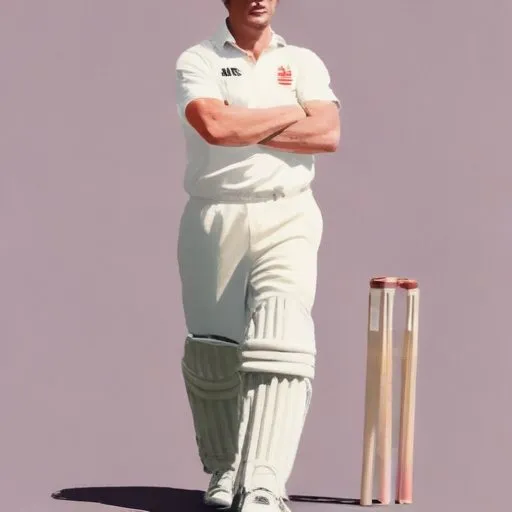
A right-handed opening batsman who played for England and Lancashire, known for his elegant style and impressive record in Test cricket.
Cyril Washbrook is renowned for being one of the most accomplished English cricketers of all time, best known for his remarkable opening partnerships with Len Hutton, which earned him a place in the history books as one of the most iconic cricket duos of the 20th century. With a career spanning over two decades, Washbrook's impressive batting skills and exceptional fielding abilities made him a stalwart of the Lancashire and England cricket teams.
Born on December 6, 1914, in Barrow, Clitheroe, Lancashire, Washbrook was educated at Bridgnorth Grammar School. At the tender age of 18, he joined Lancashire County Cricket Club, where he quickly established himself as a talented young player. In 1935, he cemented his place in the team, scoring an impressive 1,724 runs and finishing fifth in the national averages.
Washbrook's breakthrough came in 1937 when he was selected to play his first Test match against New Zealand at The Oval. Although he didn't make a significant impact in his debut match, he continued to hone his skills and eventually became a regular member of the England team. The war interrupted his career, and during this period, he served as a physical training instructor in the Royal Air Force.
The 1946-1947 Ashes series marked a significant turning point in Washbrook's career, as he formed a devastating opening partnership with Len Hutton. The duo's incredible form, which included three consecutive century stands, earned them a place in the hearts of cricket fans in Australia and England. Washbrook's unique batting style, characterized by his hooked and pulled shots, made him a formidable opponent on the pitch.
Cyril Washbrook's remarkable career was marked by numerous achievements, including his highest Test score of 195, made during the tour of South Africa in 1948-1949. He shared a record-breaking 359-run partnership with Hutton, which remains the first-wicket record for England to this day.
Washbrook's impact on the game extends beyond his impressive statistics. He was an exceptional fielder, known for his agility and quick reflexes, particularly at cover. His dedication to the sport and his infectious enthusiasm earned him a special place in the hearts of cricket fans and his peers alike.
Washbrook's cricketing career spanned over two decades, eventually coming to an end in 1959 when he retired at the age of 44. After his retirement, he remained involved in cricket, serving as a coach and mentor to young players.
Cyril Washbrook passed away on April 27, 1999, but his legacy continues to inspire generations of cricketers and fans alike. His remarkable achievements, both on and off the field, have cemented his place as one of the greatest English cricketers of all time.
Born in 1916
A highly skilled batsman and captain of the English cricket team, known for his exceptional technique and leadership during the post-war era.
Born in 1903
A dominant right-handed batsman and successful coach who held multiple records for his impressive cricketing career, including the highest individual Test score for England.
66 Years Old
A former All Blacks captain and chairman of the New Zealand Rugby Union, known for his leadership and contributions to the sport's governance.
Born in 1894
A renowned opening batsman who dominated cricket in the early 20th century, known for his exceptional defensive skills and record-breaking partnerships.
Born in 1901
A left-handed batsman who played for England in the early 20th century, known for his aggressive style and century in the 1932-33 Ashes series.
Born in 1922
A legendary English cricketer who took a record 19 wickets in a single Test match, later becoming a renowned cricket commentator.
97 Years Old
A right-arm medium-pace bowler and hard-hitting lower-order batsman, known for his aggressive style and ability to take wickets on any surface.
Born in 1920
A wicket-keeper who played for England and Kent, known for his exceptional glovework and 11 Test stumpings in a single series.
