


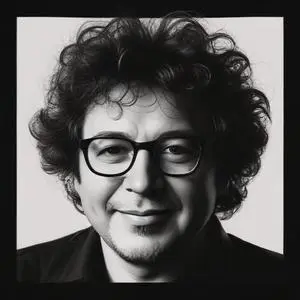
A renowned glass sculptor and educator, known for his vibrant, intricate, and organic glass artworks that blur the line between art and nature.
Dale Chihuly is renowned for elevating blown glass from a mere craft to a majestic art form, creating breathtaking installations that defy gravity and dazzle the senses. With his innovative techniques and unwavering passion, he has redefined the realm of glass art, producing some of the most exquisite and intricate sculptures the world has ever seen.
Born on September 20, 1941, in Tacoma, Washington, Dale Patrick Chihuly was the son of George and Viola Chihuly. His paternal grandfather, a Slovakian immigrant, instilled in him an appreciation for the arts. Chihuly's early life was marked by tragedy, with the loss of his older brother in a Navy aviation accident and his father's sudden passing in 1958.
Despite these setbacks, Chihuly's mother encouraged him to pursue higher education. He enrolled at the College of Puget Sound, later transferring to the University of Washington to study interior design. It was during this time that he discovered his fascination with glass, learning to melt and fuse it in 1961. This newfound passion led him to drop out of university and travel to Florence, where he honed his skills and met architect Robert Landsman, who would later become a significant influence in his life.
Chihuly's experimentation with glassblowing began in 1965, and he soon received a full scholarship to attend the University of Wisconsin-Madison, where he studied under the tutelage of Harvey Littleton, a pioneer in the American studio glass movement. In 1967, Chihuly earned a Master of Science degree in sculpture, followed by a Master of Fine Arts degree from the Rhode Island School of Design in 1968.
Throughout his illustrious career, Chihuly has pushed the boundaries of glass art, creating intricate, large-scale installations that blend color, form, and texture. His most famous series, including the iconic Fiori, Chandeliers, and , have captivated audiences worldwide. Chihuly's work can be found in over 200 museum collections, including the Louvre, the Metropolitan Museum of Art, and the Victoria and Albert Museum.
Chihuly's contributions to the art world have been recognized with numerous awards, including 12 honorary doctorates, two National Endowment for the Arts grants, and a Louis Comfort Tiffany Foundation grant. He has also been honored with the National Medal of Arts, the highest award given to artists and patrons of the arts by the United States government.
Chihuly's impact extends beyond the art world. He has been involved in various charitable initiatives, including the establishment of the Hilltop Artists program, which provides arts education to at-risk youth. His legacy continues to inspire a new generation of glass artists, ensuring that his innovative spirit and creative vision will endure for generations to come.
With an estimated net worth of over $1 billion, Chihuly's artistic empire has had a significant impact on the art market, making glass art a coveted and valuable commodity. His business acumen has enabled him to build a thriving enterprise, with a global network of galleries, studios, and exhibitions.
In 1994, Chihuly survived a near-fatal car accident, which left him with a broken leg and a newfound appreciation for life. This Brushes with mortality inspired him to redefine his artistic vision, leading to the creation of some of his most celebrated works.
Chihuly's art has transcended the boundaries of the art world, influencing architecture, design, and popular culture as a whole. His unique aesthetic has been incorporated into film, television, and advertising, making glass art a mainstream phenomenon.
Chihuly's extensive career has been marked by numerous landmark exhibitions, including Chihuly Over Venice (1995), Chihuly in the Light of Jerusalem (1999), and Chihuly at the V&A (2001). His largest and most ambitious project to date is the Garden Cycle, a series of installations that explore the relationship between glass, nature, and architecture.
