


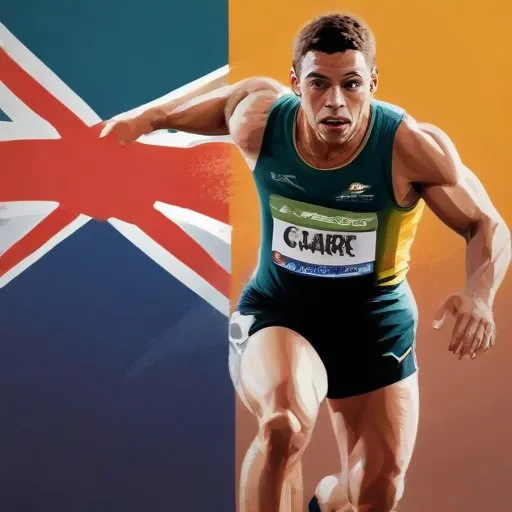
Australian sprinter who won gold at the 1990 Commonwealth Games and set multiple national records, earning him the title of Australia's fastest man.
Darren Clark is an Australian retired sprinter who left an indelible mark on the world of athletics, particularly in the 400 meters event. With a personal best time of 44.38 seconds, achieved at the 1988 Seoul Olympics, he holds the current Oceanian record, a feat that would have placed him second in the 2008 Beijing Olympics 400m final.
Throughout his career, Clark demonstrated remarkable speed and agility, earning him the nickname "The Fastest White Man Alive." He co-holds the Oceanian record in the 4x400 meters relay with a time of 2:59.70 minutes, achieved with his teammates Bruce Frayne, Gary Minihan, and Rick Mitchell at the 1984 Los Angeles Olympics.
Clark's impressive athletic career includes two fourth-place finishes in consecutive Olympics, 1984 and 1988. Despite facing setbacks, including an Achilles tendon injury that forced him to withdraw from the 1992 Barcelona Olympic team, he continued to push himself, taking a break from the track to play a season of New South Wales Rugby League for the Balmain Tigers in 1991.
In recognition of his outstanding contributions to athletics, Clark was inducted into the Sport Australia Hall of Fame in 2000 and the Athletics Australia Hall of Fame in 2014. These prestigious honors acknowledge his dedication, perseverance, and exceptional talent, cementing his place as one of Australia's most accomplished athletes.
In 1991, Clark made a surprise move, trading his spikes for a rugby league jersey, playing mostly in reserve grade for the Balmain Tigers. This unusual career detour showcases his adaptability and willingness to take on new challenges, even if it meant stepping away from the track temporarily.
Darren Clark's remarkable athletic achievements, combined with his courage to explore new opportunities, have inspired generations of athletes and non-athletes alike. His legacy extends beyond the track, serving as a testament to the power of human resilience and the importance of embracing new experiences.
As an athlete, Clark pushed the boundaries of human speed and endurance. As a person, he demonstrated an extraordinary capacity for adaptation and growth. His remarkable journey, marked by triumphs and setbacks, continues to inspire and motivate others to pursue their passions, no matter how unconventional they may seem.
53 Years Old
Australian Olympic gold medalist and world champion sprinter who lit the Olympic Cauldron at the 2000 Sydney Olympics, symbolizing Aboriginal pride and Australian unity.
44 Years Old
A dominant freestyle swimmer, winning five Olympic gold medals and setting multiple world records, cementing his status as one of the greatest swimmers of all time.
44 Years Old
Australian track and field athlete who specialized in the 400 meters hurdles, winning numerous Olympic and World Championship medals. She's a pioneering female athlete in her country.
52 Years Old
A former rugby league player turned sportscaster, known for his commentary and analysis of the sport in Australia.
75 Years Old
Australian sprinter who won seven Olympic and Commonwealth Games medals, and is recognized as one of the country's greatest female athletes.
66 Years Old
Australian hurdler and coach who won Olympic gold and silver medals, holding multiple national records; renowned for her exceptional speed and technique.
50 Years Old
Australian Formula One driver who won nine Grands Prix and finished third in the World Drivers' Championship three times. Known for his speed and consistency on the track.
