


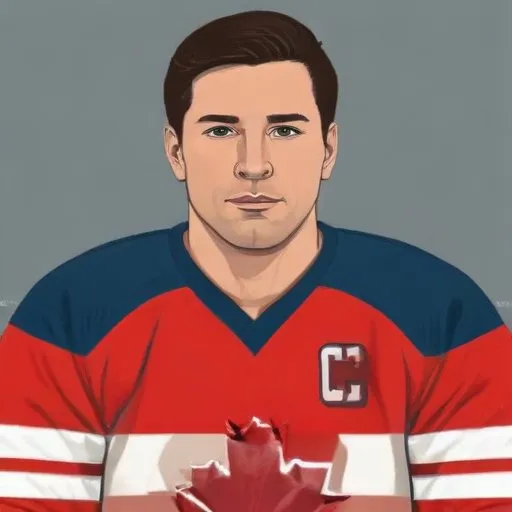
A Canadian ice hockey player and coach who founded the Canadian national team and led it to the 1964 Winter Olympics, earning a bronze medal. He's a pioneer in Canadian hockey development.
David Bauer, a Canadian ice hockey player, coach, educator, and Catholic priest, is best known for establishing the Canada men's national ice hockey team program in 1963. This pioneering effort revolutionized the country's approach to international ice hockey competitions and left a lasting impact on the sport.
Born on November 2, 1924, Bauer's love for hockey was evident from a young age. He was offered a playing contract by the Boston Bruins at just 15, but declined on his father's advice to complete his education. This early setback led Bauer to seek more meaning in life and pursue a path that would eventually bring him closer to world peace.
After serving as captain of the Toronto St. Michaels Majors for two seasons and winning the 1944 Memorial Cup, Bauer felt called to the priesthood. He was ordained as a Catholic priest in the Congregation of St. Basil and went on to teach at St. Michaels College School.
Bauer coached multiple levels of hockey at St. Michaels, sat on the junior ice hockey council for the Ontario Hockey Association, and lobbied for a shortened playing schedule for student-athletes. His dedication to the well-being of young players led him to coach the St. Michaels Majors to victory in the 1961 Memorial Cup.
In 1961, Bauer was reassigned to St. Marks College at the University of British Columbia (UBC), where he coached the UBC Thunderbirds for two seasons. During this time, he led the team to the finals at the 1963 CIAU University Cup.
The Canadian Amateur Hockey Association approved Bauer's proposal to create a team of Canadian university students combined with senior ice hockey players to represent Canada in international competitions. This marked a significant departure from the existing practice of selecting the reigning Allan Cup champion team.
In September 1963, Bauer established the Canada men's national ice hockey team program, seeking players who prioritized their studies and training alongside athletic excellence. He prepared the team for the larger international ice hockey rink surface and differences from North American ice hockey rules, aiming to improve Canada's reputation and reduce penalties for rough play.
Under Bauer's guidance, Canada finished in fourth place based on goal differential at the 1964 Winter Olympics. His vision and dedication paved the way for future generations of Canadian ice hockey players, earning him a permanent place in the history of Canadian sports.
David Bauer's remarkable journey is a testament to the power of perseverance, faith, and a passion for making a difference in the world. His legacy continues to inspire athletes, educators, and communities across Canada, cementing his place as one of the most influential figures in Canadian ice hockey history.
65 Years Old
The greatest hockey player of all time, holding numerous records, including most career goals and assists, and leading his team to four Stanley Cup championships. A legendary athlete and iconic figure in the sport.
61 Years Old
A legendary hockey player who won two Stanley Cups and is a two-time Olympic gold medalist, known for his incredible on-ice skills and overcoming health issues to dominate the sport.
84 Years Old
A legendary Hall of Famer who dominated the NHL as a prolific goal-scorer and later became a successful coach and executive, known for his iconic mustache and charismatic personality.
65 Years Old
A legendary defenseman who won five Norris Trophies and holds the record for most goals, assists, and points by a defenseman in NHL history. He's a Boston Bruins icon and one of the greatest players of all time.
65 Years Old
A Hall of Fame defenseman who holds the record for most goals, assists, and points by a defenseman in NHL history, known for his incredible speed and scoring ability.
57 Years Old
Legendary center who led the Colorado Avalanche to two Stanley Cup championships and won numerous individual awards, including the Hart Trophy and Conn Smythe Trophy.
