


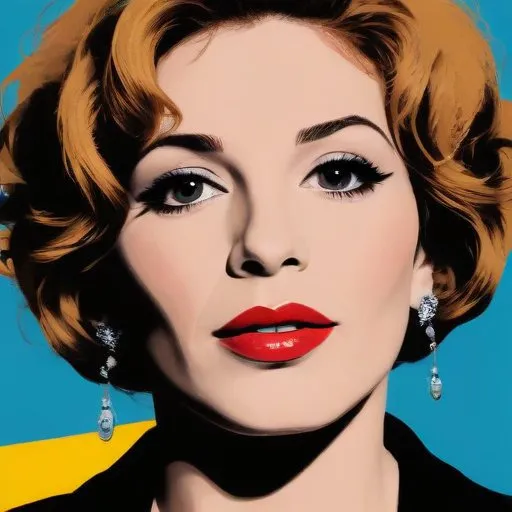
A renowned singer-songwriter who transformed Jewish liturgical music with contemporary folk-inspired melodies, making it more accessible and engaging for a new generation.
Debbie Friedman was an American singer-songwriter of Jewish religious music, a passionate feminist, and a lover of music, who revolutionized the way we pray and express ourselves through song. She is best known for her iconic setting of Mi Shebeirach, the prayer for Healing, which has become an integral part of Jewish liturgy, used by hundreds of congregations across America.
Debbie Friedman was born on February 23, 1951, in Utica, New York, to Freda and Gabriel Friedman. She spent her early years in St. Paul, Minnesota, where she received choral training with her high school's chamber choir and songleading lessons with her NFTY youth group. These formative experiences laid the foundation for her future as a pioneer in Jewish music.
Friedman's music spanned over 22 albums, recorded between 1971 and 2010. Her work was inspired by folk music legends such as Joan Baez, Peter, Paul and Mary, and others. She wrote songs that resonated with people of all ages, employing both English and Hebrew lyrics. Some of her most beloved songs include "The Aleph Bet Song," "Miriam's Song," "Not By Might," and "I Am A Latke."
Friedman was a trailblazer in using gender-sensitive language in Jewish liturgy, incorporating feminine forms of the Divine and altering masculine-only text references. Her pioneering work paved the way for women's voices to be heard in Jewish prayer and community. Orthodox Jewish feminist Blu Greenberg noted that Friedman had a significant impact on Modern Orthodox shuls, women's tefillah prayer, and the Orthodox feminist circles.
Friedman received numerous awards and honors for her contributions to Jewish music and feminism. Her advocacy for inclusive language and women's empowerment has inspired generations of Jewish leaders and musicians.
Friedman's music was not only a reflection of her faith but also a testament to her kindness and compassion. Cantor Harold Messinger of Beth Am Israel in Penn Valley, PA, described Friedman as "a religious bard and angel for the entire community." Friedman once said, "My music is a way to connect with the divine, with ourselves, and with each other."
Debbie Friedman's legacy extends far beyond her music. She has inspired a new generation of Jewish musicians, cantors, and songleaders. Her work has had a profound impact on Jewish liturgy, promoting inclusivity and equality. As Cantor Messinger so eloquently put it, "Debbie was the first, and every contemporary hazzan, song leader, and layperson who values these concepts is in her debt."
Debbie Friedman's music and message continue to uplift and inspire, reminding us of the transformative power of song and the importance of inclusivity in our prayers and communities.
In conclusion, Debbie Friedman's remarkable life and work serve as a beacon of hope, unity, and empowerment, reminding us that music has the power to transform and uplift us all.
