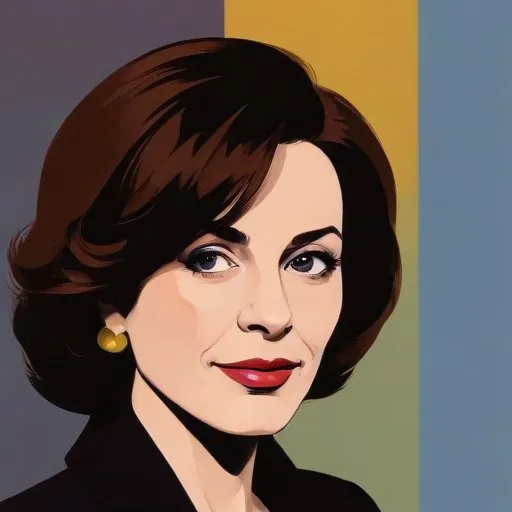
Deborah Blum: A Pioneering Science Journalist and Author
Deborah Blum is renowned for her exemplary work as a science journalist and author, particularly known for her acclaimed books,
The Poisoner's Handbook (2010) and
The Poison Squad (2018). As the director of the Knight Science Journalism program at the Massachusetts Institute of Technology, Blum has made significant contributions to the field of science writing, earning her a prominent position among her contemporaries.
Early Life and Education
Born on October 19, 1954, in Urbana, Illinois, Blum grew up in various cities, including Baton Rouge, Louisiana, Bristol, England, and Athens, Georgia. She graduated from the University of Georgia, where she majored in journalism and served as the chief editor of the student newspaper,
The Red and Black. Blum's early exposure to journalism laid the foundation for her future success.
Career Highlights and Major Works
Blum's career in science journalism spans several decades, with notable achievements in environmental reporting. Her work as a science writer for the
Sacramento Bee led to the creation of the Pulitzer Prize-winning series, "The Monkey Wars" (1992), which explored the conflicts between scientists and animal rights activists. This series demonstrated Blum's ability to tackle complex, contentious issues with depth and nuance.
In addition to her newspaper work, Blum has authored several books, including
The Poisoner's Handbook, which examines the development of forensic science in the early 20th century, and
The Poison Squad, a historical account of the origins of the Food and Drug Administration. Her writing has been featured in prominent publications, such as
The New York Times and
Wired, and she currently maintains a blog,
Elemental, on the
Wired platform.
Awards and Honors
Blum's outstanding contributions to science journalism have been recognized with numerous awards, including:
- Pulitzer Prize for Beat Reporting (1992)
- National Academy of Sciences Communication Award (2006)
- Baxter Prize for Science Writing (2010)
Influence on Modern Society
Deborah Blum's work has had a significant impact on the way science is communicated to the general public. Her writing has not only elevated the profile of science journalism but has also contributed to a greater understanding of complex scientific concepts. By making science accessible and engaging, Blum has inspired a new generation of science writers and enthusiasts.
Philosophical Contributions and Beliefs
Blum's approach to science journalism is rooted in a commitment to accuracy, rigor, and storytelling. She believes that science writing should not only inform but also engage and inspire readers. Her philosophy emphasizes the importance of conveying the human side of scientific research, highlighting the personal stories and motivations behind groundbreaking discoveries.
Legacy and Historical Context
Deborah Blum's contributions to science journalism have cemented her place as one of the most influential science writers of her generation. Her work has paved the way for future generations of science journalists, establishing a high standard for excellence in the field. As a pioneer in her field, Blum continues to inspire and educate readers about the wonders and importance of science.
FAQ
What is Deborah Blums most famous book?
Deborah Blums most famous book is The Poisoners Handbook, a historical true crime book that explores the development of forensic science in the early 20th century. The book was a finalist for the 2010 Los Angeles Times Book Prize.
What awards has Deborah Blum won for her writing?
Deborah Blum has won several awards for her writing, including the Pulitzer Prize for Beat Reporting in 1992 for her reporting on the environment and public health. She has also received a Guggenheim Fellowship and an Alfred P. Sloan Foundation grant.
What topics does Deborah Blum typically write about?
Deborah Blum typically writes about science, history, and true crime, often exploring the intersection of these topics. Her work often delves into the human stories behind scientific discoveries and the darker aspects of human nature.
Has Deborah Blum taught journalism?
Yes, Deborah Blum has taught journalism at several institutions, including the University of Wisconsin-Madison and Harvard University. She has also conducted workshops and lectures on science writing and narrative nonfiction.
Is Deborah Blum involved in any scientific organizations?
Yes, Deborah Blum is involved in several scientific organizations, including the National Association of Science Writers and the World Federation of Science Journalists. She has also served as a judge for several science writing awards.