


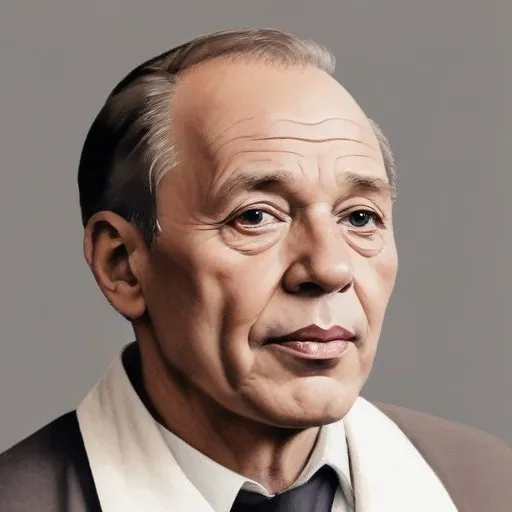
A South African journalist, poet, and academic who fought against apartheid through his writing and activism, using his words to inspire social change and justice.
Dennis Brutus, a South African activist, educator, journalist, and poet, is best known for his unfaltering campaign to ban South Africa from the Olympic Games due to its abhorrent racial policy of apartheid. Through his relentless efforts, Brutus shed light on the injustices of the apartheid regime, inspiring a generation of freedom fighters and earning himself a reputation as a champion of human rights.
Born on November 28, 1924, in Salisbury, Southern Rhodesia (now Harare, Zimbabwe), Brutus was the son of South African parents of mixed ancestry, including Khoi, Dutch, French, English, German, and Malaysian roots. At the age of four, his family moved to Port Elizabeth, South Africa, where he was classified as "coloured" under the apartheid regime's racial code.
Brutus pursued higher education, graduating with a BA from the University of Fort Hare in 1946 and later studying law at the University of the Witwatersrand. He taught English and Afrikaans at several high schools in South Africa from 1948, but his vocal criticism of apartheid led to his eventual dismissal.
Brutus's activism against the apartheid government began in the 1950s and 1960s. Influenced by the Trotskyist movement of the Eastern Cape, he joined the Anti-Coloured Affairs Department (Anti-CAD), a group that organised against the government's attempts to institutionalise divisions between blacks and coloureds.
In 1958, Brutus founded the South African Sports Association, which aimed to promote non-racial sports and challenge the apartheid regime's segregation policies. As Secretary of the organisation, he led a successful campaign to cancel a proposed cricket tour by Frank Worrell's West Indies to South Africa in 1959, citing the unfair treatment of non-white players.
Aside from his activism, Brutus was a talented poet, and his work often reflected his experiences as a black South African under apartheid. His poetry collections, such as Sirens, Knuckles and Bones and Letters to Martha, offer a glimpse into the struggles and injustices of life under apartheid.
In recognition of his tireless efforts to promote human rights and social justice, Brutus received the Lifetime Honorary Award from the South African Department of Arts and Culture in 2008. He also served as a Professor Emeritus at the University of Pittsburgh, where he taught literature and creative writing.
Brutus's unwavering dedication to challenging apartheid and promoting racial equality has left an indelible mark on South African history. His courageous activism, coupled with his literary talents, continues to inspire generations of freedom fighters and social justice advocates around the world.
"The most important thing in life is to stop saying 'I wish' and start saying 'I will'."
"We must not be afraid to dream of a better world, and we must not be afraid to work towards that dream."
"The struggle against apartheid is not just a struggle for human rights, but a struggle for humanity itself."
These powerful words from Dennis Brutus's speeches and writings continue to inspire and motivate individuals around the world to fight for social justice and human rights.
Born in 1918
A South African lawyer and politician who fought against apartheid, becoming the country's first black president and a symbol of racial reconciliation, earning a Nobel Peace Prize. He's a beacon of hope and freedom.
Born in 1917
A leading figure in the fight against apartheid, he served as President of the African National Congress and played a crucial role in mobilizing international opposition to the racist regime.
Born in 1912
A leading figure in the fight against apartheid, he was a co-founder of the African National Congress and spent 25 years in prison for his activism. He played a key role in shaping South Africa's transition to democracy.
Born in 1926
A Lithuanian-born South African revolutionary who fought against apartheid, leading the armed wing of the African National Congress and playing a key role in the country's transition to democracy.
96 Years Old
A South African anti-apartheid activist who spent 26 years in prison, including 18 years on Robben Island with Nelson Mandela, fighting for racial equality and democracy.
