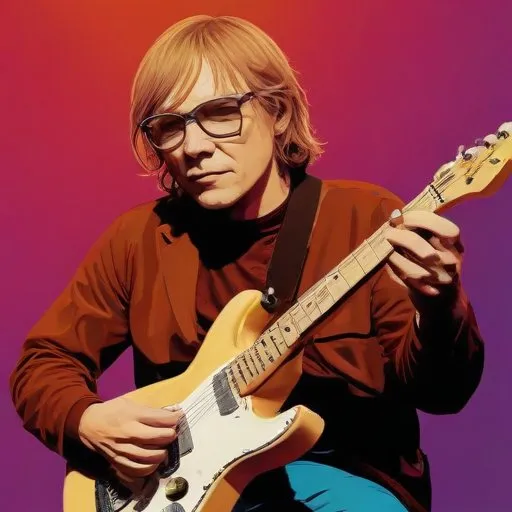
Dennis Coffey: The Guitar Legend Behind Motown's Funk and Soul
The Scorpio Sound
Dennis Coffey is a name synonymous with the funky, soulful sounds of Motown in the 1960s and 1970s. As a studio musician and guitarist, Coffey played a crucial role in shaping the sound of some of the era's biggest hits, including The Temptations' "Cloud Nine" and
Edwin Starr's "War". But it's his 1971 hit single "Scorpio" that catapulted him to fame, becoming a million-selling instrumental track that peaked at number nine on the Billboard Hot Soul Singles chart.
Early Life and Career
Born on November 11, 1940, in Copper City, Michigan, Coffey began playing the guitar at the age of 13. By 15, he was already playing his first recording session, backing Vic Gallon on the Gondola record label. In the early 1960s, he joined The Royaltones, a group that had hits with "Poor Boy" and "Flamingo Express". The Royaltones played sessions with other artists, including
Del Shannon, setting the stage for Coffey's future work with Motown.
The Funk Brothers and Motown
As a member of the legendary Funk Brothers studio band, Coffey played on dozens of recordings for Motown Records. He introduced a hard rock guitar sound to producer
Norman Whitfield's recordings, incorporating distortion, Echoplex tape-loop delay, and wah-wah effects. This unique sound can be heard on tracks like The Temptations' "Psychedelic Shack" and
Diana Ross and The Supremes' "Someday We'll Be Together".
Solo Success and Beyond
In addition to his work with The Funk Brothers, Coffey recorded several solo albums, including "Scorpio" and its follow-up, "Taurus", both credited to Coffey and the Detroit Guitar Band. Since then, he has continued to release music, exploring different genres and styles.
Awards and Legacy
"Scorpio" earned Coffey a gold disc from the Recording Industry Association of America in 1971. He also became the first white artist to perform on the television show Soul Train, playing "Scorpio" in 1972. Today, Coffey's influence can be heard in the work of countless musicians, from rock and funk to hip-hop and R&B.
Personal Milestones and Key Life Events
- 1955: Played first recording session at 15 years old, backing Vic Gallon on the Gondola record label.
- 1960s: Joined The Royaltones, playing sessions with other artists including Del Shannon.
- 1971: Released "Scorpio", which became a million-selling instrumental single.
- 1972: Became the first white artist to perform on Soul Train, playing "Scorpio".
Influence on Modern Society
Dennis Coffey's contributions to Motown's sound have had a lasting impact on modern music. His innovative use of guitar effects and techniques has inspired generations of musicians, from funk and soul to rock and hip-hop. His legacy continues to be felt, with his music remaining a staple of classic Motown playlists.
Visual Timeline and Milestones
 : Coffey as a young man, holding his guitar.
 : Coffey (far right) with The Funk Brothers studio band.
 : The cover art for Coffey's hit single "Scorpio".
Trivia and Fun Facts
- Coffey's guitar playing was so influential that he was dubbed "the white James Jamerson" by Motown musicians.
- He was one of the few white musicians to work extensively with Motown Records during the 1960s and 1970s.
- Coffey's music has been sampled by numerous hip-hop and R&B artists, including DJ Shadow and J Dilla.
FAQ
What is Dennis Coffeys impact on funk music?
Dennis Coffey is a legendary American guitarist who has had a significant impact on funk music. He is known for his unique playing style, which combines elements of rock, soul, and R&B. His work with artists such as The Temptations and Marvin Gaye has helped shape the sound of funk music. Sub-question: What are some of Dennis Coffeys most influential funk guitar riffs?
What are some of Dennis Coffeys notable collaborations?
Dennis Coffey has collaborated with a variety of artists, including The Temptations, Marvin Gaye, Stevie Wonder, and The Isley Brothers. He has also worked on numerous film and television soundtracks, including the iconic theme song for the TV show Black Belt Jones.
What is Dennis Coffeys connection to the Motown sound?
Dennis Coffey is closely associated with the Motown sound, having worked as a guitarist and session musician at Motown Records in the 1960s and 1970s. He played on many classic Motown recordings, including hits by The Supremes, The Temptations, and Marvin Gaye.
Has Dennis Coffey released any solo albums?
Yes, Dennis Coffey has released several solo albums, including Hair and Thangs and Electric Coffey. These albums showcase his unique guitar playing style and blend of funk, rock, and R&B influences.
Is Dennis Coffey still active in the music industry?
Yes, Dennis Coffey is still active in the music industry and continues to perform and record music to this day. He has also been involved in various music education initiatives, sharing his knowledge and expertise with aspiring musicians.