


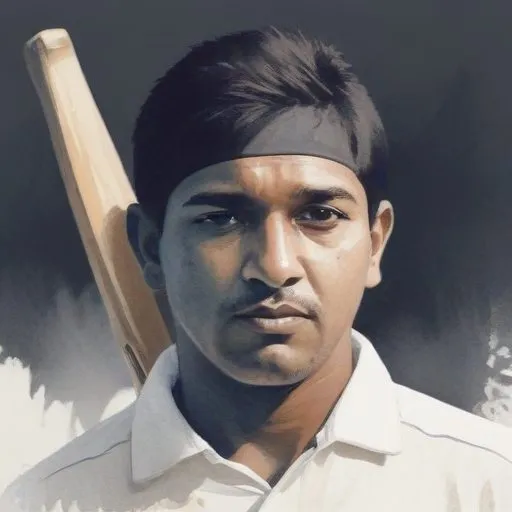
A talented Indian batsman who played a crucial role in India's first-ever Test series victory overseas in 1971, known for his gritty and determined style of play.
Dilip Narayan Sardesai, a name synonymous with Indian cricket, is renowned for being the first Goan-born cricketer to represent India at the international level. With a stalwart career spanning over two decades, Sardesai's incredible batting skills against spin made him a formidable force in Indian cricket.
Born on August 8, 1940, in Margao, Goa, Sardesai grew up in a Saraswat Brahmin family. He developed a passion for cricket at a young age, despite the lack of cricketing infrastructure in his hometown. After moving to Bombay (now Mumbai) in 1957, Sardesai's cricketing talent was spotted by coach Manya Naik at Wilson College. He later studied at the Siddharth College of Arts, Science, and Commerce in Fort, Mumbai.
Sardesai's first-class debut came in 1960, when he was selected to play for the Combined Universities team against the touring Pakistan side. His impressive performance, which included scoring 87 in 194 minutes, caught the attention of Lala Amarnath, the chairman of selectors. Sardesai went on to make his mark in the cricketing world, scoring an unbeaten century (106) against Pakistan in his next game.
Sardesai's Test career was marked by his exceptional batting skills, particularly against spin. He played 30 Tests for India, scoring 2001 runs at an average of 39.23. Although he didn't have a prolific Test career, Sardesai's contributions to Indian cricket cannot be overstated.
Sardesai was known for his calm and composed demeanor on the field. He believed in playing cricket with discipline and patience, which earned him the respect of his teammates and opponents alike. His philosophy centered around the importance of hard work, dedication, and teamwork.
Sardesai's contributions to Indian cricket have inspired generations of cricketers. His dedication to the sport and his country has made him a role model for young cricketers. Sardesai's legacy continues to influence Indian cricket, and his name is often mentioned alongside other cricketing legends.
Dilip Sardesai passed away on July 2, 2007, but his legacy lives on in the world of Indian cricket. He will be remembered as one of India's finest batsmen against spin, and his contributions to Indian cricket will continue to inspire future generations.
Sardesai's story serves as a testament to the power of hard work, dedication, and passion. His journey from a small town in Goa to the international cricket arena is a true inspiration, and his legacy will continue to shape the world of Indian cricket.
77 Years Old
A legendary Indian cricketer and sportscaster, renowned for his exceptional batting skills and charismatic commentary, revolutionizing the sport with his on-field heroics and off-field insights.
53 Years Old
Regarded as one of the greatest batsmen in cricket history, he is known for his incredible technical skills and record-breaking career spanning over two decades.
53 Years Old
A legendary Indian cricketer and captain, known for his exceptional batting skills, calm demeanor, and inspirational leadership, earning him the nickname "The Wall".
52 Years Old
A stylish and elegant batsman, renowned for his exceptional skill and artistry on the cricket field, particularly in Test matches. He is celebrated for his incredible ability to rescue his team from precarious situations.
54 Years Old
Former Indian cricket team captain and one of the most successful batsmen in the sport's history, known for his aggressive playing style and leadership that led India to several international victories.
48 Years Old
A destructive opening batsman who revolutionized the art of batting with his aggressive style, scoring runs at a rapid pace and breaking numerous records.
56 Years Old
Legendary spin bowler and captain who took 619 wickets in Test cricket, known for his unorthodox style and exceptional skill.
46 Years Old
A spin bowling legend, known for his unorthodox action and ability to turn the ball sharply, taking over 400 wickets in international cricket.
