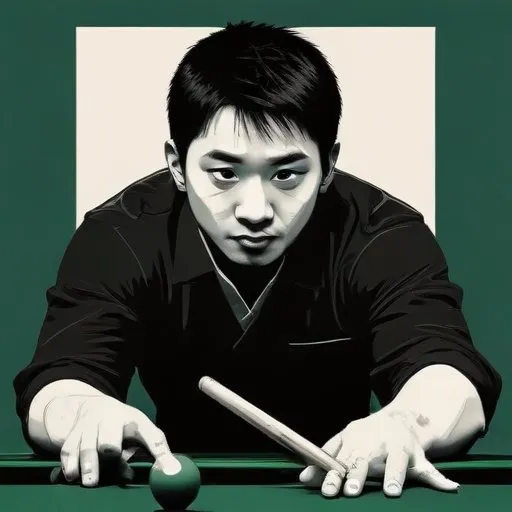
Ding Junhui: The Trailblazing Chinese Snooker Sensation
The Most Successful Asian Player in Snooker History
Ding Junhui is renowned for being the most successful Asian player in the history of snooker, with a staggering 14 major ranking titles to his name. Widely regarded as the greatest Asian player of all time, Ding has left an indelible mark on the sport, paving the way for future generations of Asian players.
Rise to Prominence
Born on April 1, 1987, in Yixing, Jiangsu, China, Ding's fascination with cue sports began at the tender age of eight. He rapidly demonstrated a natural talent for snooker, and by nine, he was already training with the Chinese national snooker team near Shanghai. His parents' unwavering support played a crucial role in his early development, with his mother even selling their home and grocery business to fund his snooker career.
Major Achievements
Ding's impressive resume boasts three UK Championships (2005, 2009, and 2019), as well as a Masters title in 2011. In 2016, he became the first Asian player to reach the final of the World Championship. Throughout his career, he has compiled over 600 century breaks, including seven maximum breaks, in professional play.
Rankings and Accolades
Ding's success has been recognized by the World Professional Billiards and Snooker Association (WPBSA), which has ranked him as the world number one on multiple occasions, starting in 2014. He is the only Asian player to have achieved this feat, cementing his status as one of the sport's elite players.
Philanthropy and Giving Back
Ding's impact extends beyond the snooker table. He owns the Ding Junhui Snooker Academy in Sheffield, England, where he provides training and mentorship to aspiring young players. His commitment to growing the sport and nurturing talent is a testament to his dedication to the next generation of snooker enthusiasts.
Personal Milestones
- Won the Asian Under-21 Championship and the Asian Championship in 2002
- Became the youngest winner of the IBSF World Under-21 Championship at 15 years old
- Turned professional at 16 in 2003
Legacy and Impact
Ding Junhui's trailblazing career has inspired countless Asian players to pursue their dreams in snooker. His unprecedented success has broken down cultural and geographical barriers, paving the way for a more diverse and inclusive sport. As a testament to his enduring influence, Ding remains an icon and a role model for generations to come.
Trivia and Fun Facts
- Ding's favorite food is Xiaolongbao, a traditional Chinese steamed dumpling
- He is a longtime resident of Sheffield, England, and has been known to indulge in the city's famous fish and chips
- Ding's.Snooker Academy offers training programs for players of all ages and skill levels
As Ding Junhui continues to rewrite the record books and push the boundaries of what is possible in snooker, his legacy as a trailblazing champion and an inspiration to millions will endure for generations to come.
FAQ
What is Ding Junhuis early life and career?
Ding Junhui was born on April 1, 1987, in Yixing, Jiangsu, China. He began playing snooker at the age of 10 and turned professional in 2003.
What are Ding Junhuis achievements in professional snooker?
Ding Junhui has won several major tournaments, including the UK Championship, the Shanghai Masters, and the Indian Open. He has also been ranked as the world number one on several occasions.
What is Ding Junhuis playing style?
Ding Junhui is known for his attacking style of play, which has earned him the nickname The Dragon. He is comfortable playing a variety of shots, including long pots and tricky plant shots.
What has Ding Junhui achieved in the World Snooker Championship?
Ding Junhui has had significant success in the World Snooker Championship, reaching the final twice and winning several quarterfinal and semifinal matches.
What is Ding Junhuis current status?
As of 2022, Ding Junhui is still an active professional snooker player, competing on the World Snooker Tour. He continues to be one of the top players in the world, known for his skill and consistency.