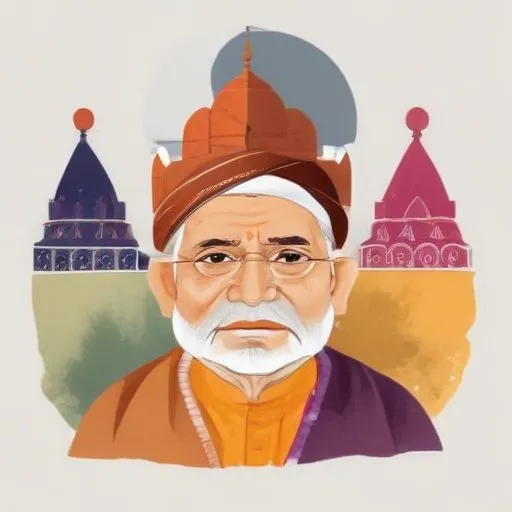
Dinkar G. Kelkar: The Renaissance Man of Indian Arts and History
A Legacy of Cultural Preservation and Contribution
Dinkar G. Kelkar was a multifaceted Indian personality, renowned for his unparalleled contributions to the realm of art, literature, and history. He is best remembered for establishing the Raja Dinkar Kelkar Museum in Pune, a testament to his dedication to preserving India's rich cultural heritage.
Early Life and Literary Pursuits
Born on January 10, 1896, into the esteemed Chitpavan Brahmin Kelkar family of Kasarveli, Dinkar Gangadhar Kelkar was the youngest of four sons to Gangadhar and Uma Kelkar. His early life was marked by a passion for literature, which led him to publish a series of poetry books titled
Adnyatvasi Marathi (Anonymous in parts one through three) beginning in 1915. These works later became reference texts for the University of Bombay's Bachelor of Arts degree in the 1950s.
A Master Editor and Historian
Kelkar's literary prowess extended to editing, where he made significant contributions to Indian literature. In 1935, he edited part of the second anthology of Bhaskar Ramchandra Tamber's poems. Additionally, he edited Pralhad Keshav Atre's poem
Zenduchi Phule. His editorial acumen also saw him become one of the founders of the Sharda Mandir High School in Mumbai.
A Collector Extraordinaire: The Raja Dinkar Kelkar Museum
The true magnitude of Kelkar's cultural contributions lies in his extensive historical collection of photographs, books, paintings, carvings, textiles, manuscripts, almanacs, toys, puppets, letters, scrolls, scriptures, weaponry, instruments, carpets, metallic works, furnishings, and fixtures. This vast anthology of Indian artifacts finds a home in the Raja Dinkar Kelkar Museum, established by him in Pune. The museum serves as a testament to his dedication to preserving India's rich cultural heritage. He named the museum after his deceased son, Raja.
Awards, Honors, and Legacy
Kelkar's contributions to the field of arts and history were recognized with a Doctor of Literature and Philosophy degree from the University of Pune in 1978. He was also awarded the Padma Shri by the Government of India in 1981 for his contributions in the field of Science and Engineering. Additionally, he received an award from the Indian Centre for Excellence. Kelkar briefly served as the chief curator at Salar Jung Museum in Hyderabad.
Personal Milestones
Kelkar married Kamala nee Sitabai Ukidwe, and the couple had a daughter, Jayaprabha (married name Rekha Ranad). His personal milestones are a testament to his devotion to family and his craft.
Historical Context and Impact
Dinkar G. Kelkar's contributions to Indian arts and history are immeasurable. Through his museum, he has preserved a vital part of India's cultural legacy, making it accessible to future generations. His literary and editorial pursuits have enriched Indian literature, while his dedication to education has inspired countless minds.
Kelkar's legacy serves as a reminder of the importance of cultural preservation and the significance of individual contributions to the collective heritage of a nation. His life's work is a testament to the power of dedication, perseverance, and passion.
| Key Dates |
Events |
| 1896 |
Born on January 10 |
| 1915 |
Published poetry books Adnyatvasi Marathi |
| 1935 |
Edited Bhaskar Ramchandra Tamber's poems |
| 1978 |
Awarded Doctor of Literature and Philosophy degree |
| 1981 |
Awarded Padma Shri by the Government of India |
| 1985 |
Government of Maharashtra took over management of Raja Dinkar Kelkar Museum |
| 1990 |
Died on March 17 |
In Conclusion
Dinkar G. Kelkar's life and work serve as a beacon of inspiration, illuminating the importance of cultural preservation, artistic expression, and individual contributions to the collective heritage of a nation. His legacy continues to inspire and educate, a testament to the power of dedication and passion.