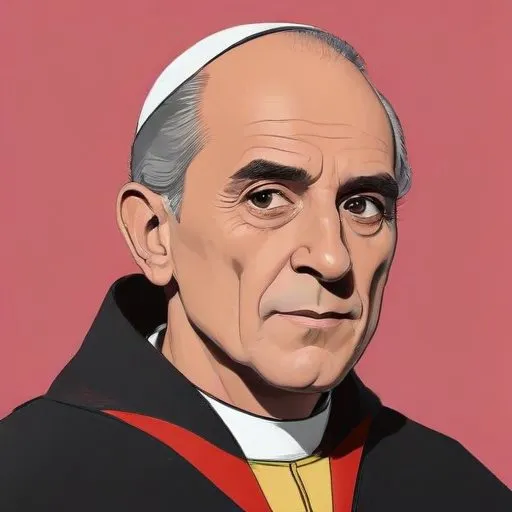
Domenico Bollani: The Diplomat and Bishop Who Shaped the Catholic Reform
A Leading Figure of the Catholic Reform
Domenico Bollani, a diplomat and politician of the Republic of Venice, is best known for his instrumental role in the Catholic reform as the Bishop of Brescia from 1559 to 1579. During his tenure, he implemented several key reforms, earning him a reputation as a champion of change and a devoted servant of the Church.
A Life of Service and Reform
Born into a noble family in Venice in 1514, Bollani pursued a career in politics, earning a doctorate of Law from the University of Padova. He quickly rose through the ranks, serving in the Consiglio dei Pregadi, the Senate, and as one of the Savi di Terraferma, an office comparable to a minister. His diplomatic skills were in high demand, and he was appointed ambassador to England in 1547.
From Politics to Ecclesiastical Career
In 1558, Bollani was appointed podestà (governor) of Brescia, where he successfully resolved a dispute with the Duchy of Milan over the use of the Oglio river's waters. The citizens of Brescia were so impressed with his leadership that they proposed him as their new bishop, a candidacy that was approved by both the Republic of Venice and Pope Paul IV.
A Bishop Dedicated to Reform
Bollani's episcopal career was marked by his commitment to implementing the reforms of the Council of Trent. He participated in the final stages of the council and was instrumental in founding the seminary in Brescia in 1568. He also gathered a diocesan synod in 1574 and made it a priority to personally visit the parishes of the diocese.
Personal Milestones and Key Life Events
- 1559: Ordained priest in Brescia and consecrated bishop in Venice
- 1568: Founded the seminary in Brescia
- 1574: Gathered a diocesan synod
- 1577: Faced the plague in Brescia, initially leaving the city but eventually returning to tend to his flock
Legacy and Impact
Domenico Bollani's life and work had a profound impact on the Catholic Church and the city of Brescia. His commitment to reform and his dedication to his flock earned him a reputation as a true servant of the Church. Today, he is remembered as a champion of change and a testament to the power of faith and dedication.
A Lasting Legacy
Bollani's legacy extends beyond his ecclesiastical career. The Arco Bollani, built in 1556 and attributed to
Andrea Palladio, stands as a testament to his time as lieutenant governor of Friuli. This architectural masterpiece serves as a reminder of Bollani's enduring impact on the city of Udine.
In conclusion, Domenico Bollani's life and work serve as a shining example of dedication, service, and reform. His commitment to the Catholic Church and his flock has left an indelible mark on the city of Brescia and the world at large.
FAQ
What was Domenico Bollanis role in the Catholic Church?
Domenico Bollani was a prominent Catholic bishop who served as the Bishop of Milan from 1589 to 1616. He was a key figure in the Counter-Reformation movement, and he worked to promote Catholic reforms and counter the spread of Protestantism.
What was Domenico Bollanis relationship with the Jesuit order?
Domenico Bollani was a strong supporter of the Jesuit order, and he worked closely with Jesuit leaders to promote Catholic education and missionary work. He was particularly close to the Jesuit leader, Robert Bellarmine, and he sought to promote Jesuit ideals in his diocese.
How did Domenico Bollani respond to the Protestant Reformation?
Domenico Bollani was a fierce opponent of the Protestant Reformation, and he worked tirelessly to counter the spread of Protestantism in his region. He promoted Catholic education and missionary work, and he encouraged the establishment of Catholic schools and institutions.
What was Domenico Bollanis contribution to Catholic theology?
Domenico Bollani was a prominent Catholic theologian who made significant contributions to Catholic doctrine and practice. He wrote extensively on Catholic theology, and his work continues to be studied by scholars today.
How did Domenico Bollanis leadership shape the Catholic Church in Milan?
Domenico Bollanis leadership had a profound impact on the Catholic Church in Milan, where he worked to promote Catholic reforms, education, and missionary work. He helped to establish Catholic schools and institutions, and he encouraged the establishment of Catholic confraternities and devotional societies.