


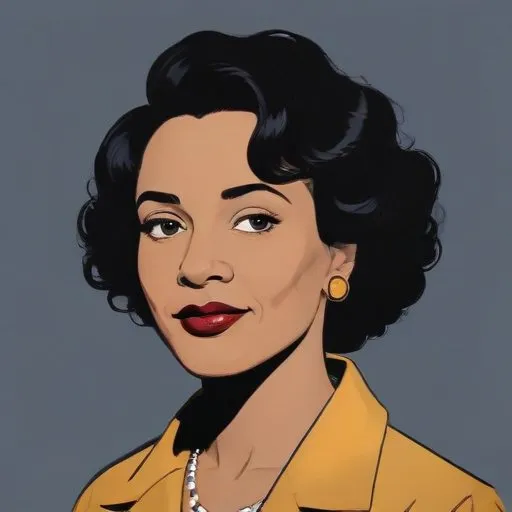
A poet and educator who explored themes of nature, love, and social justice through her lyrical and accessible verse. Her work often celebrated the beauty of the American Southwest.
A celebrated writer, educator, and performance poet, Doris Davenport has made a lasting impact on the literary world with her bold and unapologetic voice.
Doris Davenport is perhaps best known for her essay, "The Pathology of Racism: A Conversation with Third World Wimmin," featured in the seminal anthology, This Bridge Called My Back: Writings by Radical Women of Color. This powerful piece has become a staple of feminist and anti-racist literature, cementing Davenport's status as a leading voice in the intersectional feminist movement.
As an African American, Appalachian, Feminist, and LGBTQ+ individual, Davenport's multiple identities inform and enrich her writing. Her poetry and essays often explore the intersections of racism, sexism, and homophobia, offering a unique perspective on the experiences of marginalized communities.
Born on January 29, 1949, in Gainesville, Georgia, Davenport was raised in Cornelia, Georgia, where her upbringing in the Appalachian foothills would later inspire many of her poems. She holds a Bachelor of Arts in English from Paine College, a Master of Arts in English from the University at Buffalo, and a Doctorate of Philosophy in Literature from the University of Southern California.
Today, Davenport continues to share her talents through workshops and poetry performances, inspiring new generations of writers and activists. Her commitment to education and community-building has earned her a reputation as a dedicated and compassionate advocate for social justice.
Davenport's work is characterized by its unflinching examination of racism, sexism, and homophobia. Her writing often explores the ways in which intersectional identities shape our experiences and perspectives, advocating for a more inclusive and equitable world.
As a self-identified lesbian, Davenport's poetry often celebrates the beauty and power of women-loving-women. Her self-published collection, its like this, offers a spiritual and lesbian perspective on the world, one that is deeply personal and relatable.
Doris Davenport's contributions to literature and social justice continue to inspire and educate. Her commitment to intersectional feminism and her unwavering advocacy for marginalized communities have left an indelible mark on our collective consciousness.
Through her powerful writing and tireless activism, Doris Davenport reminds us that our identities are intertwined, and that true liberation can only be achieved by embracing our complexities and celebrating our differences.
Born in 1830
A reclusive poet who crafted innovative, enigmatic, and emotionally charged verse that continues to captivate readers with its unique style and profound insights.
Born in 1892
A Pulitzer Prize-winning poet and playwright, known for her lyrical and passionate works that explored themes of love, feminism, and social justice. Her poetry is celebrated for its musicality and emotional intensity.
94 Years Old
A confessional and emotionally intense writer who explored themes of mental illness, mortality, and femininity in her work, leaving a lasting impact on contemporary literature.
97 Years Old
A confessional poet who explored themes of mental illness, family, and femininity through her raw and intimate writing style, earning a Pulitzer Prize in 1967.
83 Years Old
A Pulitzer Prize-winning poet and professor, known for unflinchingly exploring themes of family, love, and politics in her work. Her poetry is celebrated for its lyricism, intimacy, and unapologetic honesty.
97 Years Old
A celebrated poet, essayist, and feminist who explored themes of identity, politics, and social justice, leaving a lasting impact on contemporary literature and feminist thought.
Born in 1882
A pioneering poet and artist who blended futurism and feminism, creating innovative works that explored the human experience through unconventional forms and language.
Born in 1885
A pioneering modernist poet and critic who transformed 20th-century literature with innovative styles and provocative ideas, shaping the course of modern poetry.
