


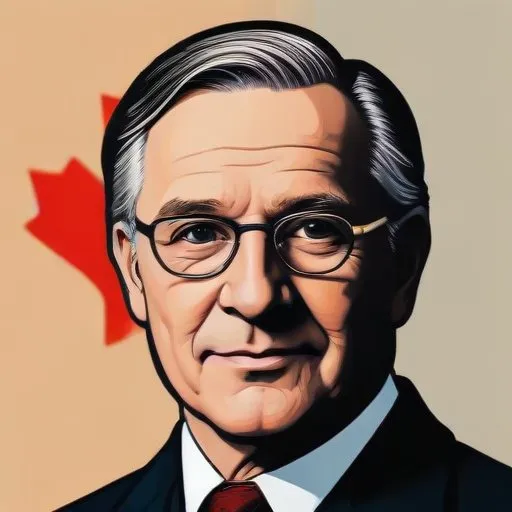
A Canadian educator and politician who served as the 13th Premier of Manitoba, known for his leadership during World War II and post-war reconstruction efforts. He played a crucial role in shaping the province's education and healthcare systems.
May 27, 1895 - April 23, 1995
Douglas Lloyd Campbell was born on May 27, 1895, in Portage la Prairie, Manitoba, to John Howard Campbell and Mary Campbell. He was educated in Portage la Prairie and Brandon, and later worked as a farmer and school teacher before entering politics.
In 1922, Campbell defeated several other contenders to become the United Farmers of Manitoba (UFM) candidate in Lakeside, north of Winnipeg. He made a virtue of his inexperience as a professional politician, which proved to be a winning strategy. He was soon regarded as a rising star in the party, known for his commanding speaking skills.
The UFM swept Manitoba's countryside in 1922, and Campbell defeated his only opponent, Conservative Herbert Muir, by about 500 votes. He went on to face opposition from Conservative J.R. Bend in 1927 and 1932, but won on both occasions. During this period, no other party ran a candidate against him.
On December 21, 1936, Campbell was sworn in as Minister of Agriculture in John Bracken's government. He played a crucial role in shaping the agricultural policies of Manitoba, earning the respect of his peers and the people of Manitoba.
In 1948, Campbell became the 13th Premier of Manitoba, a position he held for 10 years. During his tenure, he worked tirelessly to promote the development of Manitoba, focusing on rural concerns and non-partisan governance. He was a strong leader who earned the trust of the people and left a lasting legacy in Manitoba politics.
In 1920, Campbell married Gladys Victoria Crampton, with whom he had eight children. He was also an active Freemason, serving as master of Assiniboine Lodge No. 7 in Portage.
Douglas Lloyd Campbell served as a member of the Legislative Assembly of Manitoba for 47 years, longer than anyone in the province's history. He received numerous awards and honors for his contributions to Manitoba politics and agriculture. His legacy continues to inspire and influence the people of Manitoba to this day.
Douglas Lloyd Campbell's remarkable life and legacy continue to inspire and educate people about the importance of public service, leadership, and dedication to the people of Manitoba.
Born in 1898
A Canadian lawyer and politician who served as the 12th Premier of Manitoba, known for his leadership during World War II and post-war reconstruction efforts. He played a key role in shaping the province's economy and infrastructure.
Born in 1917
The 14th Premier of Manitoba, a Canadian politician who served from 1958 to 1967, is most known for his progressive policies and infrastructure development, including the construction of the Manitoba Centennial Centre.
90 Years Old
A Canadian politician and academic who served as Governor General of Canada, known for promoting national unity and bilingualism. He played a key role in shaping Canada's cultural identity.
78 Years Old
The 20th Premier of Manitoba, serving from 1999 to 2009, is a Canadian politician and diplomat known for his progressive policies and strong leadership in the province. He later became the Canadian Ambassador to the United States from 2009 to 2016.
